

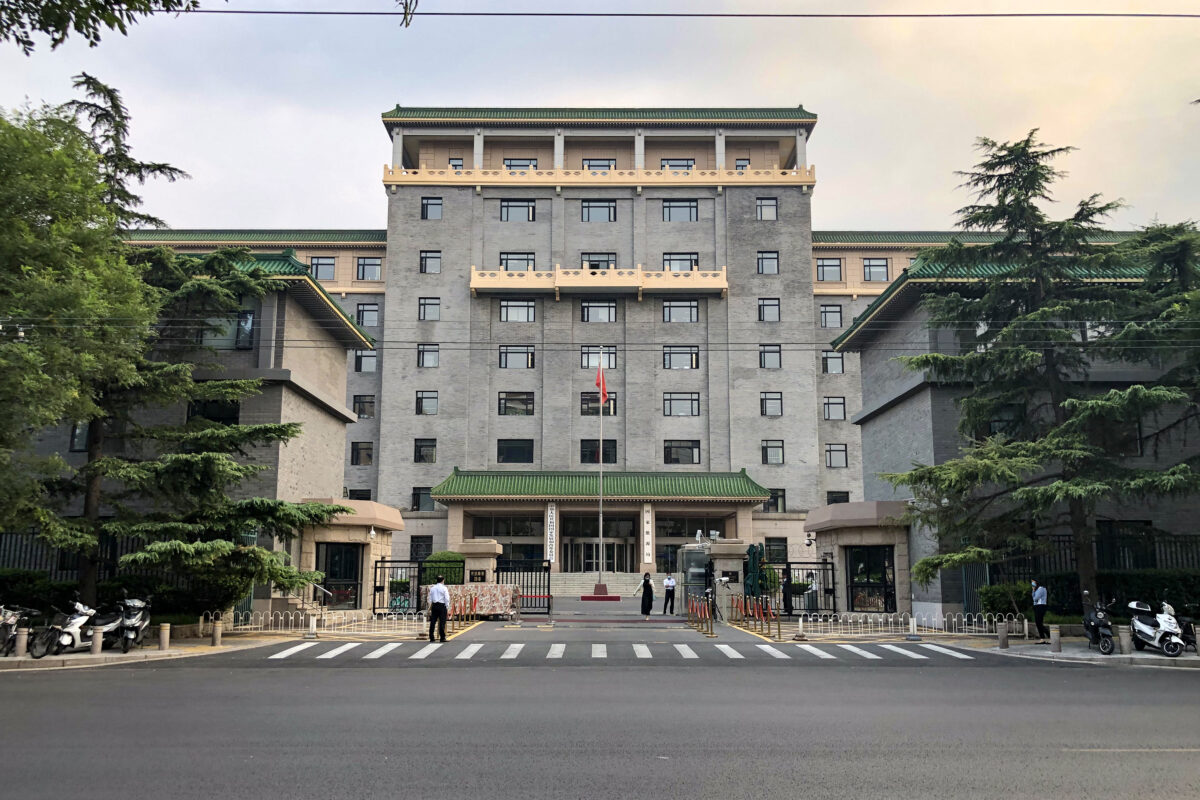
Beijing has introduced a stricter national carbon assessment system that formally holds provincial governments accountable for emissions reduction and energy transition targets.
China has released a new national framework for assessing progress toward its carbon peak and carbon neutrality goals, formalizing what was previously policy direction into a structured accountability system for provincial governments.
The “Comprehensive Evaluation and Assessment Measures for Carbon Peaking and Carbon Neutrality” was approved at a meeting of the Politburo Standing Committee on February 26, 2026, jointly issued by the General Office of the Central Committee of the Communist Party of China and the General Office of the State Council on April 12, and published in full on April 23.
The measures will come into effect from tax year 2026 and apply to party committees and governments at the provincial level. The implementation will be carried out under centralized party leadership, with the Central Organization Department providing overall coordination and the National Development and Reform Commission (NDRC) working with relevant agencies on the assessment process. The Commission for Supervision and Management of State Assets is also tasked with developing a parallel evaluation system for central SOEs.
The core of the framework is a “5+9” indicator system. The five binding indicators are total carbon emissions, carbon intensity reduction, total coal consumption, total oil consumption and the share of non-fossil energy in total energy consumption. These are supplemented by nine supporting indicators covering energy savings, industry, urban and rural construction, transport, public institutions and carbon trading. According to the NDRC, the structure is intended to support China’s transition from an energy consumption control approach to a carbon emissions control system.
The assessment methodology is stricter than previous systems. Instead of a points-based model, it uses an assessment approach that meets the criteria of three final assessments: excellent, qualified and unqualified. A province is assessed as not qualified if a binding indicator does not meet the target, or if three or more supporting indicators are missed.
The process includes local self-evaluation, departmental assessment, on-site verification, comprehensive evaluation and final approval by the Party Central Committee and the State Council, followed by feedback to the provincial authorities.
The assessment results will be used as a reference in the performance evaluation, appointment and supervision of provincial leadership teams and relevant officials. Counties assessed as unqualified are required to submit correction reports within 30 business days. If issues are not corrected in a timely manner, principal officers may be subject to formal discussions. Cases involving serious breach of duty, falsification of data, concealment or tampering will be immediately assessed as unqualified and may lead to disciplinary or legal action.
The NDRC described the framework as a key institutional part of China’s carbon management system, integrating dual carbon targets into the party’s internal review mechanism. For the energy sector, the policy reinforces the long-term prioritization of non-fossil energy development, while increasing pressure on coal- and oil-dependent growth pathways. It is also expected to strengthen policy signals for renewables, storage, green energy trading and carbon market development by more firmly embedding low-carbon energy deployment into provincial governance requirements.
This content is copyrighted and may not be reused. If you would like to collaborate with us and reuse some of our content, please contact: editors@pv-magazine.com.
