

According to data collected by solar buyer Black Bear Energy, the U.S. real estate sector has surpassed 1 GW of installed on-site solar capacity. The 2025 Solar Rankings for Real Estate shows 1,086 GW installed in 2,157 projects owned by more than 65 owners and managers.
The Solar Leaderboard collects data on U.S.-based projects facilitated by Black Bear Energy, along with information voluntarily submitted by property owners and managers and supplemented by third-party sources. The dataset reflects the most comprehensive information available to Black Bear Energy at the time of publication, covering a wide range of project-level data and sources.

Black Bear Energy 2025 Real Estate Solar Rankings
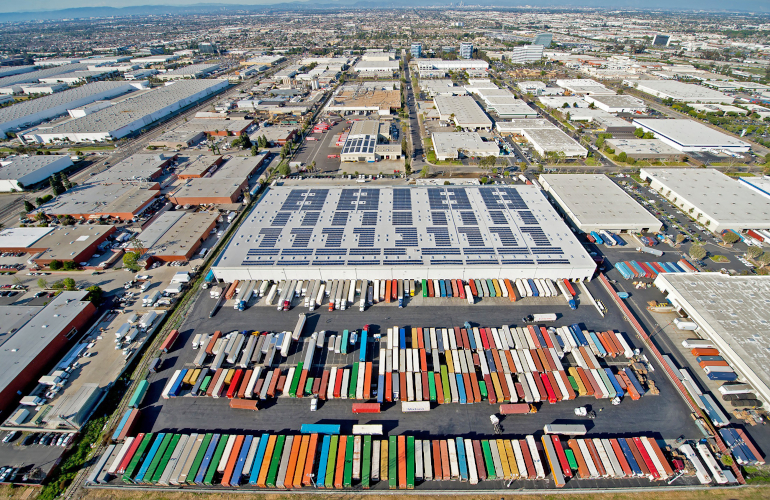
At the end of 2025, Prologis maintained its status as a leader in industrial solar energy with an impressive portfolio of 310.9 MW. Meanwhile, public storage emerged as the standout story in the 2025 report, claiming second place with 111 MW. The company has generated 97.5 MW of solar energy over the past three years and has deployed 1,120 projects through a mix of self-funded initiatives and third-party leases for the community solar markets, demonstrating its commitment to deploying solar at scale to generate new portfolio value.

A Prologis location in Torrance, California.
The 2025 Solar Leaderboards also highlight the top solar operators across different asset types – recognizing that meaningful benchmarking requires comparing companies within their own peer group. A multifamily owner like Avalon Bay Communities faces fundamentally different roof restrictions and deal structures than an industrial real estate investment trust (REIT) like Prologis. By segmenting leaders by asset type, the Leaderboards reveal which companies truly excel within their categories:
- Industrial: Prologis (272 projects, 309.4 MW)
- Retail: Brookfield Properties (62 projects, 53.5 MW)
- Self Storage: Public Storage (1,120 projects, 110 MW)
- Multifamily: Avalon Bay Communities (69 projects, 11.87 MW)
- Office: Kilroy (14 projects, 6.2 MW)
Community solar energy has also evolved dramatically. By the end of 2025, community solar reached 233.8 MW – more than 21% of all tracked capacity. Large industrial rooftops, which have traditionally been underutilized due to low tenant loads on the site and split incentives, are ideally suited for community solar. This approach allows owners to maximize roof capacity without managing on-site energy users, collect predictable roof rents and, in states with favorable programs, scale this model across their entire portfolio.
“Leaders in this industry have shifted from focusing on managing risk to viewing solar as a profit center,” said Victoria Stulgis, president of Black Bear Energy. “The progress over the past three years – more than 1,263 projects powered by 30 real estate companies, totaling 371.9 MW – proves that both the pioneers and the fast followers are successfully scaling their programs. However, half of the solar energy deployed is concentrated among the Top 5 companies, highlighting the enormous untapped potential within the sector.”
