

May 7, 2026
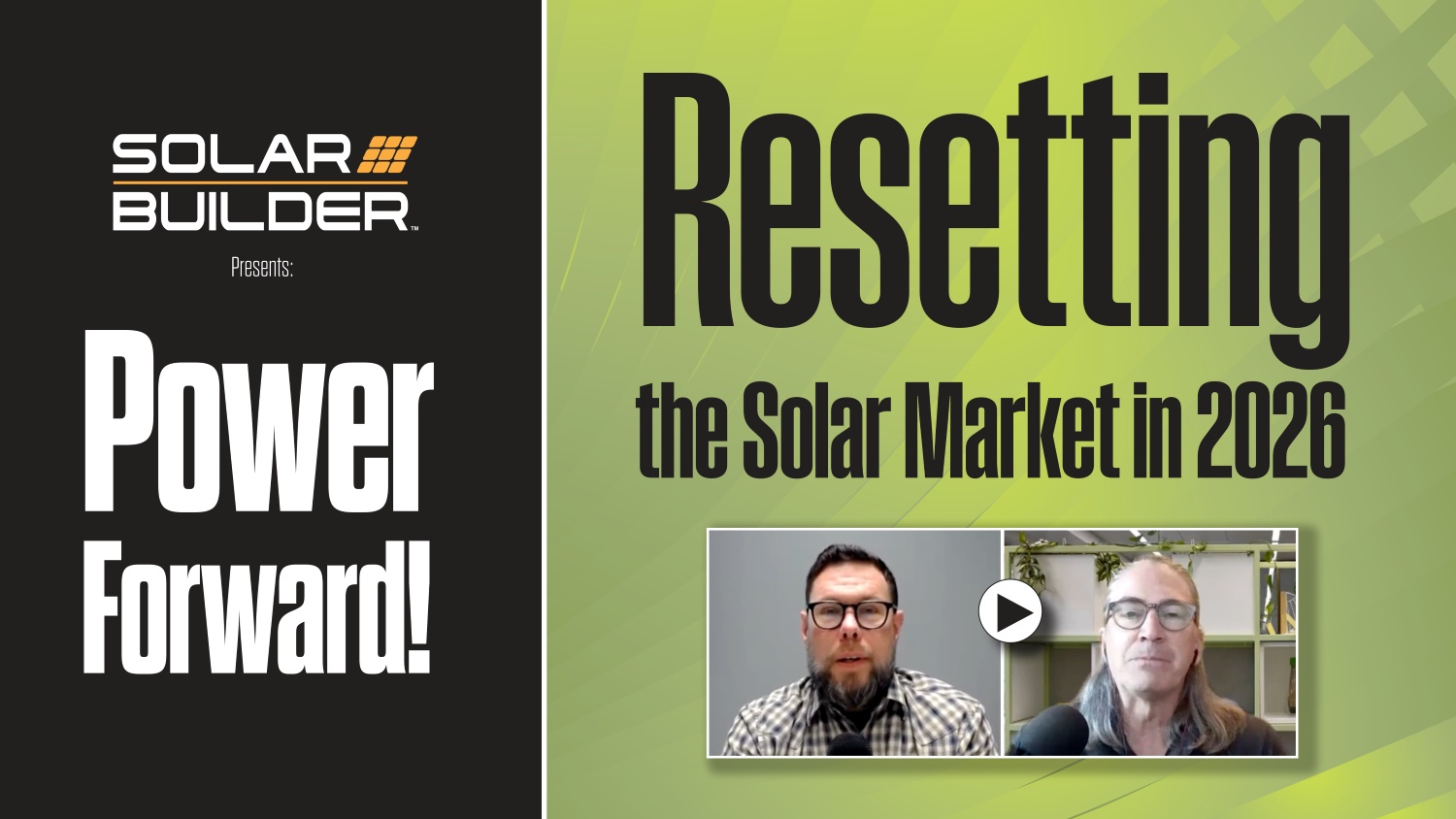
Last year was a tumultuous year for the solar industry, as Congress voted to claw back tax credits. With the 25D residential solar tax credit set to expire in December and the ITC expiring this summer, installers are looking at a new landscape in 2026 and beyond. On Power Forward! Brad Kramer, editor of Solar Builder, discusses resetting the solar market in 2026 with David Dunlap, VP of product strategy at BayWa re
- 00:55 Where the solar energy market stands today
- 03:09 Biggest changes impacting the market in 2026
- 06:14 Understanding your options in this new landscape
- 09:42 The biggest challenges facing solar installers today
- 14:18 Reasons for hope in today’s solar energy market
- 15:53 How to Take Back Control of Your Solar Business
Where the solar energy market stands today
Kramer: We are already about a quarter of the way through the year. What is your assessment of where the solar market is today?
Dunlap: It seems like this year has been both challenging and a slow start, but it’s also pretty amazing that we’re already three months into it. When we talk to our customer base, our installer base definitely feels like there was a pretty big hangover, a 25D hangover in homes at the end of the year, and a lot of people had a backlog of installation that they couldn’t complete on time as they had planned. And so we spend a lot of the first, I would say six to eight weeks of the year, working through that backlog and figuring out what comes next. And of course, in the Midwest and the Northeast, we had some pretty big winter storm challenges that slowed things down quite a bit. Our financial partners told us that there were many new projects in the funnel, but the installation rate was slow. So I think all of these signs together indicate what most of us are probably feeling, which is that 2026 is off to a bit of a slower start than people would hope.
Understanding the new landscape
Kramer: How do solar installers proceed? How can they best understand their options in this new landscape?
Dunlap: There are many new rules, but I hear a lot of people stumble over rules that don’t actually apply to them, because they have made a different choice. For example, I’ll give you a great. With the elimination of 25D, there is no direct homeowner tax credit available, right? For a solar contractor who offers a homeowner an installed system, there are no federal tax liabilities associated with that project if they are going to make a cash and loan sale. What that means is all the noise, confusion and challenge surrounding: Does this company meet FEOC standards? Does the product come from a non-FEOC country? What is the IP address of the product? Does it have domestic content? These are buzzwords. We’re all talking about them. They seem like the most important thing in our industry ever. They’re all tied to that federal tax money, right? So if you want to finance a project that doesn’t involve federal tax dollars, none of that matters.
And just after the February NABCEP show in Wisconsin, there are many installers in that market and throughout the Midwest that leasing is not an option. So they really don’t do any kind of third party financing, and they get this cash and loan project. It’s just the direct project costs, whatever equipment I can find and put into it. They’re going for, I don’t want to devalue it and say the lowest cost for the equipment, but they’re going for cost-effective, reliable equipment. That doesn’t have to meet all those other requirements, all those other bars.
So if you’re an installer or a listener trying to figure out how can I do this FEOC, non-FEOC or domestic content. The first question everyone should ask themselves is: am I using a third-party product with a tax benefit attached to it? If the answer is no and you only provide cash and loans, don’t worry about it. That’s not part of the equation. You can just choose your favorite brand, the reliable one, good warranty, good service. You are familiar with the product. Just do that. Get back to running your business the way you want.
Taking back control
Kramer: What are some key tools installers can use to regain control of their business in 2026?
Dunlap: That’s a great question. And maybe before tools it’s just recognizing that this is a choice a business owner can make. I think a lot of people are used to making their own decisions about their business. And maybe part of the frustration, some of the fear or anxiety right now is that I don’t feel like I’m making my own business decisions. I feel like someone else is telling me what to do, right? By the federal government on this policy, or by the rules for the ITC. Or it is that the financing companies tell me what to do. I must comply with the AVL and I must purchase these products. Well, I don’t want to use those products. I want to use something else.
So I think the first tool is to take a deep breath, assess your business and ask yourself those tough questions. In the current climate, am I running the business I want to run? And if not, why not take the time to chat with friends, colleagues and your local professionals and ask some of those tough questions. Could I operate differently today at this time? Can I be successful with XYZ, right? Shop around and compare notes with similar companies to yours in other markets where you don’t compete with them. What do you see other installers doing?
This is one of the things that BayWa likes to do: bring our installers together, meet each other, compare notes like this, and I invite everyone to reach out to their network. Everyone has an extensive network of professionals they can lean on and ask these questions. But I guess it’s back to basics, right? Why is solar energy important for my business? How do I present it at the kitchen table? Or at the table in the meeting room, if you are advertising.
I think it starts with a vision and some of the basic tools you may have used when you started your business. What kind of solar business do I want to set up? Why did I start it and what is important to me? And maybe you’re not going to get all of those things back under control right away, but what’s one thing that can really make you feel proud of the company you’re running today and feel like you’re in control again? I think it’s also a time to be a little conservative in your projections. I don’t think anyone is really predicting that they’re going to double their sales this year. I think most people recognize that this is a bit of a recovery year, and that’s okay. As long as we can remain sustainable, profitable and on the right track, we will get through to the other side.
Check out the Power Forward! series on Solar builder‘s YouTube channel.
Tags: BayWa re, Power Forward!
