

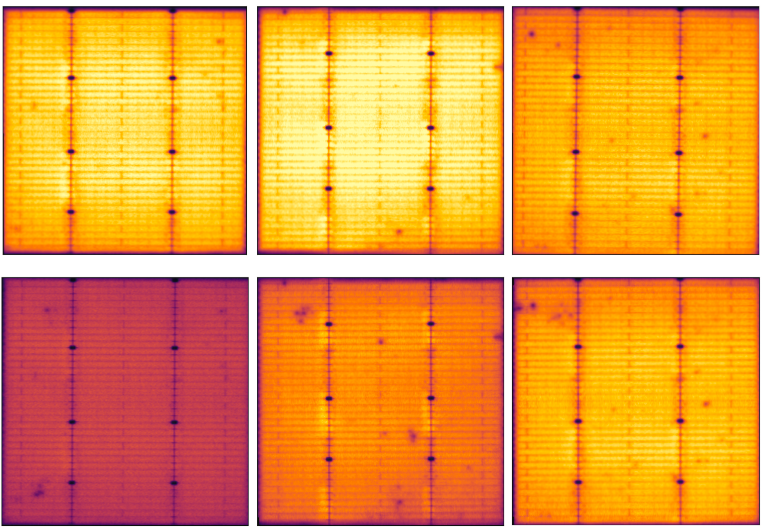
The scientists found that UV exposure in PERC and TOPCon solar cells increases interface defects and makes them more recombination active, boosting ultraviolet-induced degradation. They found strong degradation on PERC front and back surfaces and TOPCon front surfaces, while the TOPCon back remains stable due to poly-Si UV absorption.
Researchers from the University of South New Wales (USNW) in Australia have investigated the physical origins of ultraviolet-induced degradation (UVID) in PERC and TOPCon solar cell technologies and have found that UV exposure not only causes additional interface defects, but also changes their electronic activity, making them significantly more recombination active.
One of the key findings of the study is that UV exposure causes pronounced degradation on both the front and back of PERC solar cells, as well as on the front of TOPCon cells, while the back of TOPCon remains largely unaffected by UV absorption in the poly-Si layer. “This explains why TOPCon and heterojunction (HJT) technologies can exhibit stronger UV sensitivity than conventional PERC architectures,” said corresponding author Bram Hoex. pv magazine. “It also highlights the critical role of interface engineering and hydrogen management for future UV-stable high-efficiency modules.”
In the study “Energy-dependent increase in DIt and larger collection cross-sections allow for UV-induced degradation”, published in Solar energy materials and solar cellsHoex and his colleagues explained that in PERC and TOPCon solar cells, the aluminum oxide layer (AlOx) is an important passivation component that strongly influences the quality of the silicon surface and UV stability. Previous studies show that thicker AlOx layers and AlOx/silicon nitride (SiNx) stacks can reduce UV-induced degradation by improving charge density and surface passivation. Overall, UV exposure changes charge and defect behavior at material interfaces, but well-optimized AlOx structures can significantly improve the long-term stability of devices.
The team examined PERC and TOPCon cells with dimensions of 182 mm x 182 mm, along with AlOx symmetric life test samples. The PERC cells use a p-type gallium-doped silicon substrate with a phosphorus-doped front emitter, a hydrogenated silicon nitride (SiNx:H) passivation layer and silver front contacts, while the back consists of an alumina layer deposited by atomic layer deposition and a hydrogenated silicon nitride layer deposited by plasma-enhanced chemical vapor deposition, with aluminum metallization.
The TOPCon cells include a boron-doped emitter, an aluminum oxide layer deposited by atomic layer deposition, a silicon dioxide interlayer, and a phosphorus-doped polycrystalline silicon/SiNx rear contact stack with silver lattice metallization.
To isolate ultraviolet-induced degradation mechanisms, alumina-only samples with symmetric lifetime were fabricated on n-type silicon wafers, with alumina layers of approximately 9-12 nm, deposited by atomic layer deposition and baked at 780 C. The samples were divided into groups, cut into 40 mm x 40 mm pieces and subjected to ultraviolet-B (UV-B) irradiation at an intensity of approximately 114 W/ m² and a temperature of 60 C. A dark glowing group at 60 C was used as a control to separate thermal effects from light-induced effects.
Photoluminescence (PL) imaging was used to evaluate degradation behavior, and photoluminescence ratio maps were generated to visualize changes before and after UV exposure. Minority carrier lifetimes were measured using the quasi-steady-state photoconductor method under controlled temperature conditions, while interfacial defect density was extracted using corona oxide characterization of semiconductor measurements, which enables non-contact capacitance-voltage profiling. Furthermore, PL intensity was correlated with saturation current density and open-circuit voltage using diode and recombination models, allowing quantitative comparison of recombination changes under UV stress.
The analysis showed that ultraviolet B (UVB) irradiation causes strong degradation on both the front and back of the PERC cells, while dark annealed samples remain stable, confirming that temperature alone is not responsible for the observed effects. The front, only passivated by SiNxshows the most severe degradation, while the rear is moderately affected. As for the TOPCon cells, UVB exposure leads to pronounced degradation on the front side, while the back side remains largely stable due to UV absorption by the polycrystalline silicon layer. Overall, both technologies demonstrate that UV-induced degradation occurs primarily at exposed silicon-dielectric interfaces.
The scientists said these results highlight that UV-induced degradation is highly dependent on surface structure and passivation design. The PERC front surface is particularly vulnerable due to its simpler passivation scheme, while the TOPCon back surface is protected by UV-absorbing layers. In general, degradation correlates with exposure of the crystalline silicon-dielectric interface to UV radiation.
“We believe this work helps bridge the gap between previous chemical hydrogen-based UVID models and a more complete, electronic recombination-based understanding of degradation mechanisms in modern silicon solar cells,” Hoex concluded.
Previous research into UVID degradation by UNSW has shown that thicker AlOx layers significantly improve UV resistance by limiting hydrogen migration, providing clear guidance for more robust TOPCon designs. Another work also warned of unexpected UV-induced degradation in TOPCon solar cells by invisible light.
This content is copyrighted and may not be reused. If you would like to collaborate with us and reuse some of our content, please contact: editors@pv-magazine.com.
