

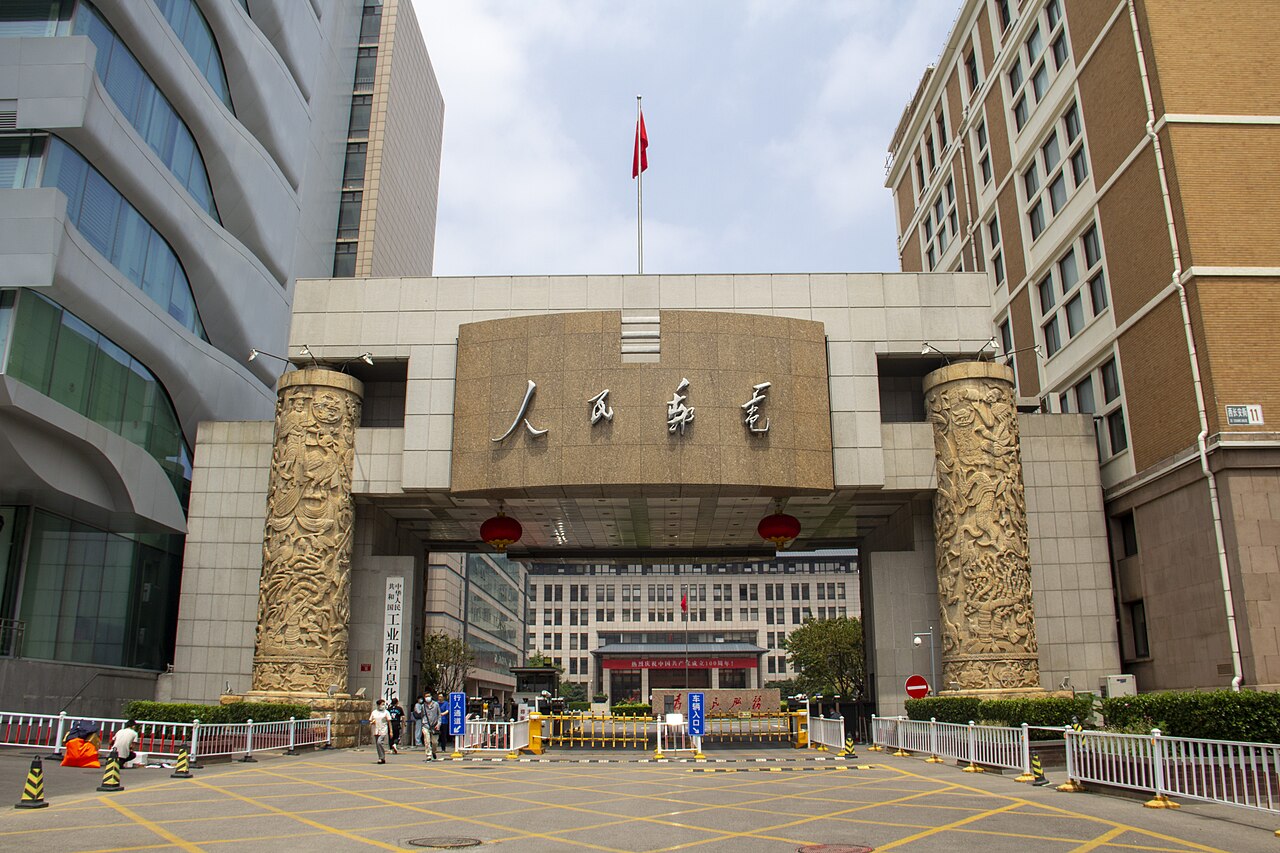
China’s Ministry of Industry and Information Technology (MIIT) has opened a public consultation on six proposed electronic industry standards for the classification and classification of photovoltaic products.
The design represents one of China’s first attempts to introduce a structured rating system for PV products. By ranking modules into quality levels rather than applying a simple ‘pass-fail’ standard, the framework could influence purchasing, financing and insurance decisions in the solar energy sector.
The proposed framework evaluates products in three categories: reliability, power generation performance, and green features. Modules would be scored against a series of indicators under each category and given an overall grade. Products scoring 80 points or higher qualify for Grade 1, products scoring 60 through 79 are classified as Grade 2, and products scoring below 60 are Grade 3.
Reliability is an important part of the proposed standard. The framework introduces differentiated testing requirements tailored to specific climate and application conditions and goes beyond basic uniform testing. It includes conventional reliability tests such as thermal cycling, moist heat, moist freezing, mechanical loading, snow loading, hail resistance and potential induced degradation (PID), as well as additional ratings for exposure to sand and dust, marine environments, ultraviolet aging and coupled stress conditions.
In the performance section, various efficiency and bifaciality thresholds are established for the major n-type technologies, including TOPCon, heterojunction (HJT), and back-contact (BC) modules. The draft establishes A+ efficiency thresholds of 25% for TOPCon, 24.8% for HJT and 25.2% for BC products, along with associated duality requirements. According to Huatai Securities, the minimum efficiency thresholds proposed in the draft are 23.4% for TOPCon, 23.5% for HJT and 23.9% for BC modules.
In the green attributes category, carbon and environmental data are included in the rating system. Criteria are expected to include production energy consumption, carbon intensity, life cycle carbon footprint, recyclability and material-related environmental performance. As a result, the standard could affect not only domestic project tenders, but also manufacturers targeting overseas markets with stricter sustainability requirements.
The framework is expected to have the greatest impact on centralized PV purchasing. China’s major state-owned energy producers regularly integrate official standards into tender qualification requirements and scoring systems. If Grade 1 or Grade 2 products are favored in utility-scale procurement, lower-efficiency PERC modules and earlier-generation TOPCon products may gradually lose access to mainstream ground-mounted projects.
In a recent research report, Huatai Securities estimated that the proposed standard could accelerate capacity rationalization across the industry. In a base case scenario, based on the current efficiency of mainstream products, the banking company said around 317.5 GW of TOPCon capacity and 10.2 GW of HJT capacity could become non-competitive, while BC capacity would remain unaffected. The total affected capacity would be approximately 327.6 GW, equivalent to approximately one third of industrial capacity.
In a more optimistic scenario, where manufacturers upgrade products to the efficiency levels of today’s leading modules, Huatai estimated that potential capacity outflows would decline to 143.4 GW for TOPCon and 10.2 GW for HJT, for a combined total of 153.6 GW, or approximately 15% of installed production capacity. Huatai Securities said TOPCon would account for the majority of affected capacity as older production lines face increasing pressure to adopt technologies such as multi-cut cells, back-end efficiency improvements and improved passivation processes.
Within the Chinese administrative framework, the proposed measures are recommended industry standards rather than mandatory national regulations. They would not ban the production, sale or export of lower quality modules, provided those products continue to meet mandatory safety and market access requirements. Their influence is therefore likely to be exerted through market mechanisms, including procurement for state-owned enterprises, government-backed projects, financing assessments, insurance pricing, local incentive programs and brand-based product segmentation.
The draft standards come after nearly two years of severe overcapacity and intense price competition in China’s solar energy production supply chain. Previous attempts to encourage capacity rationalization through market forces, sector coordination and production controls have produced limited results. The proposed assessment framework represents a new effort to promote industry consolidation through the development of standards and purchasing preferences rather than direct administrative intervention.
If similar assessment frameworks are widely adopted in project tenders and financing assessments, they could eventually be extended upstream to cells, wafers and polysilicon, increasing competitive pressure on older and less efficient manufacturing capacities across the solar value chain.
