

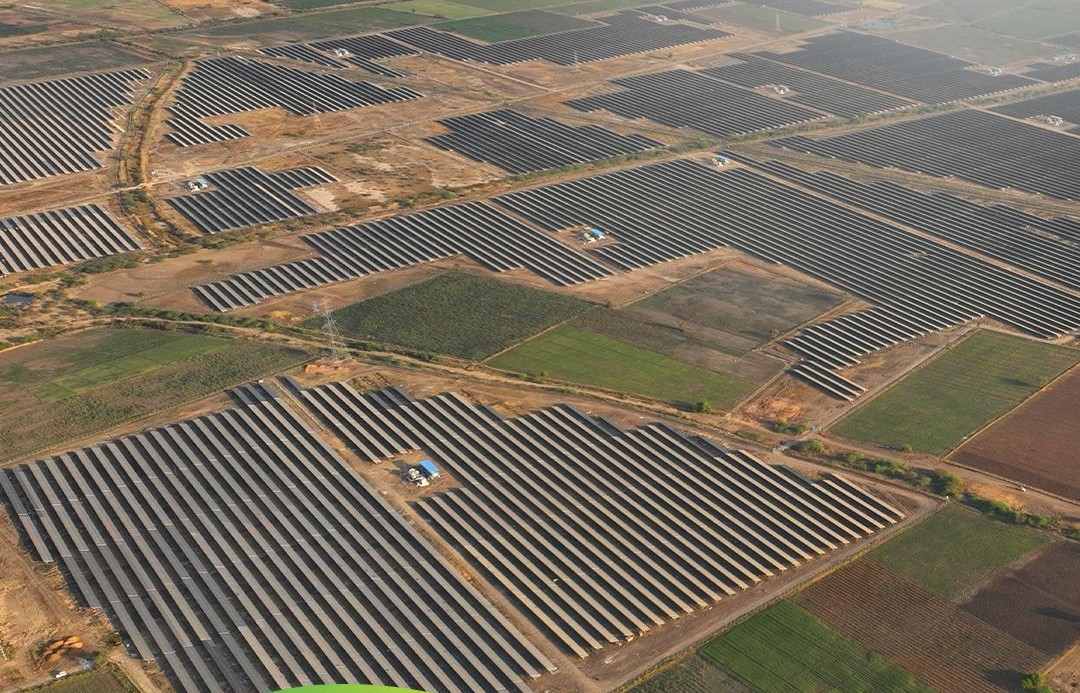
According to ICRA, about a third of India’s newly commissioned renewable energy capacity is facing grid curtailment as transmission infrastructure expansion lags behind renewable energy capacity expansion.
The rating agency said around 33% of the 54.8 GW of recently commissioned renewable energy capacity was evacuated through the Temporary General Network Access (T-GNA) route as of May 2026. Curtailment under T-GNA is highest during solar energy generation hours, ranging from 50% to 60%.
ICRA said the curtailment of solar power is most pronounced in Rajasthan and Gujarat, while in southern India it remains limited even during peak solar power generation hours.
A pipeline of 107 GW of solar, wind, hybrid, hydro, pumped storage and thermal projects, all of which have already received connectivity, is expected to be integrated into the Inter-State Transmission System (ISTS) between 2026 and 2031.
“As we have seen in the past, slippages in the timely commissioning of the upcoming transmission infrastructure cannot be ruled out, which could impact the expansion of renewable energy capacity or result in continued grid curtailment, which would materially impact project revenues,” said Ankit Jain, vice president and co-group head at ICRA.
ICRA estimates that the transmission sector will require investments of INR 5 trillion to INR 6 trillion ($52.36 billion) between 2026 and 2032 to support the government’s plan to remove electricity from more than 900 GW of non-fossil fuel generation capacity, including about 548 GW of solar and wind capacity, by the 2035-2036 financial year.
“The expected transmission investments of INR 5 trillion to INR 6 trillion include strengthening existing infrastructure, adding evacuation capacity and developing new transmission corridors to support manufacturing centres,” Jain said. “The sector requires approximately 20,000 circuit kilometers of transmission lines and 120 GVA of substation capacity annually to meet government targets.”
According to ICRA, transmission projects continue to face significant implementation risks, including land acquisition issues, right of way (RoW) issues and regulatory approvals, resulting in implementation delays. Most of the projects awarded by central nodal agencies through the rate-based competitive bidding (TBCB) route have missed their scheduled commercial operation date (SCOD) due to these restrictions.
Of the projects commissioned under the TBCB route in March 2026, only 12% were completed on time. The rest were put into service two months to three years late, with an average delay of more than ten months. Delays in transmission capacity expansion limit power evacuation for renewable energy projects, leading to grid curtailment.
