

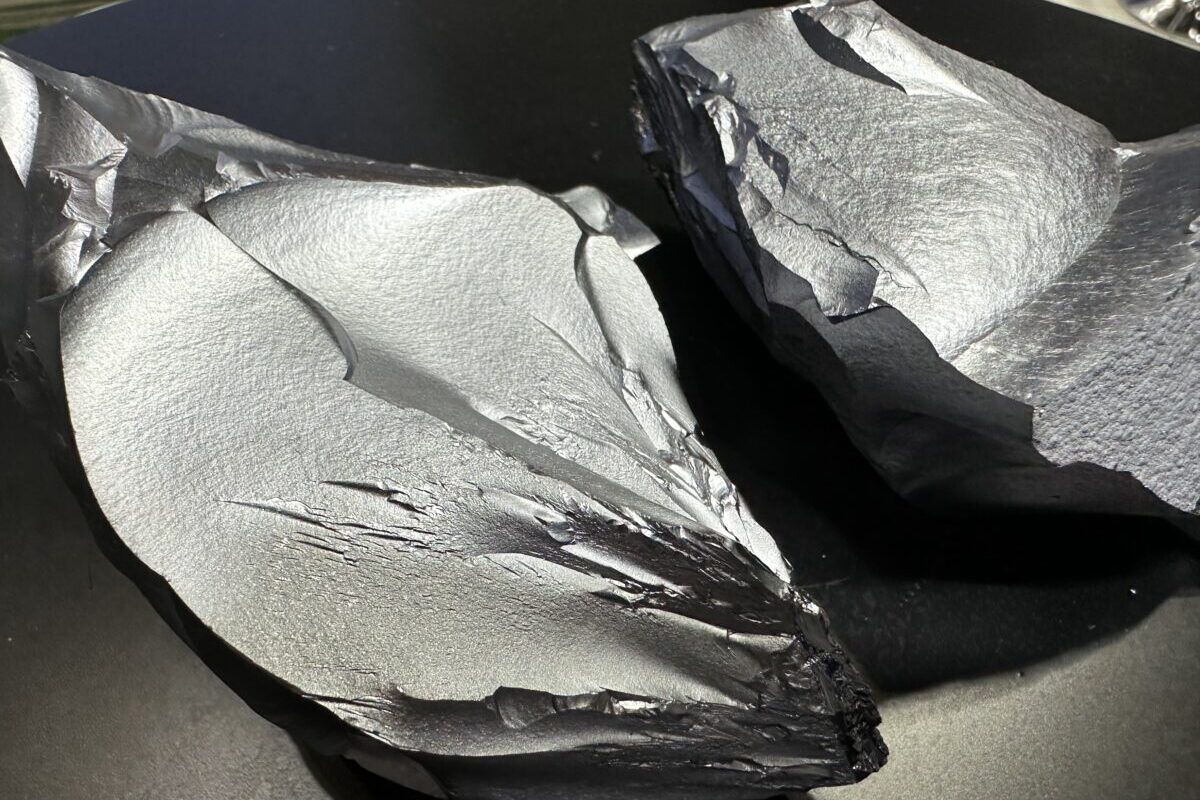
China has released the full texts of three mandatory national standards that impose restrictions on energy consumption and efficiency in the photovoltaic production value chain.
The standards were approved on June 27, published in full on July 22 and will come into effect on January 1, 2027. They cover the production of polysilicon and germanium, the production of monocrystalline silicon and the efficiency of crystalline silicon modules and inverters.
The most important changes appear in GB 29447-2026, the revised energy consumption standard for polysilicon and germanium production. The final version is stricter than the draft released for public consultation in September 2025.
For polysilicon produced via the trichlorosilane process, which is commonly used to produce rod silicon, the three energy consumption classes are set at 5.0, 5.5 and 6.3 kilograms of standard coal equivalent (kgce) per kilogram of product. The Grade 3 limit, which represents the maximum permitted energy consumption for existing production, has been tightened in the consultation draft from 6.4 kgce/kg.
For the production of silane fluidized bed, which is mainly used for the manufacture of granular silicon, the limits of Class 1, Class 2 and Class 3 are 3.6, 4.0 and 4.6 kgce/kg, respectively. The final Grade 3 threshold is significantly lower than the proposed 5.0 kgce/kg.
The standard also tightens accounting rules for externally produced silicon cores and hydrogen, reducing the ability for producers to reduce reported energy consumption due to differences in calculation limits.
The revisions exceeded previous market expectations as much of China’s existing rod silicon capacity was reportedly operating within a narrow range of 6.3 to 6.4 kgce/kg. An industry estimate, cited after a standards implementation meeting, suggested that about 84% of capacity could meet the design threshold of 6.4 kgce/kg, but only about 45% could meet the final limit of 6.3 kgce/kg.
The estimate is not an official assessment of production capacity and does not mean that all non-compliant facilities will immediately cease operations. Manufacturers can improve performance through measures such as heat recovery, process optimization, higher operating rates or other technical upgrades.
Estimates from brokers nevertheless suggest the standard could reduce China’s polysilicon capacity from around 3.5 million tonnes to less than 2 million tonnes. That would remove more than 1.5 million tons from the compliant capacity pool, compared to estimated demand of about 1.5 million tons in 2027.
The immediate impact on supply may be more limited. Much of the production capacity for higher energy production is already idle, while operational capacity for polysilicon was around 1.3 million tonnes in the first half of 2026.
The other two standards extend the mandatory framework further downstream. GB 47835-2026 sets energy consumption limits for crystal drawing and wafer cutting, while GB 47834-2026 sets minimum efficiency requirements for crystalline silicon modules and inverters. Products that do not meet the Class 3 requirements for modules and inverters are not allowed to be manufactured, imported or sold in China.
Together, the new standards shift China’s campaign against PV system overcapacity from voluntary production discipline to binding technical regulations.
