

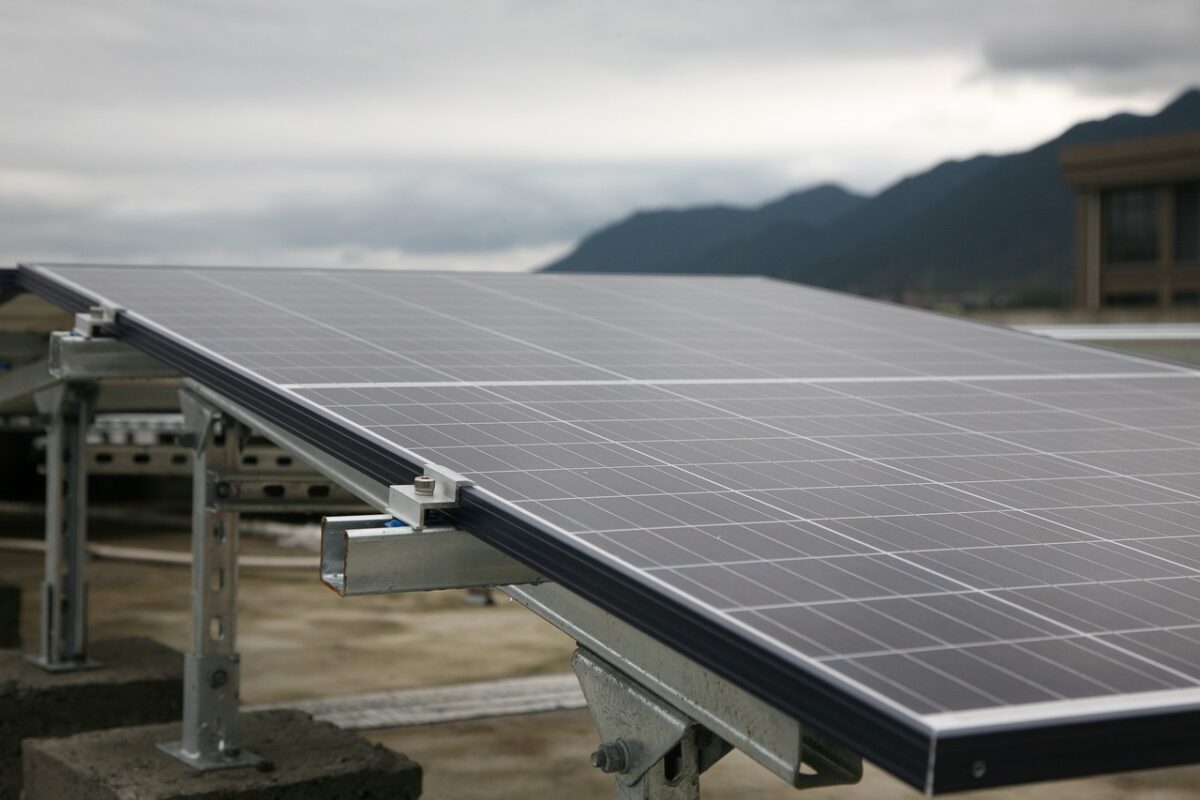
New research from India shows the benefits of deploying fixed-tilt, low-angle PV systems in regions with high summer load demand, such as India. The scientists said that while PV systems with low tilt angles may not achieve maximum energy yield or lowest levelized cost of energy (LCOE), they can reduce dependence on expensive electricity grids during periods of high demand.
A group of scientists from the Indian Institute of Technology Kharagpur have developed a new model for optimal PV installation angles in regions with high summer load demand, such as India, and found that low tilt angles provide a range of benefits.
“The study suggests that installing solar panels at lower tilt angles can significantly increase electricity generation during the high-demand summer months in India, by as much as 8% over optimal tilt,” said the study’s corresponding author, Saikat Ghosh. pv magazine. “The findings indicate that lower PV tilts are suitable for India, leading to higher generation in summer and potentially mitigating the electricity, coal and water crises.”
According to Ghosh, the proposed methodology is also suitable for countries at similar latitudes, both in the Northern and Southern Hemispheres, especially if the demand for summer loads exceeds the demand for winter loads due to the greater use of air conditioners.
“Every summer, India faces an electricity crisis due to increased air-conditioning loads,” Ghosh explains. “Lower PV tilts not only boost summer generation, but also reduce row spacing requirements, allowing more PV to be installed in smaller areas. I have seen that installers often waste a lot of space by installing PV systems on a high slope, which requires greater spacing between rows and also leads to less generation when the country faces an electricity crisis. A lower tilt approach can therefore help to match PV generation to the electricity demand pattern.”
In the study “Maximizing PV generation with lower tilt angles to meet high summer electricity demand on the Indian grid,” published in Energy for sustainable developmentGhosh and his colleagues explained that for PV systems deployed in regions with low to mid latitude and high summer load demand, such as India, the title angles are typically equal to the latitude angle of the region to achieve the highest solar energy yield reach.
“However, this orientation maximizes solar radiation falling on the PV plane of the array (POA) in winter, but relatively reduces POA radiation in summer, resulting in relatively reduced electricity generation from the fixed-tilt PV system at the time when India is experiencing its crisis. peak demand for electricity,” they explained. “A lower PV tilt can increase the ground coverage ratio (GCR) and power density of the installation, leading to greater economic benefits.”
The team conducted a series of simulations and analyzed the performance of a modeled 100 kW PV system at four Indian locations: Chandigarh, Bhadla, Kolkata and Kurnool. It used solar resource data from the National Solar Radiation Database, National Renewable Energy Laboratory (NSRDB-NREL) and energy market data from India’s energy trading platform Indian Energy Exchange Limited (IEX). It also used the System Advisor Model (SAM) for hourly energy output modeling and PVsyst for assessing the impact of inter-row shading.
The analysis showed that PV systems with a low tilt angle can achieve higher solar energy generation in summer. “For example, with a PV tilt of 10 degrees in April, the generation with respect to the latitude tilt is 0.2% higher in Chandigarh, while it is 1% higher for the other three locations,” the academics pointed out, noting that the PV energy generation was also higher in the early morning and late afternoon. “The yield improvement is lower in early April, when energy demand is relatively subdued.”
They also found that a 10 degree tilt angle also increased power generation by 5.9%, 6%, 4.1% and 2.4% in Chandigarh, Bhadla, Kolkata and Kurnool respectively, compared to the tilt angle at latitude in May . “In June the increase is 7.8%, 8.5%, 5.4% and 3%, in July there is an increase of 6.7%, 7.2%, 4.6% and 2.6%, and in August it is 3%, 3.3%, 2.4%. %, and 1.4% for the same locations,” she added.
The scientists also explained that while PV systems with low tilt angles may not achieve maximum energy yield or lowest levelized energy cost (LCOE), they can reduce dependence on expensive electricity grids during high demand periods.
“Additionally, lower tilt angles would allow PV modules to be more closely packed in a fixed-tilt PV system, increasing the installation GCR and power density by approximately 40-50%,” they concluded. “The study found that although the PV tilt equals the latitude angle leads to the lowest LCOE, but because the lower PV tilt enables a higher GCR, lower tilts are therefore more economically beneficial.”
This content is copyrighted and may not be reused. If you would like to collaborate with us and reuse some of our content, please contact: editors@pv-magazine.com.
