

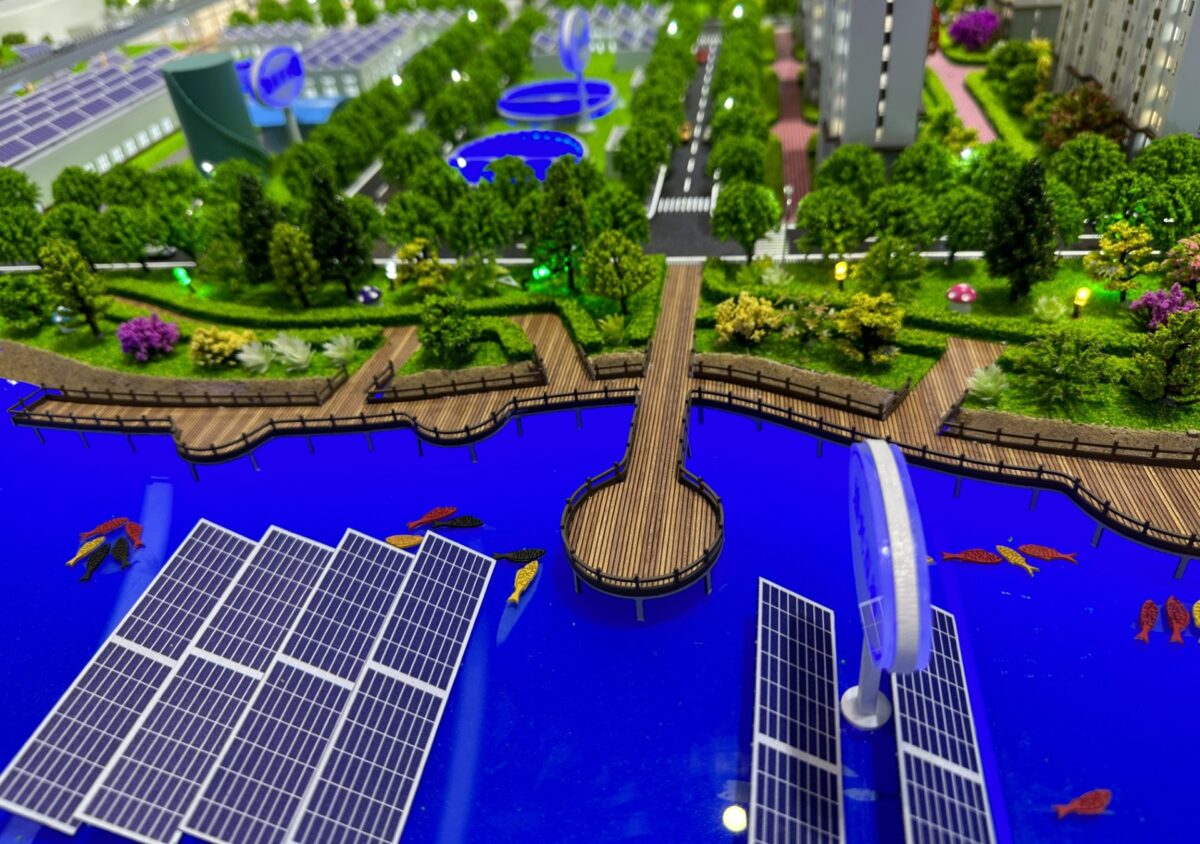
The updated IEA PVPS Task 12 Fact Sheet provides a comprehensive assessment of the environmental impacts associated with PV systems. It highlights the significant advances made in PV technology, with an emphasis on improved efficiency and a reduced carbon footprint.
IEA PVPS Task 12 (PV Sustainability Activity) has released an updated version Fact sheet, which sheds light on the environmental impacts of photovoltaic (PV) electricity. This fact sheet, entitled “Environmental life cycle analysis of electricity from PV systems“, provides crucial insights into the sustainability of PV systems and highlights important developments and current data in the field of PV technology.
Life cycle assessment: a comprehensive overview
Life cycle assessment (LCA) is a detailed method used to quantify and assess material and energy flows, as well as emissions, throughout the life cycle phases of PV systems. These phases include production, transportation, installation, use and end of life. The production phase includes resource extraction, raw material production, and the creation of wafers, cells, panels, inverters, and mounting structures. Transportation includes distribution logistics, while installation involves setting up roof-mounted systems and cabling. The use phase evaluates the performance of the system over a typical operational period of 30 years, including maintenance. Finally, the end-of-life phase includes the dismantling, recycling and waste management processes.
The updated fact sheet focuses mainly on a typical residential PV system in Europe. This system is defined by a roof-mounted PV installation, an annual production rate of 976 kWh/kW and an in-plane irradiation of 1,331 kWh/m². It includes PV panels, cabling, mounting structure, inverter and installation, with a linear degradation rate of 0.7% per year and a lifespan of 30 years for panels and 15 years for inverters.
Evaluation of PV module technologies
IEA PVPS Task 12 assesses four PV module technologies, each with different efficiencies: Cadmium-Telluride (CdTe) at 18.4%, Copper-Indium-Gallium-Selenide (CIS/CIGS) at 17.0%, Multicrystalline Silicon (multi- Si, BSF) at 18.0% and monocrystalline silicon (mono-Si, PERC/TOPCon) at 20.9%. These efficiencies are critical in determining the environmental impact and performance of any technology.
Key findings from the fact sheet
The non-renewable energy payback period (NREPBT) is the period it takes for a renewable energy system to generate an amount of energy equivalent to the non-renewable energy used in its production. The study shows that the PV systems evaluated have a NREPBT of approximately one year, indicating a rapid return on energy investment.
PV systems dramatically reduce greenhouse gas emissions compared to fossil fuel generators. The carbon footprint for producing 1 kWh of solar electricity ranges from 25.2 to 43.6 g CO2 equivalent, much lower than the 1 kg CO2 per kWh emitted by fossil fuels. The study also examines additional environmental impacts, including fossil fuel use (0.35 to 0.52 MJ per kWh), mineral and metal use (4.6 to 5.3 mg Sb equivalent per kWh), particulate matter (1.0 to 4.0 incidences per kWh). and acidification (0.18 to 0.36 mmol H+ equivalent per kWh).
The efficiency of PV modules, especially mono-Si, has improved significantly over the years, contributing to reduced greenhouse gas emissions. For example, average module efficiency has increased from 14.0% in 2007 to 20.9% recently, with a corresponding drop in emissions from 76 g CO2 eq/kWh to 36 g CO2 eq/kWh.
Conclusion
The detailed life cycle assessment methodology used in this study provides valuable insights into the entire life cycle of PV systems, from production to end-of-life management. This holistic approach ensures that all environmental impacts are taken into account, enabling more informed decision-making for both policy makers and industry stakeholders.
Then download the fact sheet here.
IEA PVPS Task 12 aims to quantify the environmental profile of PV systems compared to other energy technologies and address critical environmental, health, safety and sustainability issues to support market growth.
For more information, please contact the IEA PVPS Task 12 Managers: Garvin Heath And Etienne Drahi.
The views and opinions expressed in this article are those of the author and do not necessarily reflect those of the author pv magazine.
This content is copyrighted and may not be reused. If you would like to collaborate with us and reuse some of our content, please contact: editors@pv-magazine.com.
