

Some regions have a lot of industry but limited renewable energy sources, while other regions have the opposite. Securing community acceptance of the infrastructure to get power where it is needed can be both enormously complex and remarkably simple.
“Talk and listen. It’s that simple,” says Nancy Kluth, spokesperson for the Amprion project for the German states of Rhineland-Palatinate and Saarland. “Go in, talk to the people, really listen to what makes sense for them, and then find a way to compromise, if you can, or to adapt and adapt what you hear and what you learn your actual planning process, if you like. have that opportunity.”
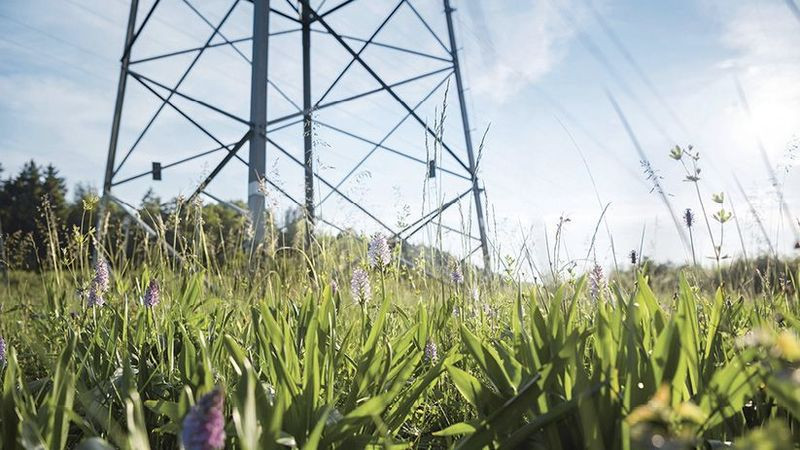
As with large-scale energy projects, the sooner this happens, the better. Amprion, cited in European Union publications for positive practices, is one of the four major network infrastructure companies in Germany. Amprion uses information fairs, community meetings, ‘blue islands’ of wildflowers around pylons and green cover for substations.
Kluth said the “talking” part of “talking and listening” involves explaining what it is for and the need for network infrastructure.
Amprion is building or modernizing 3,500 km of electricity lines and creating a new direct current (DC) connection from Lower Saxony in the north to Baden-Württemberg in the south, via North Rhine-Westphalia. The company is actively building offshore connections and increasing the capacity of its regional lines and substations.
Electrons on the way
When major DC transmission lines go to other regions, locals generally understand the benefits, Kluth said, “for Germany, for German industry, but also in terms of energy security for everyone.”
European networks must accommodate the electrification of transport, heating, cooling and industry, as well as the production of low-carbon hydrogen.
As heavily industrialized Germany modernizes and expands its networks, it also needs to import energy. Greece plans to become a green hydrogen hub to bring clean energy to heavy industry regions such as Germany.
On the Greek island of Evia, 750 wind turbines have already been built to power other regions, and there are plans for more. Katerina Apostolatou, member of the Environment Protection Society of South Karystia, is fundamentally opposed to all wind energy on the island. She said this is partly because environmental concerns have not been listened to enough. She is not against renewable energy, and neither are the other community members who oppose the hundreds of wind turbines popping up all over Evia. On the contrary, they are all for clean energy, except that it is not there, in that form, on that scale, or with what they say will bring many disadvantages to the local population, and little to no benefit.
In a sense, this is typical of energy transition infrastructure projects that are subject to ‘green on green’ conflicts. Ultimately, it is about the industrial infrastructure that may or may not be well placed and that ensures a balance for the local environment.
Familiar horizons
Areas known for their natural beauty will also generally have a greater barrier to community acceptance of visually imposing infrastructure than areas already characterized by industry.
Amprion’s Kluth acknowledged that people in Germany’s Ruhr region, where she lives and acts as a spokesperson, are used to the industrial infrastructure, although Aprion’s projects still face some opposition. Research in the United States has shown that areas with high levels of existing industrial infrastructure pose less of a challenge to community adoption.
Environmental and social concerns about industrial-sized energy companies are also often related to scale. For example, a recent US study shows that established solar projects larger than 100 MW have more difficulty with community acceptance. The bigger the project, whether it concerns energy production or network infrastructure, the bigger the thorn in the side and the bigger the institutions involved. Such sites appear more imposing and less accessible to local communities.
‘Energy colonialism’
On Evia, residents fear that their beautiful region is becoming an industrial energy site that pushes them aside, degrading the island to nothing more than an energy hub, providing energy for somewhere else.
Some local residents said they would feel more positive if the energy from the wind turbines were also produced for the local population. Numerous opponents of the massive wind projects said they want solar energy.
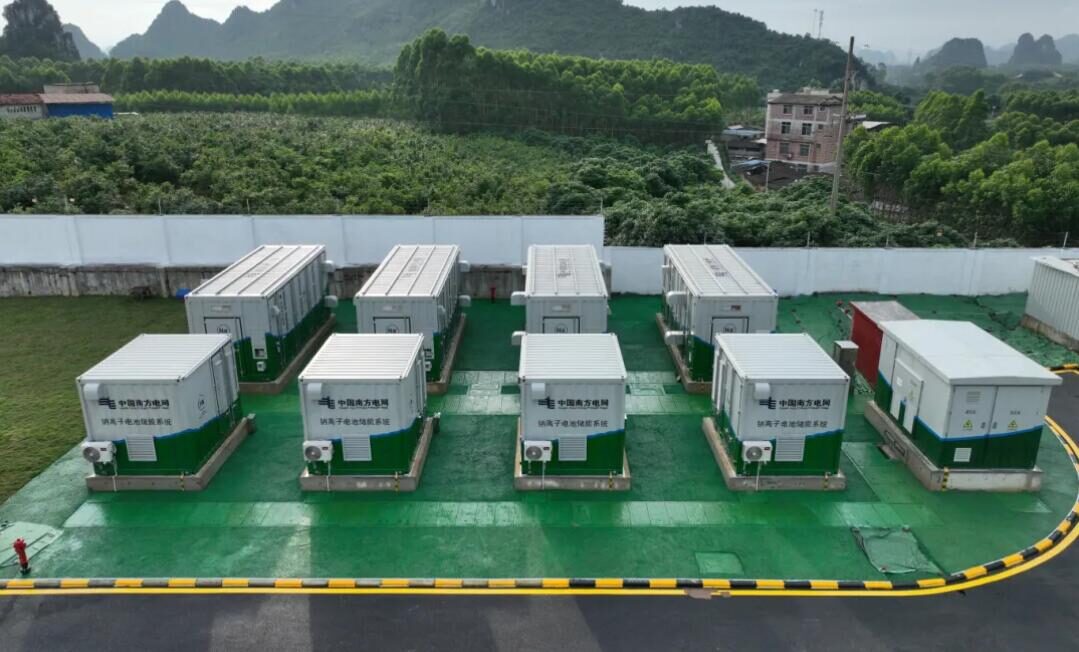
The inter-regional electricity transmission of large-scale energy projects, such as Evia’s large wind farms, differs significantly from the infrastructure of decentralized community solar projects, which provide electricity to local people.
It is not difficult to understand why small-scale energy infrastructure must accompany large-scale ambitions. Residents of Evia miss that small-scale local distribution.
The question “what is in it for us?” is difficult to answer if there is hardly any local solar energy available. The old ferry that carries tourists to the island smells so strongly of dirty bunker fuel that it is unpleasant to go on deck, outdated local transmission lines have been linked to fires that devastated the island not so long ago, and local substations of a half a century ago looks like something out of a post-apocalyptic science fiction movie. Meanwhile, remote areas receive large amounts of clean, renewable energy. The locals don’t even know where the power goes.
Who does what?
That said, many of Evia residents’ concerns have little to do with energy or infrastructure companies. Complaints also concern the way the land was acquired or allocated, and how the money flows to the relevant contractors, but does not contribute to the local energy transition. The end-user benefits of electrification are not necessarily within the purview of contracted energy and infrastructure providers, but these issues all impact the level of community acceptance of larger energy infrastructure projects.
When asked how she deals with complaints that are more the responsibility of a number of different stakeholders, Amprion’s Kluth responded: “There are many stakeholders and many things are happening at the same time. Just last week we sat with the government of Rhineland-Palatinate and they brought everyone together – the wind farmers and the smaller energy suppliers – to look at the planning and discuss the ideas, so that we can get a better view of the planning of others. can house and connect them.”
Communication is a two-way street. Kluth passionately believes that locals know their area best. So she is assigned the area she knows and where she lives, and listens to what the locals have to say about their needs.
However, sometimes she gets much more than she bargained for. People sometimes avoid general problems that are not relevant to the projects at hand. A certain amount of resistance can help create a stronger project. Helping opponents expose problems, question things from a different perspective and notice details that would otherwise not come to light. In Evia, one of the opponents says that she was the first to inform an energy supplier that it did not have the correct permit.
What should happen when promises are not kept, when tasks are not performed adequately? What if there is corruption? A European Union whistleblower law recently came into effect in Germany. Companies with more than 250 employees must now follow guidelines that allow people to report things that go wrong without fear of reprisal. Greece is also under pressure to implement such a law. Every energy infrastructure project that goes poorly makes it harder for others to gain acceptance. Transparency ensures better communication in all respects. Reaching yes means, as Kluth said, finding a win-win situation for everyone.
This content is copyrighted and may not be reused. If you would like to collaborate with us and reuse some of our content, please contact: editors@pv-magazine.com.
