

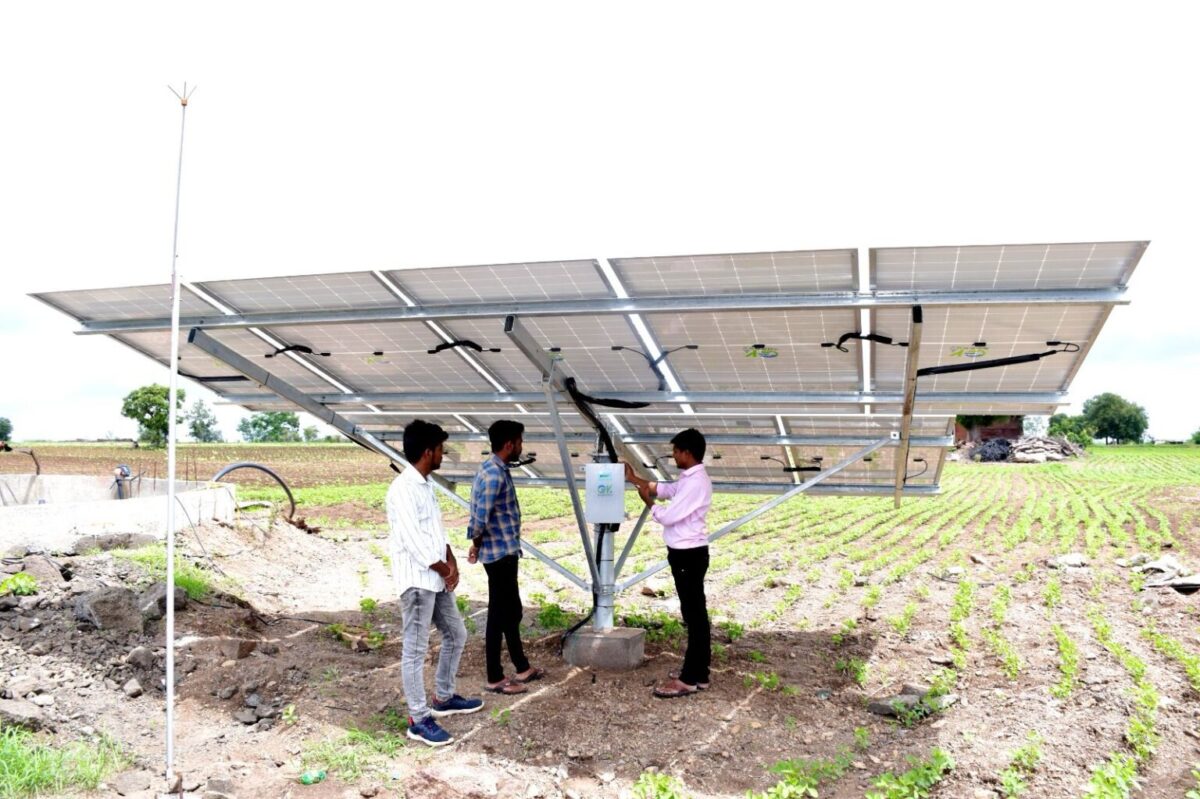
Gopal Kabra, the founder and CEO of GK Energy, speaks pv magazine on the Indian solar pump market, its key drivers and future prospects.
What is the current size and scope of the solar pump market in India? How does the growth potential compare to other agricultural countries in the coming years?
Let me share some key data points: India has over 90 million farmers, of which over 90% are marginal farmers.
Government estimates indicate that there are approximately 30 million grid-connected and diesel-powered pumps currently in use. Diesel pumps, which account for almost a third of the total in June 2019, are expensive to use. Ensuring a consistent power supply for grid-connected pumps, which account for around two-thirds of the total in June 2019, is a significant challenge.
The central government is focusing on promoting solar agricultural pumps, with a target of installing 1.4 million solar pumps by March 2026, along with solarization of 3.5 million grid-connected pumps and feeders. This effort is further strengthened by state-level initiatives such as Maharashtra’s Magel Tyala Saur Krishi Pump Yojana with 0.85 million solar farm pumps and Chhattisgarh’s Saur Sujala Yojana.
Given these factors, demand is likely to grow as more farmers see the financial benefits of solar pumps.
What key factors determine the current demand for solar pumps in India? How will these factors impact short- and long-term market trends?
Simply put, the main driving force behind the adoption of solar pumps is the improvement of the living standards of farming families. Today, marginal farmers are willing to contribute between INR 12,000 ($142.95) and INR 100,000 – depending on the state – for the installation of a solar pump.
Although government subsidies have played a role in driving demand for solar pumps, I believe solar pumps are becoming increasingly popular because they offer value for money to farmers.
Moreover, the increasing number of solar pumps also leads to large-scale benefits such as cost reduction, faster deployment and better service benefit at ground level, making them increasingly affordable.
Can you elaborate on the challenges faced by companies in the solar pump industry, especially in the areas of technology adoption, farmer education and transition from traditional fuel-based pumps?
High initial pump costs, coupled with unfamiliarity with the technology, were the biggest challenges the industry faced in the beginning, as many were hesitant to move away from traditional AC-based systems. Government initiatives like Atal Solar Pump Scheme, Mukhyamantri Saur Krushi Pump Yojana, Saur Sujala Yojana and PM Kusum have helped overcome such obstacles and create awareness with hands-on hands-on experience about the product in larger farming communities in a shorter time frame. Such awareness has led to increasing adoption of solar pumps, reducing costs and improving ease of maintenance.
How will the demand for solar pumps evolve in relation to global and national environmental goals, given the growing emphasis on sustainability and low CO2 emissions?
Demand for solar pumps is expected to increase as sustainability and low carbon emissions become global and national priorities. According to available estimates, a 1 kW solar power plant emits approximately 0.8 kilograms of CO2 per kilowatt hour of solar energy generated, in addition to being a reliable energy source. Government incentives and technological advancements make them more affordable.
As awareness of sustainability grows, especially in regions with high levels of sunlight, the solar pump market will expand. Increasing interest from businesses and consumers for environmentally friendly solutions will further drive this demand, making solar pumps a key player in the shift to renewable energy.
Government policies and subsidies have contributed significantly to the growth of the solar pump industry in India. What specific areas could benefit from additional support or policy changes to further accelerate industry growth?
Initiatives such as the PM-KUSUM program have significantly increased awareness about solar pumps, leading to widespread adoption. This increased demand has driven volume growth, making the pumps more affordable for the end user.
In terms of additional support, investments in research and development for more efficient technologies and a focus on marginalized regions can further drive adoption at a rapid pace. Expanding grid integration and providing incentives for innovation will also support broader renewable energy goals while promoting sustainable agriculture.
How do technological developments such as the Internet of Things (IoT) and AI improve the costs, efficiency and acceptance of solar pumps?
IoT enables real-time monitoring and remote control, while AI-driven predictive maintenance and smart irrigation optimize efficiency and reduce costs. Although the initial costs may be higher, the long-term savings and improved performance are driving greater adoption, making solar pumps a more attractive and sustainable solution in agriculture.
How is GK Energy positioned to take advantage of emerging opportunities in this sector?
GK Energy is committed to innovation, quality and customer-oriented solutions. We differentiate ourselves by offering comprehensive support from installation to after-sales service, ensuring a seamless experience for the farmer. I believe this strategic approach has helped position GK Energy as a trusted supplier in the evolving solar pump market.
This content is copyrighted and may not be reused. If you would like to collaborate with us and reuse some of our content, please contact: editors@pv-magazine.com.
