

Close Menu
  • News
  • Industry
  • Solar Panels
  • Commercial
  • Residential
  • Finance
  • Technology
  • Carbon Credit
  • More
    • Policy
    • Energy Storage
    • Utility
    • Cummunity
What's Hot

Mitsubishi Electric Trane announces new heat pump line for hydronic heating – SPE

March 6, 2026

Origis is developing a 413 MW solar portfolio in West Texas

March 6, 2026

New Jersey expands state community solar program by 3 GW

March 6, 2026
Facebook X (Twitter) Instagram
Solar Energy News
Friday, March 6
  • News
  • Industry
  • Solar Panels
  • Commercial
  • Residential
  • Finance
  • Technology
  • Carbon Credit
  • More
    • Policy
    • Energy Storage
    • Utility
    • Cummunity
Solar Energy News
Home - Carbon Credit - Carbon removal for corporate Net Zero strategies
Carbon Credit

Carbon removal for corporate Net Zero strategies

solarenergyBy solarenergyJuly 14, 2024No Comments4 Mins Read
Facebook Twitter Pinterest LinkedIn Tumblr Email
Share
Facebook Twitter LinkedIn Pinterest Email

Renewed potential for carbon removal thanks to SBTI FLAG

The Science-Based Targets initiative (SBTi) launched the new Forest, Land and Agriculture Guidance (FLAG). The FLAG Guidelines provide sector-specific guidance for setting climate targets for land-based emissions and removals. Before their introduction, high-quality carbon removal played only a limited role in achieving companies’ climate goals, because they were only accepted as a method to neutralize residual emissions that a company cannot limit in the long term.1, a point in the decarbonization process that many companies have not yet reached. SBTi FLAG now offers companies operating in land-based value chains the opportunity to account for carbon removals to reduce their FLAG emissions.

As a result, it is now possible for a farmer to achieve net negative emissions (on-farm), and for actors in the downstream value chain to account for these negative emissions in Scope 3, rather than reporting them separately from the footprint. This reduces their overall Scope 3 footprint. These types of land-based carbon removals do not require carbon removal credits to be obtained.

Business Risks of Carbon Removal Credits

Carbon removal credits play a key role in carbon neutrality because they allow companies to neutralize emissions that are difficult to reduce. However, the carbon credit market is fragmented and complex. Recurring issues relate to the additional nature, exaggeration of impact, sustainability and the accounting methods used to quantify the removals generated.

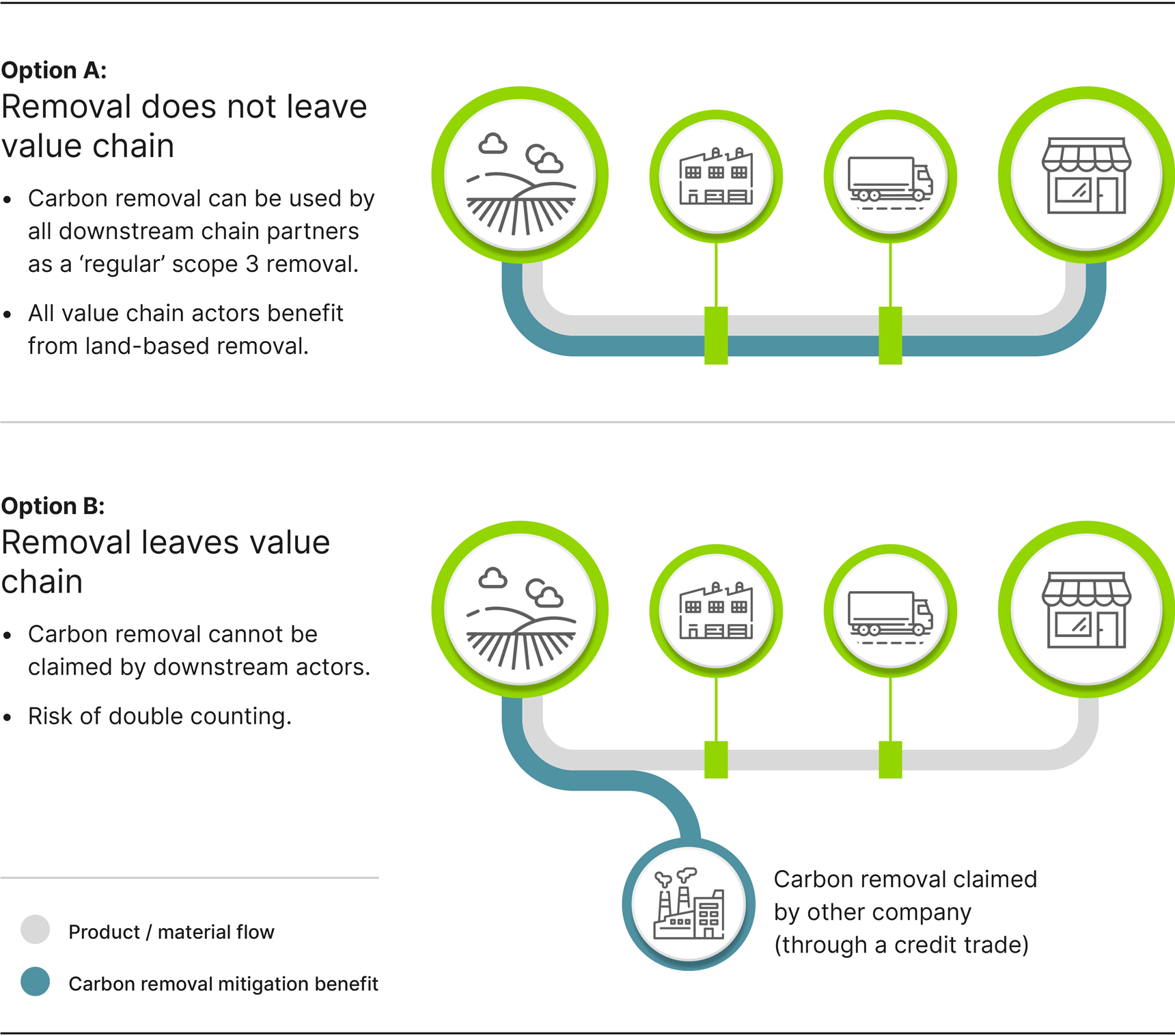
Rather, companies have come to recognize the mitigation potential of suppliers that generate credible carbon removals, lowering the Scope 3 footprint of value chain partners (Exhibit 1, Option A). Alternatively, farmers can decide to sell the claim on their removals as credits to companies that are part of a different value chain via the Voluntary Carbon Market (VCM). When carbon removals leave the value chain (Figure 1, Option B), it is no longer possible to take into account the additional benefit, according to the draft Land Sector and Removals Guidance of the Greenhouse Gas Protocol.
See also  CU Boulder enters into a virtual net metering agreement for a new 5 MW solar project

Carbon renewals EME NbS 2024_1

Future policies will regulate carbon removal using standardized methodologies

Carbon removal has been a largely unregulated topic for years, relying instead on VCM certification standards. The European Commission’s (EC) upcoming Carbon Removal Certification Framework (CRCF) will take the first steps to develop regulations on how to quantify and verify the climate benefits of carbon removal, encouraging further market development. Additionally, the California Air Resources Board (CARB) has proposed the Carbon Dioxide Removal Act, as part of which CARB aims to establish rules and processes for certifying carbon removal practices.

The policies proposed by the EC and CARB are likely just the first step by international policymakers in regulating how consumers and businesses account for and report on carbon removal. In the absence of clear regulatory standards, companies are reluctant to invest in and account for carbon removal for fear of greenwashing lawsuits.

Corporate Due Diligence to understand carbon removal risks and opportunities

Companies must devise a carbon removal strategy before committing to long-term carbon removal programs, or face suppliers seeking to sell carbon removal as credit to parties outside their value chain. By establishing appropriate minimum requirements that ensure credible use of takedowns, the risks of greenwashing allegations and lawsuits can be minimized.

Why Guide House?

Guidehouse helps organizations design and implement their sustainability strategies, including with regard to nature, from calculating impact, setting goals and assessing risks to designing implementable solutions and innovative financial models.

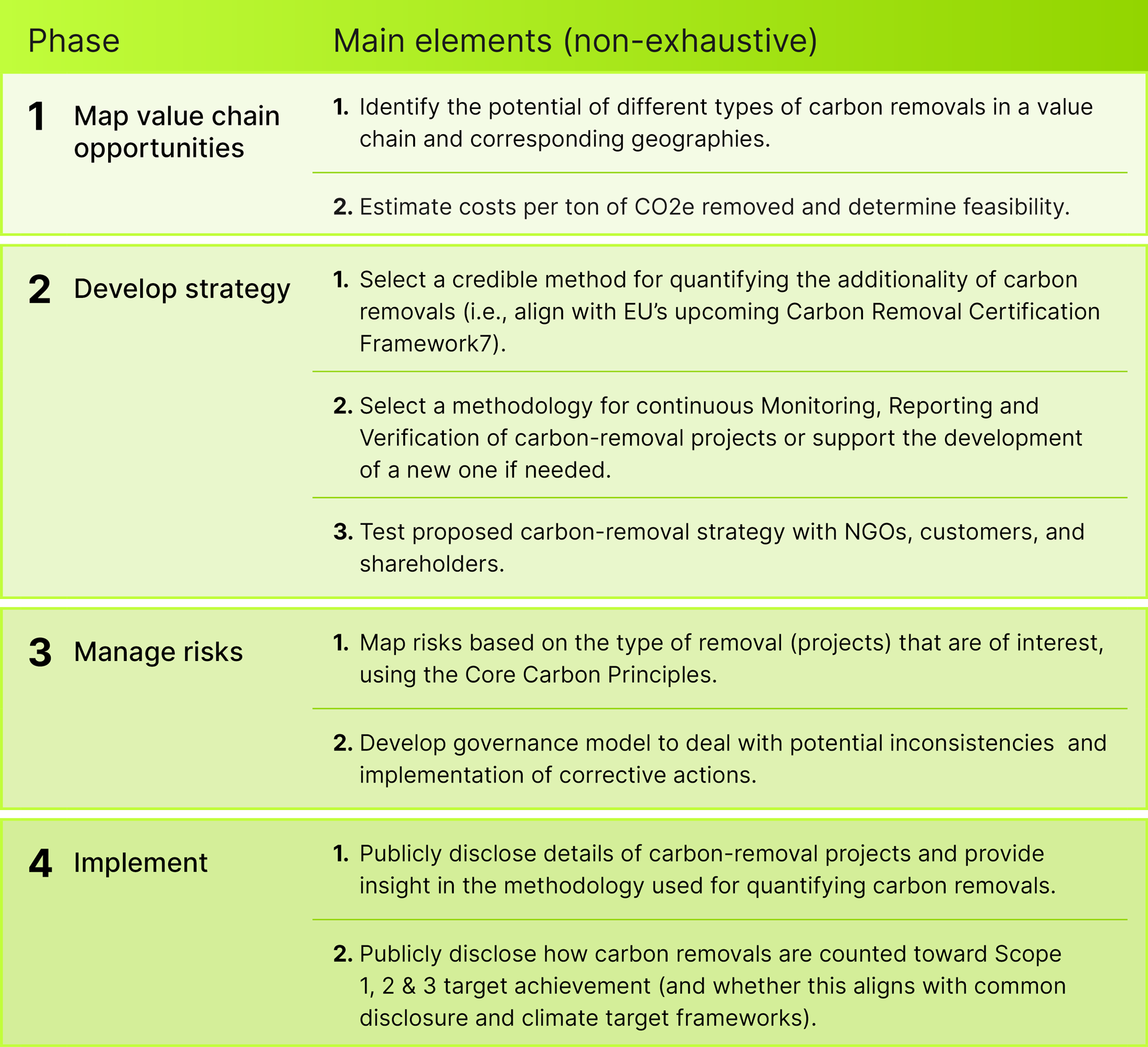
Table 2 below shows how Guidehouse can support its clients in developing a credible carbon removal strategy in line with best climate frameworks and initiatives.
See also  Photovoltaic energy and control strategies have little influence on the optimal size of heat pumps in renovation buildings – SPE

Carbon renewals EME NbS 2024_2

© 2024 Guidehouse Inc. All rights reserved. This content is for general information purposes only and should not be used as a substitute for consultation with professional advisors. This publication may be used only as expressly permitted under license from Guidehouse and may not otherwise be reproduced, modified, distributed or used without the express written permission of Guidehouse.

Source link

carbon corporate net Removal Strategies
Share. Facebook Twitter Pinterest LinkedIn Tumblr Email
solarenergy
  • Website

Related Posts

New solar energy tracking strategies aim to maximize crop yield in agricultural voltaics – SPE

February 26, 2026

Navigating Nature-Based Solutions – The 2026 Forecast

February 25, 2026

Corporate PPA transactions down 10% by 2025 as demand for AI fills the gaps – SPE

February 20, 2026
Leave A Reply Cancel Reply

Don't Miss
News

Midwest Solar Expo renamed Iesna Midwest

By solarenergyJune 26, 20250

The 11th Midwest Solar Expo has recently been packed in Chicago, which brings together more…

Testing shows BIPV better than expected with the help of glass with patterns – PV Magazine International

January 29, 2025

Decision model for wind and solar energy projects in Saudi Arabia – SPE

January 23, 2025

Masdar, EWEC break ground for 1 GW baseload solar-plus-storage project – SPE

October 24, 2025
Stay In Touch
  • Facebook
  • Twitter
  • Pinterest
  • Instagram
  • YouTube
  • Vimeo
Our Picks

Mitsubishi Electric Trane announces new heat pump line for hydronic heating – SPE

March 6, 2026

Origis is developing a 413 MW solar portfolio in West Texas

March 6, 2026

New Jersey expands state community solar program by 3 GW

March 6, 2026

How to address imbalance datasets in solar panel dust detection

March 5, 2026
Our Picks

Mitsubishi Electric Trane announces new heat pump line for hydronic heating – SPE

March 6, 2026

Origis is developing a 413 MW solar portfolio in West Texas

March 6, 2026

New Jersey expands state community solar program by 3 GW

March 6, 2026
About
About

Stay updated with the latest in solar energy. Discover innovations, trends, policies, and market insights driving the future of sustainable power worldwide.

Subscribe to Updates

Get the latest creative news and updates about Solar industry directly in your inbox!

Facebook X (Twitter) Instagram Pinterest
  • Contact
  • Privacy Policy
  • Terms & Conditions
© 2026 Tsolarenergynews.co - All rights reserved.

Type above and press Enter to search. Press Esc to cancel.