
Close Menu
  • News
  • Industry
  • Solar Panels
  • Commercial
  • Residential
  • Finance
  • Technology
  • Carbon Credit
  • More
    • Policy
    • Energy Storage
    • Utility
    • Cummunity
What's Hot

Mitsubishi Electric Trane announces new heat pump line for hydronic heating – SPE

March 6, 2026

Origis is developing a 413 MW solar portfolio in West Texas

March 6, 2026

New Jersey expands state community solar program by 3 GW

March 6, 2026
Facebook X (Twitter) Instagram
Solar Energy News
Friday, March 6
  • News
  • Industry
  • Solar Panels
  • Commercial
  • Residential
  • Finance
  • Technology
  • Carbon Credit
  • More
    • Policy
    • Energy Storage
    • Utility
    • Cummunity
Solar Energy News
Home - News - A new protocol to improve the sustainability of flexible solar technology
News

A new protocol to improve the sustainability of flexible solar technology

solarenergyBy solarenergyDecember 5, 2024No Comments2 Mins Read
Facebook Twitter Pinterest LinkedIn Tumblr Email
Share
Facebook Twitter LinkedIn Pinterest Email


A new protocol to improve the sustainability of flexible solar technology


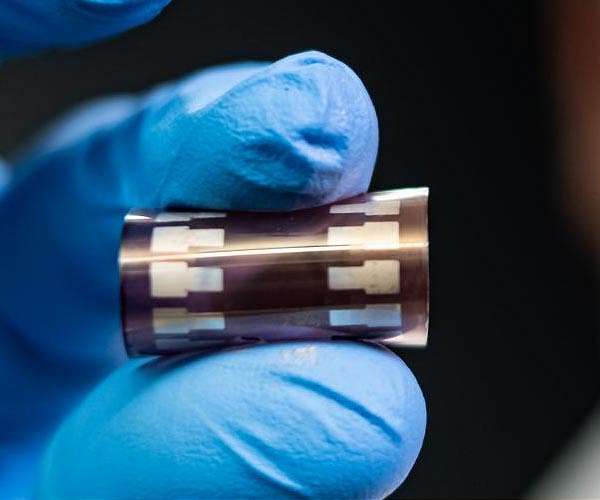
Flexible photovoltaic devices, or FlexPVs, are emerging as key solutions in applications ranging from wearable technology and smart textiles to drones and space systems. Despite significant improvements in efficiency, FlexPVs still face challenges related to the lack of standardized testing protocols for durability and flexibility, hindering their practical application.

In response, the Universitat Rovira i Virgili (URV) led an international team of 23 experts from 12 countries to develop a uniform testing protocol for flexible solar cells and panels. The initiative, published in Nature Energy, focuses on mechanical performance and provides consistent benchmarks for evaluation. “The protocol measures efficiency over 1,000 bending cycles at a strain of 1%, providing a benchmark for mechanical resistance,” explains Lluis F. Marsal, a URV researcher in electronic, electrical and automatic engineering.

This comprehensive method also assesses environmental factors such as humidity and temperature and includes encapsulation techniques to reduce degradation. The protocol ensures that these devices can perform effectively and safely under a wide range of conditions, allowing them to be used in applications that require both flexibility and durability.

The research effort was co-led by Kenjiro Fukuda of the RIKEN Center for Emerging Matter Science in Saitama, Japan, and Osbel Almora, a researcher at URV and administrator of Emerging-PV.org. Marsal, a pioneer in organic solar cell research and leader of the URV Nanoelectronics and Photonic Systems group, also played a crucial role in the project.

Expand the FlexPV potential

Flexible photovoltaic devices differ from rigid panels by using materials that allow adaptation to curved surfaces without significant loss of efficiency. Their lightweight design makes them ideal for drones, smart clothing, wearable medical devices and Internet of Things applications. The mechanical properties of FlexPVs enable resilience under extreme conditions and open doors for use in aerospace and automotive technologies.

See also  Environmentally friendly battery developed for low-income countries

This new testing protocol represents the first step toward bridging the gap between solar photovoltaics and flexible electronics. “The advancement of these devices will require new protocols for testing stabilization, torsion and adhesion properties, which will enable the next generation of flexible solar cells to meet future demands,” Marsal concluded.

Research report:A bend test protocol for characterizing the mechanical performance of flexible solar photovoltaics


Source link

flexible improve protocol solar sustainability technology
Share. Facebook Twitter Pinterest LinkedIn Tumblr Email
solarenergy
  • Website

Related Posts

Origis is developing a 413 MW solar portfolio in West Texas

March 6, 2026

New Jersey expands state community solar program by 3 GW

March 6, 2026

How to address imbalance datasets in solar panel dust detection

March 5, 2026
Leave A Reply Cancel Reply

Don't Miss
News

Atlanta K-12 School Installs Solar Lifters at Softball Field

By solarenergyAugust 21, 20250

Woodward AcademyA private pre-k-12 school in Atlanta, Georgia, is probably the first K-12 school in…

Japan launches R&D call for Tandem Perovskite Solar Cell Mass Production – PV Magazine International

October 6, 2025

Encore Renewable Energy and GreenSpark Solar are working together on an agrivoltaic project

August 29, 2024

Renewable energy sources supplied 40% of electricity in January

February 17, 2026
Stay In Touch
  • Facebook
  • Twitter
  • Pinterest
  • Instagram
  • YouTube
  • Vimeo
Our Picks

Mitsubishi Electric Trane announces new heat pump line for hydronic heating – SPE

March 6, 2026

Origis is developing a 413 MW solar portfolio in West Texas

March 6, 2026

New Jersey expands state community solar program by 3 GW

March 6, 2026

How to address imbalance datasets in solar panel dust detection

March 5, 2026
Our Picks

Mitsubishi Electric Trane announces new heat pump line for hydronic heating – SPE

March 6, 2026

Origis is developing a 413 MW solar portfolio in West Texas

March 6, 2026

New Jersey expands state community solar program by 3 GW

March 6, 2026
About
About

Stay updated with the latest in solar energy. Discover innovations, trends, policies, and market insights driving the future of sustainable power worldwide.

Subscribe to Updates

Get the latest creative news and updates about Solar industry directly in your inbox!

Facebook X (Twitter) Instagram Pinterest
  • Contact
  • Privacy Policy
  • Terms & Conditions
© 2026 Tsolarenergynews.co - All rights reserved.

Type above and press Enter to search. Press Esc to cancel.