

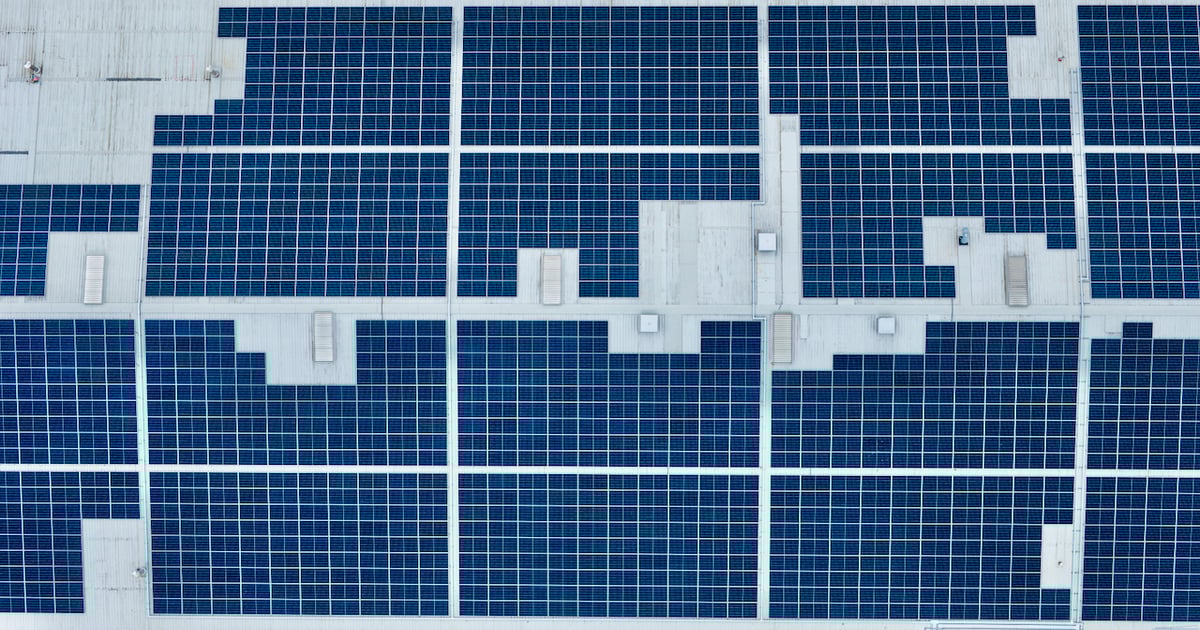
Swedish solar and independent power producer (IPP) Alight has secured £34 million in funding from Scandinavian financier SEB Group to develop behind-the-meter (BtM) commercial and industrial (C&I) solar PV projects in the UK.
The portfolio will consist of more than 50 MW of capacity, and Alight expects to commission the projects by the end of 2027. The company said it had entered into power purchase agreements (PPAs) with “blue chip commercial and industrial companies”, but did not name any of the companies involved in the offtake agreements.
This is not the first agreement between Alight and SEB. In March 2025, the latter invested approximately £102.3 million (US$139 million) to facilitate the acquisition of a 215 MW agriPV project in Denmark, which was put into use in December.
According to Solar Media Market Research, residential rooftop solar would account for 18% of Britain’s operational capacity by 2025, up 25% year-on-year. while commercial rooftop solar accounted for only 12% of operational capacity. However, Alight CEO Warran Campbell said Alight is currently in a “rapid growth phase” in the UK C&I sector, and expressed optimism about the future of the sector.
“We are in a rapid growth phase in this market in the UK and are seeing huge customer interest given the financial and environmental benefits,” said Campbell. “This facility will enable us to accelerate our rollout of BtM projects to some of Europe’s leading companies and together accelerate the green transition.”
Alight noted that the deployment of BtM projects in particular could better supply energy suppliers without having to rely on grid infrastructure, the shortage of which has been a topic of conversation in the European renewable energy industry both in Britain and across Europe.
Speakers at this week’s Solar Finance & Investment Europe summit, hosted in London by Solar energy portal publisher Solar Media, said there is currently a “major focus on optimisation” in the UK electricity gridand the use of technologies and systems such as BtM projects and battery energy storage systems (BESS) have often been touted as an elegant solution to the UK’s grid capacity problems.
