

The Australian government has launched the second round of its Hydrogen Headstart program to provide revenue support for large-scale renewable hydrogen projects, while the UK government is seeking industry input on rules for hydrogen-to-electricity participation in its capacity market.
The Australian government launched the second round of its Hydrogen Headstart program, which will provide revenue support for large-scale renewable hydrogen projects through ‘competitive’ hydrogen production contracts. “Hydrogen Headstart Round 2 is currently open for applications. The Australian Renewable Energy Agency (Arena) is administering the program, with up to AUD 2 billion ($1.31 billion) available,” said the Australian government on its website. The program objectives to produce renewable hydrogen at scale, support domestic decarbonization, provide pricing and transparency, while reducing barriers to future implementations and facilitating knowledge sharing.
The British government is seeking opinions on enabling Hydrogen to Power’s participation in the capacity market and technical changes in determining interconnector rating factors. The call for evidence, which closes on November 27, is open to everyone but will be of particular interest to police energy industry, consumer groups, academia and think tanks. The government said it aims to “gather evidence to inform how Hydrogen to Power (H2P) installations should be categorized within the CM to enable the participation of H2P as a new technology. This involves collecting evidence regarding the operation and reliability of H2P installations”.
Ingeteam launched a high-capacity modular rectifier solution explicitly designed for renewable hydrogen production plants during World Hydrogen Week 2025 in Copenhagen. “Hydrogen stakeholders are under pressure to deliver projects that are both cost-competitive and technically robust. The Ingecon® H2 Megalyzer directly addresses these pain points and combines efficiency, reliability and compliance in one solution.” said Iñigo Uriarte, commercial director of H2 Systems at Ingeteam.
European energy will begin integrating next-generation bio-methanol into its green fuel portfolio. The bio-methanol does be produced through electrified steam methane reforming (e-SMR), using renewable electricity is used to process biogas or biomethane into synthesis gas, that is then converted in green methanol. “The e-SMR technology is not a replacement, but a complementary addition to European Energy’s range of green fuels. By promoting green hydrogen, e-methanol and bio-methanol in parallel, European Energy ensures more flexibility across markets,” said the Danish company.
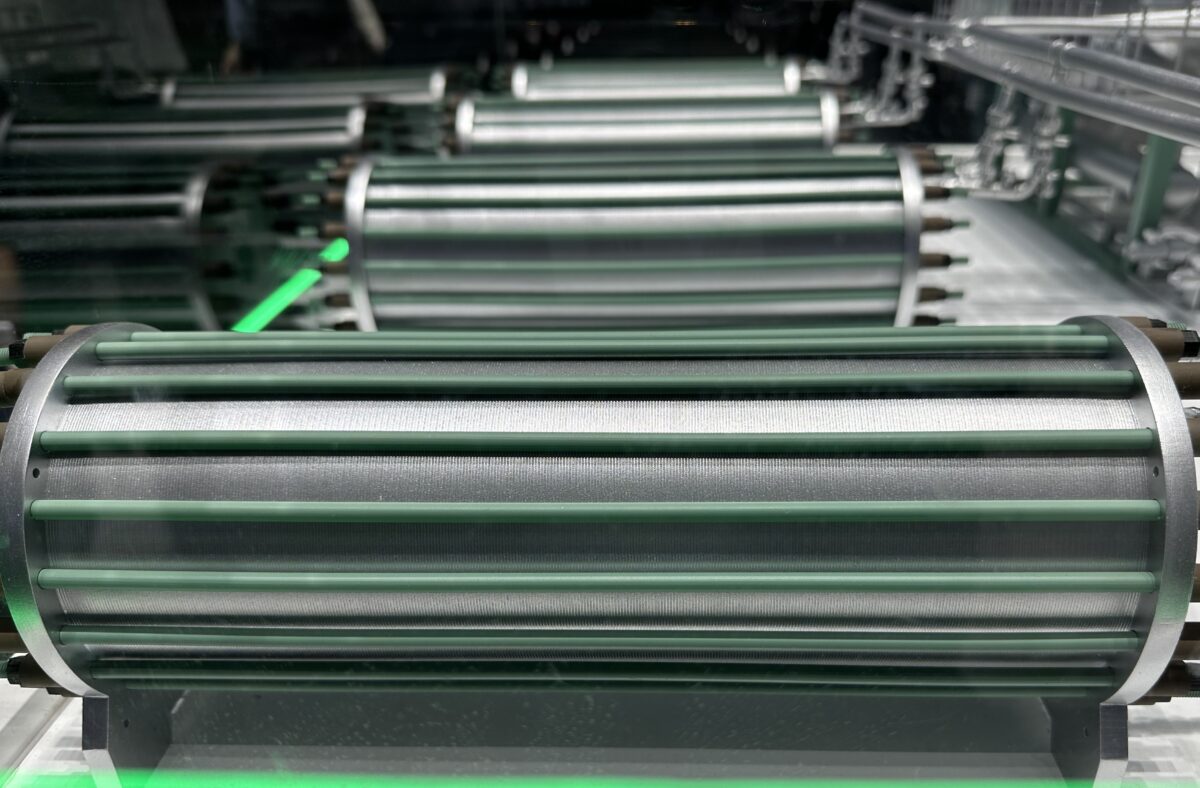
Agfa has inaugurated are production facility for alkaline electrolyzer (AEL) membranes. With Zirfon’s new production site, the company is ready to meet market demand and confirms its intention to play a decisive role in the global scale-up of green hydrogen. “The new facility is designed with modular scalability to meet rising global demand as green hydrogen evolves from niche projects to full commercialization. The expansion will benefit vital markets such as steel and chemical manufacturing, heavy transportation and shipping, and large-scale renewable energy storage.” said the Belgian company, adding that the project is supported with a grant of 11 million euros from the EU Innovation Fund.
This content is copyrighted and may not be reused. If you would like to collaborate with us and reuse some of our content, please contact: editors@pv-magazine.com.
