

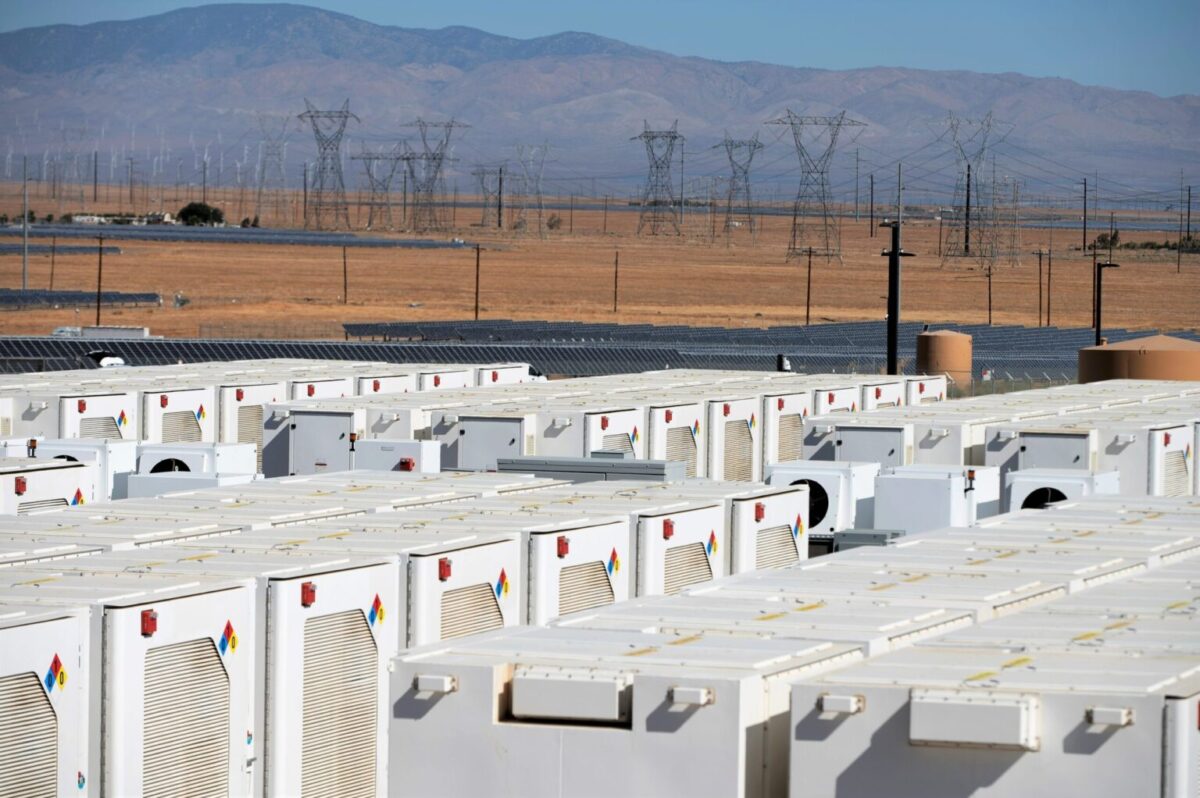
The Brazilian Association of Energy Storage Solutions brought together executives to debate applications that could solve the systemic challenges facing Brazil’s electricity sector. The issue, they argue, goes beyond a debate about “BESS versus thermal energy or renewable energy versus energy security”, but is about finding the best combination of safety, price, ‘renewability’ and flexibility.
By ESS news
Battery storage is a consolidated technology worldwide, with volumes already exceeding the installed capacity of pumped hydroelectric power stations. While the world is expected to install around 300 GW of storage by 2026, Brazil is expected to only exceed the 1 GW mark.
The role of the technology in modernizing electrical systems was discussed during a recent webinar organized by the Brazilian Association of Energy Storage Solutions (Absae). The discussion comes as anticipation grows for a dedicated storage auction in Brazil, alongside ongoing debates over the planned contracting of 16.5 GW of thermal power plants to provide system capacity.
Fábio Lima, Executive Director of Absae, emphasized the need for a nuanced approach to network planning.
“The debate is not about BESS versus thermal power stations, nor about sustainable energy versus energy security. The question is what is the best combination of safety, price, ‘renewability’ and flexibility. And BESS is certainly part of the answer to that question.”
Lima noted that BESS enables the shift of renewable generation to times of higher demand, deferring investments in network reinforcements and facilitating the integration of new loads.
Meanwhile, Absae President Markus Vlasits stated that while BESS represents the cheapest global solution to various network challenges, the Brazilian market is making slow progress. Despite the growth of behind-the-meter systems, Vlasits believes that the volume of 1 GW is far below the country’s potential.
“We need price signaling, specific contracts and the publication of the regulatory framework. In the meantime, the behind-the-meter market continues to develop and help alleviate the system burden.”
The Chilean example: support services and containment
Atlas Renewable Energy provided a regional blueprint for storage integration and presented its experience operating a 200 MW/800 MWh storage system in combination with the 244 MWp Sol del Desierto solar power plant in Chile.
According to Atlas country manager Fabio Bortoluzo, the Chilean grid operator recorded an availability of over 98% when it activated the asset for ancillary services such as primary and secondary frequency control. BESS has significantly reduced energy price differentials at the Sol del Desierto project and reduced solar curtailment. Chile currently has 8 GW BESS in operation, including another 800 MW planned by Atlas.
Grid formation and network reinforcement
The National Electric System Operator (ONS) in Brazil has already established technical requirements for systems that provide synthetic inertia to simulate the behavior of synchronous machines. Huawei CTO Roberto Valer noted that systems with grid-forming technology can operate either connected to the power grid or in isolation, providing critical functions such as black start and inertial support.
Citing a case in the United Kingdom where wind farms went offline after a storm, Valer noted how crucial BESS intervention was for frequency regulation. “If there had been grid formation, the recovery would have been even faster,” he said.
In Brazil, storage is already proving its value as an instrument for grid reinforcement. The expansion and research manager of ISA Energia Brasil, Renato Guimarães, highlighted a BESS installation at the Registro substation, considered the first large-scale system in the country. The project replaced a traditional diesel generation solution and successfully avoided manual load shedding on the São Paulo coast during peak summer demand.
Looking ahead to future utility-scale deployments, Guimarães sees this as a blueprint for the country. “Capacity reserve BESS will carry out systemic peak shaving, instead of locally, as happened in Registro. This shows in practice how storage solves energy problems,” he said.
Federal energy planners are taking note. The Energy Research Office (EPE) has identified storage as the most viable solution for infrastructure expansion in certain isolated regions of the country, proposing to contract a 100 MW/200 MWh network-forming system in an upcoming auction in 2027.
This content is copyrighted and may not be reused. If you would like to collaborate with us and reuse some of our content, please contact: editors@pv-magazine.com.
