
Close Menu
  • News
  • Industry
  • Solar Panels
  • Commercial
  • Residential
  • Finance
  • Technology
  • Carbon Credit
  • More
    • Policy
    • Energy Storage
    • Utility
    • Cummunity
What's Hot

Why the UK solar industry needs to own its safety story

April 23, 2026

Fraunhofer ISE develops colored film technology for patterned solar panels

April 23, 2026

Thermoacoustic heat pumps are on the verge of commercial breakthrough – SPE

April 23, 2026
Facebook X (Twitter) Instagram
Solar Energy News
Thursday, April 23
  • News
  • Industry
  • Solar Panels
  • Commercial
  • Residential
  • Finance
  • Technology
  • Carbon Credit
  • More
    • Policy
    • Energy Storage
    • Utility
    • Cummunity
Solar Energy News
Home - News - Buried interface engineering drives advances in the efficiency of tin-lead-perovskite solar cells
News

Buried interface engineering drives advances in the efficiency of tin-lead-perovskite solar cells

solarenergyBy solarenergyDecember 20, 2024No Comments2 Mins Read
Facebook Twitter Pinterest LinkedIn Tumblr Email
Share
Facebook Twitter LinkedIn Pinterest Email

Buried interface engineering drives advances in the efficiency of tin-lead-perovskite solar cells


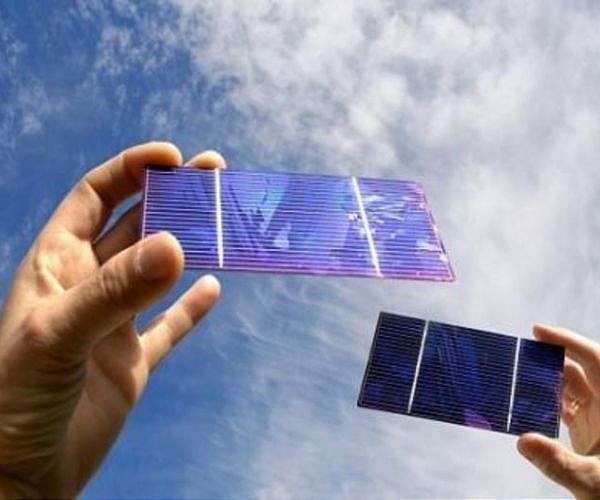
A team led by Prof. Meng Li from Henan University’s School of Nanoscience and Materials Engineering has unveiled an innovative approach to overcoming stability and efficiency challenges in tin-lead (Sn-Pb) perovskite solar cells. The researchers’ work focuses on optimizing the selective interface for buried holes using a specially designed self-assembled material, which has major implications for single-junction and tandem solar cell technologies.

Tin-lead perovskites are valued for their narrow bandgap properties, making them a key material for the production of high-efficiency solar cells. However, energy level mismatches and degradation at the buried interface have limited both their performance and long-term stability. To address these issues, Prof. Meng’s team designed a boric acid-anchored hole-selective contact material, 4-(9H-carbazol-9-yl)phenylboronic acid (4PBA).

Compared to conventional materials, 4PBA showed superior stability and compatibility at the substrate surface. The high adsorption energy of -5.24 eV and significant molecular dipole moment (4.524 D) improved the energy level alignment between the substrate and the perovskite layer, allowing efficient charge extraction. Furthermore, the interface designed using 4PBA improved perovskite crystallization and substrate contact, thereby reducing defects and non-radiative recombination.

These improvements allowed Sn-Pb perovskite solar cells with 4PBA to achieve a power conversion efficiency (PCE) of 23.45%. The material’s reduced corrosivity also mitigated the degradation effects typically caused by PEDOT:PSS, a commonly used hole transport material, improving chemical stability and storage durability. The cells retained 93.5% of their initial efficiency after 2000 hours of shelf storage.

“This approach provides a practical path to improve both the efficiency and stability of Sn-Pb perovskite solar cells, by addressing mismatches in energy levels and interfacial stability issues,” the research team said.

See also  Wisconsin solar group purchasing program ready for 2024

The findings provide a basis for advancing efficient and stable Sn-Pb perovskite solar cells and highlight the importance of interface engineering in next-generation photovoltaic technologies.

Research report:Buried hole-selective interface engineering for high-efficiency tin-lead-perovskite solar cells with improved chemical boundary stability


Source link

advances Buried cells drives efficiency Engineering interface solar tinleadperovskite
Share. Facebook Twitter Pinterest LinkedIn Tumblr Email
solarenergy
  • Website

Related Posts

Why the UK solar industry needs to own its safety story

April 23, 2026

Fraunhofer ISE develops colored film technology for patterned solar panels

April 23, 2026

The federal court has halted Trump administration orders that hinder solar and wind energy development

April 23, 2026
Leave A Reply Cancel Reply

Don't Miss
Finance

Glint Solar adds PV degradation maps to utility-scale developer software – SPE

By solarenergyApril 29, 20240

The Norwegian PV planning software company said it has added the new PV degradation maps…

Sodium-ion battery research claims no breakthrough due to thermal issues – SPE

April 10, 2026

The next evolution in the relegation of solar energy, not available – PV Magazine International

May 15, 2025

SolarEdge outlines path to 800 V (DC) data center infrastructure – SPE

April 2, 2026
Stay In Touch
  • Facebook
  • Twitter
  • Pinterest
  • Instagram
  • YouTube
  • Vimeo
Our Picks

Why the UK solar industry needs to own its safety story

April 23, 2026

Fraunhofer ISE develops colored film technology for patterned solar panels

April 23, 2026

Thermoacoustic heat pumps are on the verge of commercial breakthrough – SPE

April 23, 2026

The federal court has halted Trump administration orders that hinder solar and wind energy development

April 23, 2026
Our Picks

Why the UK solar industry needs to own its safety story

April 23, 2026

Fraunhofer ISE develops colored film technology for patterned solar panels

April 23, 2026

Thermoacoustic heat pumps are on the verge of commercial breakthrough – SPE

April 23, 2026
About
About

Stay updated with the latest in solar energy. Discover innovations, trends, policies, and market insights driving the future of sustainable power worldwide.

Subscribe to Updates

Get the latest creative news and updates about Solar industry directly in your inbox!

Facebook X (Twitter) Instagram Pinterest
  • Contact
  • Privacy Policy
  • Terms & Conditions
© 2026 Tsolarenergynews.co - All rights reserved.

Type above and press Enter to search. Press Esc to cancel.