

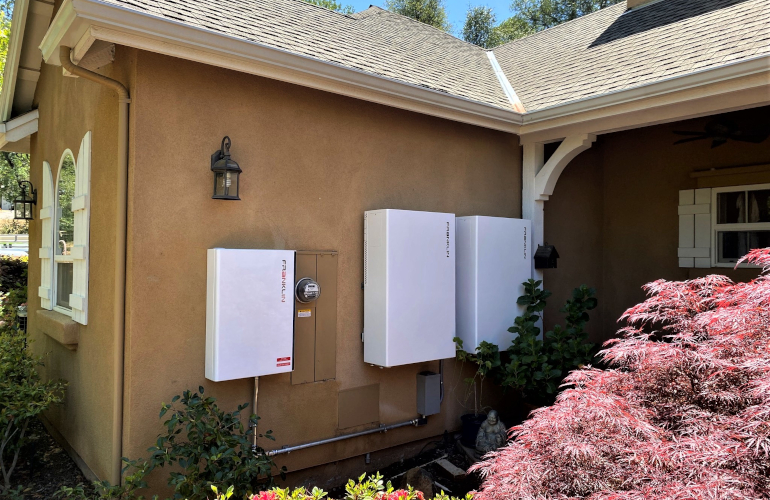
California is regularly seen as a leader in clean energy, and no area of the country has more solar or energy storage deployments. Remarkably though, the attachment of batteries to residential solar installations has been low — until recently, only 10% of home solar systems in California also had batteries. New net-metering rules in the state are dramatically changing the solar + storage landscape though, and solar installers are keeping busy with the new normal.
In 2022, the California Public Utilities Commission enacted an overhaul of the state’s net-metering program. Since April 15, 2023, any new solar installation feeding energy onto the grid is now compensated for that power through a net-billing tariff. This new structure, known as NEM 3.0, significantly reduces the compensation for behind-the-meter solar systems — by as much as 75%, when compared to systems operating under the NEM 1.0 and NEM 2.0 structures.
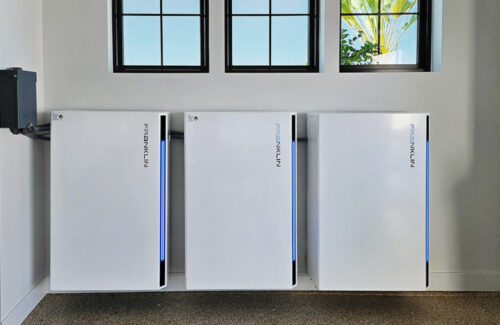
FranklinWH
Under NEM 3.0, homeowners are encouraged to consume their own solar-generated power instead of pushing it back to the grid, which ultimately requires an energy storage system. While residential batteries had previously been marketed primarily for emergency backup during utility outages, now batteries are being used to help homeowners consume their own power during high utility rate periods. A brief from Berkeley Lab found that more batteries are being installed in California during this new era — there’s now a 60% battery attachment rate to residential solar projects, compared to only 10% before 2023.
When Hawaii switched to a similar net-billing tariff almost 10 years ago, solar customers were also encouraged to add storage in order for projects to make financial sense. The island state now has a 90% battery attachment rate on new solar projects, a goal battery companies would love to see repeated in California.
Many California solar installers are already self-reporting 90% attachment rates on residential solar projects. Jeremy Pearl, residential sales manager of Sandbar Solar & Electric in Santa Cruz, said the company has been installing solar in central California for 20 years and had almost no battery installs until the late 2010s.
“Around 2020 to 2022, we were seeing about a 30% attachment rate for new projects. Maybe 150 residential projects a year, mostly new, with a 30% battery attachment rate,” he said. “Once we hit NEM 3.0, I thought it was going to be an 80% attachment rate, but it turns out to be more like 90%. The phone did definitely start ringing.”
Similarly, Sun Light & Power of Berkeley has seen a jump in battery installs.
“Since the introduction of NEM 3.0, we’ve observed a significant uptick in interest for battery add-ons among residential solar customers, with a 95% attachment rate,” said Chris Mink, sales and marketing manager. “The changes under NEM 3.0 prompted homeowners to seek greater energy independence. Many homeowners feel more in control of their energy usage and costs [with a battery].”
Choosing the best residential battery
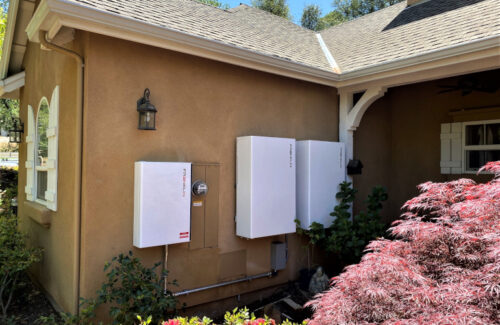
FranklinWH
With so many customers now needing batteries throughout California, installers are narrowing their product choices to those that are reliable and easy to install. Sun Light & Power installs the Tesla Powerwall and FranklinWH system for these reasons.
“By selecting Tesla Powerwall and FranklinWH batteries, we ensure that our customers receive high-quality, reliable battery storage solutions optimized for their specific energy needs,” Mink said. “Tesla’s DC- or AC-coupled design allows for flexible installation in both new and existing solar setups. FranklinWH’s AC-coupled systems are particularly advantageous for retrofits due to their ease of installation and scalability.”
Vincent Ambrose, CCO of FranklinWH, said it’s “gratifying” to hear that many installers in California are turning to FranklinWH for the battery system’s reliability, which has recorded a post-installation servicing rate of only 0.2%. The company has seen an increase in sales throughout the state.
“Storage attachment rate has definitely skyrocketed in California in the NEM 3.0 era,” he said. “New solar customers must have batteries to realize savings. For existing NEM customers looking to add solar and keep their original NEM agreements, batteries are necessary to maximize value of that new non-exporting PV.”
Battery retrofits for existing net-metering customers
There are more than 1 million solarized homes in California that don’t yet have a battery, and they can keep their NEM 1.0 and NEM 2.0 compensation rates while enjoying the functionality of energy storage through battery retrofits. Solar contractors have a backlog of battery retrofit projects from the rush to get solar systems completed before the April 2023 NEM 2.0 cutoff. Many installers, Sandbar Solar included, told homeowners to get their solar installed quickly sans battery to secure better net-metering compensation.
“We were telling people, ‘Get your solar now and don’t worry about the complexity or cost of batteries. Call us next year and we’ll add on the batteries,’” Pearl said. “It’s allowable to retrofit a NEM 1.0 or NEM 2.0 system with batteries without losing your grandfathering.”
But a new state licensing rule could prevent solar installation companies from accessing that cultivated customer list.
The California Contractors State License Board recently approved a rule that prohibits C-46 licensed solar contractors from retrofitting batteries to existing solar systems or performing maintenance on previously installed batteries. The state instead requires a C-10 licensed electrician to complete the task. General solar contractors can still pair batteries with solar at the initial install, but putting in the battery after solar is commissioned would be prohibited. Consumer protection groups are appealing the rule, which could take effect on Oct. 1, 2024.
Some solar contractors, like Sandbar Solar, have the C-10 license and can continue business as normal, but many more only have their C-46 license and would be prevented from completing battery retrofits, even though the task is not difficult for solar installers to complete. Especially with the ease of AC-coupled setups, there is no difference in installing a battery at the same time as solar compared to after solar is commissioned, said FranklinWH’s Ambrose. The new electrician licensing rule may actually make things more complicated and expensive for the homeowner.
“Everyone’s waiting for battery prices to come down. What I like to point out to consumers — what’s happening with inflation in our country, the cost of labor and the way California rules are starting to change that require a higher-caliber electrician for battery jobs, I do not expect prices to come down much in the near-term,” said Pearl of Sandbar Solar. “When you do a Phase 1 solar and a Phase 2 [battery install], you’re spending maybe $5,000 in additional costs. That’s the interconnection, the permit, redrawing it and engineering and setting that final inspection, mobilizing the crew. I think that people should understand you’re going to save a significant amount of money if you do it all at once.”
While California solar installers are experts in solar design, the state doesn’t consider them capable enough to hook up a battery, even though they’re doing just that on nearly every residential solar project now under NEM 3.0 rules. The electrician licensing requirement may change, but one thing is sure — residential solar installers in California will be installing more batteries from now on.
“We are witnessing the rise of virtual power plants and demand response programs nationwide,” Ambrose said. “With more and more utilities changing or eliminating net metering, the conversation around storage is strengthening.”
