
Close Menu
  • News
  • Industry
  • Solar Panels
  • Commercial
  • Residential
  • Finance
  • Technology
  • Carbon Credit
  • More
    • Policy
    • Energy Storage
    • Utility
    • Cummunity
What's Hot

Why the UK solar industry needs to own its safety story

April 23, 2026

Fraunhofer ISE develops colored film technology for patterned solar panels

April 23, 2026

Thermoacoustic heat pumps are on the verge of commercial breakthrough – SPE

April 23, 2026
Facebook X (Twitter) Instagram
Solar Energy News
Thursday, April 23
  • News
  • Industry
  • Solar Panels
  • Commercial
  • Residential
  • Finance
  • Technology
  • Carbon Credit
  • More
    • Policy
    • Energy Storage
    • Utility
    • Cummunity
Solar Energy News
Home - Solar Industry - Cambridge scientists discover photovoltaic properties in organic radical semiconductors
Solar Industry

Cambridge scientists discover photovoltaic properties in organic radical semiconductors

solarenergyBy solarenergyOctober 30, 2025No Comments3 Mins Read
Facebook Twitter Pinterest LinkedIn Tumblr Email
Share
Facebook Twitter LinkedIn Pinterest Email

The researchers said their new discovery could open the way to the production of simpler solar panels made from a single material.

October 30, 2025
Emiliano Bellini

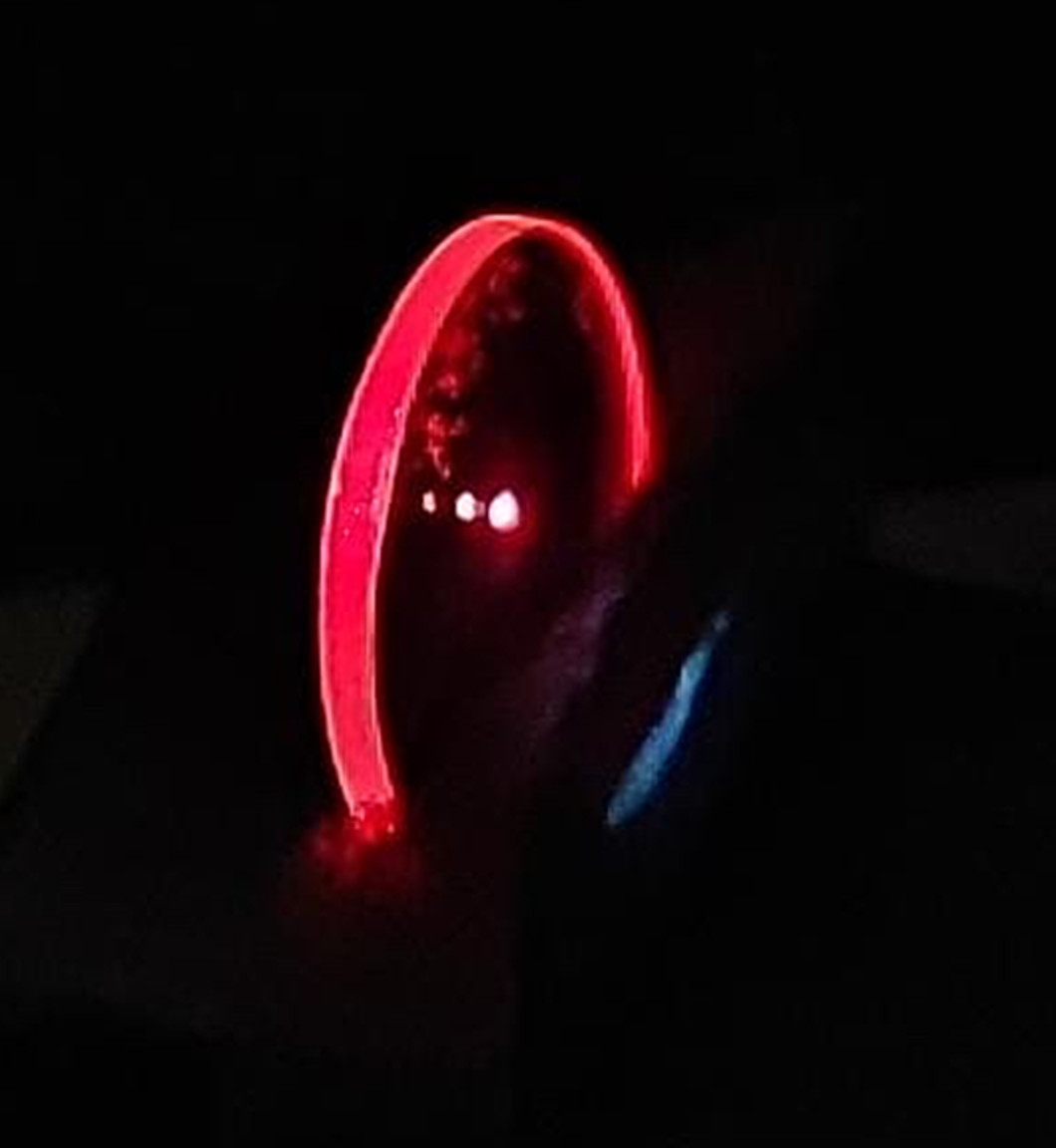
Researchers from the University of Cambridge in the United Kingdom claim to have discovered photovoltaic properties in a glowing organic semiconductor molecule known as poly(3-triphenylmethyl-thiophene (P3TTM).

Unlike conventional organic semiconductors, which have paired electrons, organic radical semiconductors contain at least one unpaired electron per molecule, giving them an ‘open shell’ character.

“In most organic materials, electrons are coupled and do not interact with their neighbors,” says lead author Biwen Li. “But in our system, when the molecules pack together, the interaction between the unpaired electrons at adjacent locations encourages them to alternately move up and down – a hallmark of Mott-Hubbard behavior.”

Mott-Hubbard behavior occurs in materials where electron-electron interactions are particularly strong. In P3TTM, each molecule can be viewed as a house containing a single electron. When light excites an electron, it can jump to a neighboring molecule. “When absorbing light, one of these electrons moves toward its nearest neighbor, creating positive and negative charges that can be harvested as photocurrent,” the team explained.

To test this, the researchers fabricated an experimental solar cell using a P3TTM film. The device contains a PEDOT:PSS layer on indium tin oxide (ITO), a buckminsterfullerene (C60) layer, a phenyl-C61-butyric acid methyl ester (PCBM) spacer and an aluminum (Al) contact.

Under standard lighting, the solar cell achieved near unity charge collection efficiency, the team reported.

“This means that almost every photon of light was converted into a useful electrical charge,” the researchers said. “In conventional molecular semiconductor solar cells, photon-to-charge conversion typically only occurs at interfaces between two materials – one acting as an electron donor and the other as an acceptor – limiting overall efficiency.”

See also  Chinese scientists achieve record-breaking 20% ​​efficiency in single-junction organic solar cells – SPE

“In these new materials, on the other hand, after photon absorption, the energy drives an electron from one molecule to an identical neighbor, creating electric charges,” she added. “The energy required for this – known as the ‘Hubbard U’ – represents the electrostatic cost of double electron occupancy on the negatively charged molecule.”

The researchers emphasized that this breakthrough could enable the manufacturing of solar cells from a single, cheap, lightweight material.

Their findings are available in the study “Intrinsic intermolecular photoinduced charge separation in organic radical semiconductors”, published in natural materials.

“This work provides an opportunity for the exploration of energy generation and solar-powered chemistry in both solution and solid states using only a single component,” they concluded.

Their findings are available in “Intrinsic intermolecular photoinduced charge separation in organic radical semiconductors”, published in natural materials.

This content is copyrighted and may not be reused. If you would like to collaborate with us and reuse some of our content, please contact: editors@pv-magazine.com.

Popular content

Source link

Cambridge discover organic photovoltaic properties radical scientists Semiconductors
Share. Facebook Twitter Pinterest LinkedIn Tumblr Email
solarenergy
  • Website

Related Posts

Fraunhofer ISE develops colored film technology for patterned solar panels

April 23, 2026

Inside PV Manufacturing: Belga Solar’s module factory in Belgium

April 23, 2026

No evidence that PFAS leaks from solar panels, research shows

April 22, 2026
Leave A Reply Cancel Reply

Don't Miss
Technology

KIT researchers develop 18.2% efficient perovskite solar cell via scalable inkjet process – SPE

By solarenergyMay 10, 20240

Researchers at the Karlsruhe Institute of Technology (KIT) have developed a scalable two-step evaporation and…

Construction begins on 124 MW Big Muddy Solar | Projects weekly

November 24, 2025

Mission Solar brings high solar panels to the market for domestic content

August 28, 2025

Shell to manage renewable energy supply for Google UK Data Center

September 16, 2025
Stay In Touch
  • Facebook
  • Twitter
  • Pinterest
  • Instagram
  • YouTube
  • Vimeo
Our Picks

Why the UK solar industry needs to own its safety story

April 23, 2026

Fraunhofer ISE develops colored film technology for patterned solar panels

April 23, 2026

Thermoacoustic heat pumps are on the verge of commercial breakthrough – SPE

April 23, 2026

The federal court has halted Trump administration orders that hinder solar and wind energy development

April 23, 2026
Our Picks

Why the UK solar industry needs to own its safety story

April 23, 2026

Fraunhofer ISE develops colored film technology for patterned solar panels

April 23, 2026

Thermoacoustic heat pumps are on the verge of commercial breakthrough – SPE

April 23, 2026
About
About

Stay updated with the latest in solar energy. Discover innovations, trends, policies, and market insights driving the future of sustainable power worldwide.

Subscribe to Updates

Get the latest creative news and updates about Solar industry directly in your inbox!

Facebook X (Twitter) Instagram Pinterest
  • Contact
  • Privacy Policy
  • Terms & Conditions
© 2026 Tsolarenergynews.co - All rights reserved.

Type above and press Enter to search. Press Esc to cancel.