
Close Menu
  • News
  • Industry
  • Solar Panels
  • Commercial
  • Residential
  • Finance
  • Technology
  • Carbon Credit
  • More
    • Policy
    • Energy Storage
    • Utility
    • Cummunity
What's Hot

Dutch solar owners asked to switch off during peak periods to ease the distribution crisis

June 7, 2026

The hydrogen flow: Toyota demonstrates its racing prototype on liquid hydrogen

June 7, 2026

Era of electrification exposing Australia’s weakest link

June 6, 2026
Facebook X (Twitter) Instagram
Solar Energy News
Sunday, June 7
  • News
  • Industry
  • Solar Panels
  • Commercial
  • Residential
  • Finance
  • Technology
  • Carbon Credit
  • More
    • Policy
    • Energy Storage
    • Utility
    • Cummunity
Solar Energy News
Home - Technology - Can sodium ion storage boost energy flexibility in France? – SPE
Technology

Can sodium ion storage boost energy flexibility in France? – SPE

solarenergyBy solarenergyApril 1, 2026No Comments3 Mins Read
Facebook Twitter Pinterest LinkedIn Tumblr Email
Share
Facebook Twitter LinkedIn Pinterest Email

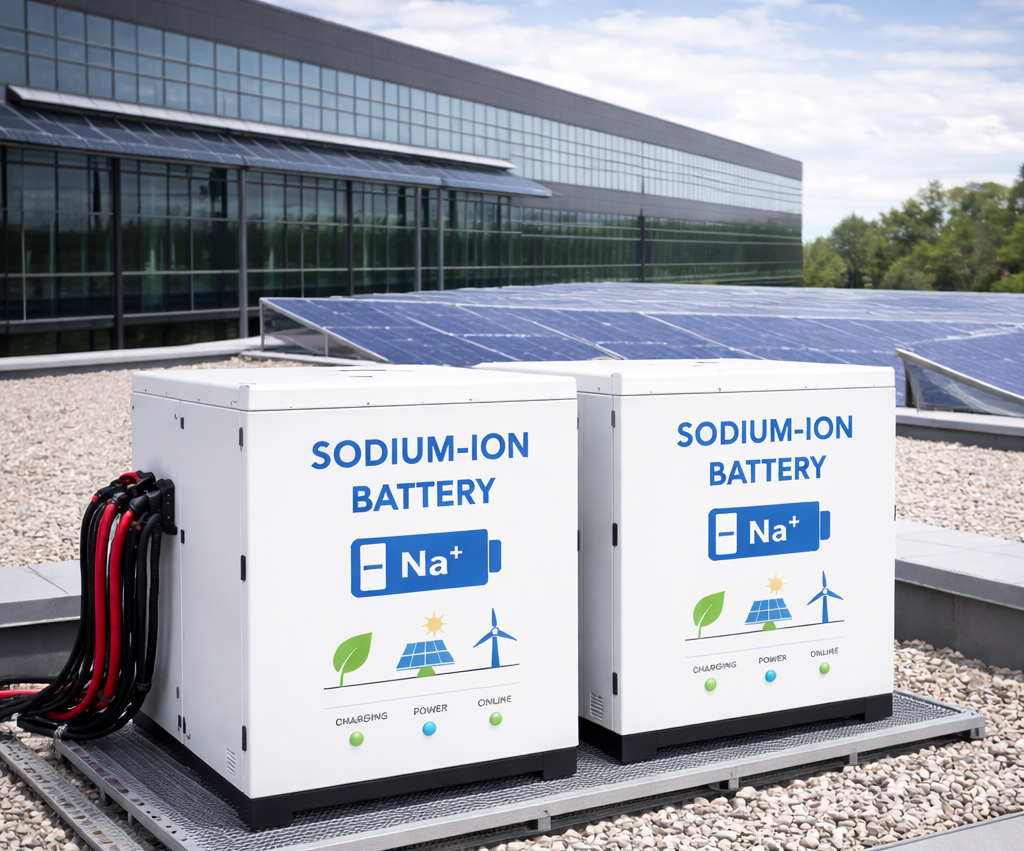
The French Association Environnement Juste has proposed a storage mandate for renewable energy projects above 10 kWp to integrate flexibility at source. The association argues that European sodium-ion batteries could be an economically and environmentally viable solution, capable of stabilizing networks without relying on imported metals.

April 1, 2026
Marie Beijer

By ESS news and pv magazine France

France’s new Multi-Year Energy Plan (PPE 3) aims for 48 GW of solar capacity by 2030, but does not set specific targets for energy storage. In a white paper recently submitted to the ministry, the Association Environnement Juste warned that this omission has technical consequences. For the French non-profit organization, the lack of flexibility turns deployment objectives into a ‘physical bottleneck’, threatening both the stability of the electricity grid and the coherence of the energy transition.

The association wants to see flexibility at the source and has proposed a minimum energy storage requirement for any new sustainable energy supply of more than 10 kW. “The principle is to make the producer responsible for the variability he supplies to the electricity grid,” says association chairman Tim Abady. This measure aims to internalize the costs of grid stabilization – currently borne by the public – and reduce the need for oversized electricity generation installations.

It is an approach that would also have an impact on land use in France, as the intermittent nature of the energy source requires ground-mounted solar farms to be built on a larger scale than necessary. This is because the French PPE 3 energy strategy reports peak power, the theoretical maximum power under ideal conditions, with an average load factor of approximately 13.5%. In practical terms, the announced 48 GWp will provide an average of only 6.5 GW of stable power. Without storage capacity to smooth out this intermittent generation, the grid must compensate for sudden fluctuations. It can do this by mobilizing manageable resources, often gas-fired power stations, but in the long term it also invests in upgrades to transmission infrastructure.

See also  US startup develops 26% efficient perovskite-silicon tandem solar module – SPE

Mandatory storage would also prevent the waste of 1.6 TWh of contained energy in 2025 and save €4.8 billion by 2035. By embedding flexibility in the European industrial fabric, with players like TIAMAT or CATL in Europe, France can successfully navigate the transition without sacrificing the stability of electricity supply or agriculture.

From a technological point of view, the association considers sodium ion technology as the most suitable solution for this large-scale deployment. Unlike lithium iron phosphate (LFP) batteries, this technology does not require lithium, cobalt or nickel – critical metals that are often imported. Recent industry data, particularly from manufacturer CATL, indicates cell costs of around €19 per kWh – three times less than LFP – and a lifespan of up to 15,000 cycles. European companies such as Tiamat Energy in France and Altris in Sweden are already shaping this sector.

This content is copyrighted and may not be reused. If you would like to collaborate with us and reuse some of our content, please contact: editors@pv-magazine.com.

Popular content

Source link

boost Energy flexibility France ion sodium SPE storage
Share. Facebook Twitter Pinterest LinkedIn Tumblr Email
solarenergy
  • Website

Related Posts

Britain’s next energy dependency is already taking shape

June 5, 2026

UK government considers community grant for battery storage

June 5, 2026

ComEd starts a new energy pilot with a solar rebate on the roof of a brewery

June 5, 2026
Leave A Reply Cancel Reply

Don't Miss
Solar Industry

Fraunhofer ISE warns of risks of higher than expected UV-induced degradation in TOPCon, PERC and HJT cells

By solarenergyDecember 3, 20240

The researchers from the German institute explained that UV-induced degradation can cause larger-than-expected efficiency and…

Researchers have found a more effective method to recycle thin-film cells

May 2, 2024

Three Gorges unveils 16.5 GW renewable energy plan in China – SPE

November 1, 2024

Sicily opens €246 million tender for solar and battery storage projects of all sizes under new EU-focused program – SPE

December 7, 2025
Stay In Touch
  • Facebook
  • Twitter
  • Pinterest
  • Instagram
  • YouTube
  • Vimeo
Our Picks

Dutch solar owners asked to switch off during peak periods to ease the distribution crisis

June 7, 2026

The hydrogen flow: Toyota demonstrates its racing prototype on liquid hydrogen

June 7, 2026

Era of electrification exposing Australia’s weakest link

June 6, 2026

‘Come out from behind your screen, our industry is ultimately about people’

June 6, 2026
Our Picks

Dutch solar owners asked to switch off during peak periods to ease the distribution crisis

June 7, 2026

The hydrogen flow: Toyota demonstrates its racing prototype on liquid hydrogen

June 7, 2026

Era of electrification exposing Australia’s weakest link

June 6, 2026
About
About

Stay updated with the latest in solar energy. Discover innovations, trends, policies, and market insights driving the future of sustainable power worldwide.

Subscribe to Updates

Get the latest creative news and updates about Solar industry directly in your inbox!

Facebook X (Twitter) Instagram Pinterest
  • Contact
  • Privacy Policy
  • Terms & Conditions
© 2026 Tsolarenergynews.co - All rights reserved.

Type above and press Enter to search. Press Esc to cancel.