In a new monthly column for pv magazineLappeenranta-Lahti University of Technology (LUT) describes how carbon dioxide removal can support the world’s energy transition from a portfolio perspective.
New research by LUT University, Finland, and OTH Regensburg, Germany, presents the techno-economic assessment of carbon dioxide removal (CDR) from a portfolio perspective. Two climate targets of 1.5 C and a more ambitious 1.0 C until 2100 have been studied. The publication is entitled “Assessment of carbon dioxide removal technologies and economics from a portfolio perspective‘ and published in the scientific outlet International Journal of Greenhouse Gas Management.
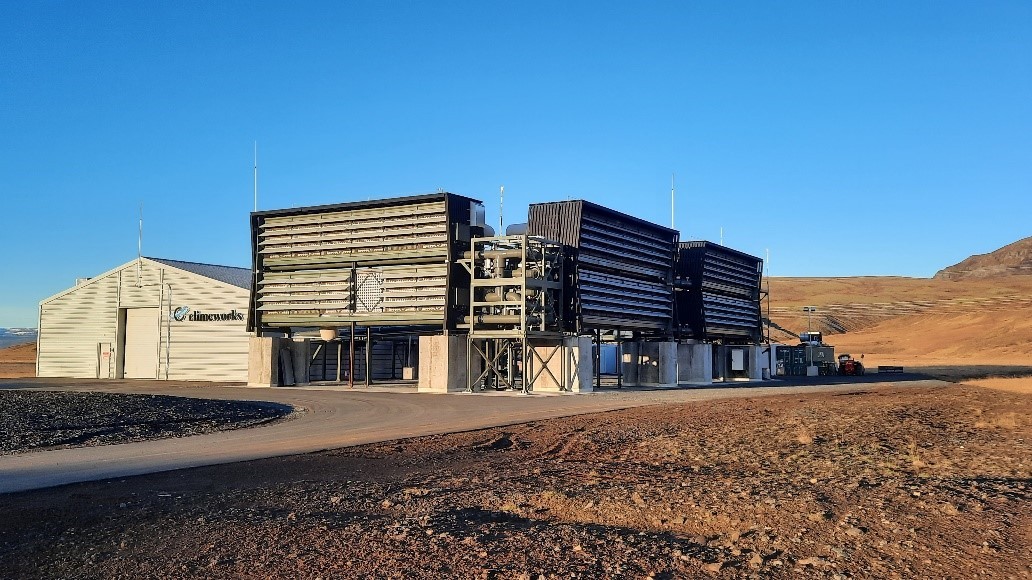
Typically, only a few CDR options are considered: direct air carbon capture and sequestration (DACCS), bioenergy with carbon capture and sequestration (BECCS), enhanced weathering, afforestation and reforestation, biochar and soil carbon sequestration. The problem is that possible technical solutions are more diverse and broader research into technologies is needed.
A wide variety of possible CDR pathways have been identified in this study. All processes are aimed at removing CO2 from the atmosphere and, if possible, fully electrified to run on 100% renewable electricity. This enables the best possible integration into an energy system dominated by solar energy and wind energy.
Image: LUT
Two climate goals have been investigatedfollowing the Paris Agreement’s 1.5C target and a more ambitious 1.0C target for a safe and just climate within planetary boundaries. The total CDR demand in the 21st century is based previous research identification of 500 GtCO2 CDR question for the 1.5 C and 1750 GtCO2 CDR question for the 1.0 C target. The macroeconomic assumptions follow a global gross domestic product (GDP) development that approaches global parity by 2100, and the United Nations medium-term population projections, modeled with the LUT-DEMAND tool. Furthermore, it is believed that by mid-century the underlying energy system will be dominated by solar energy as a lowest-cost solution according to the trends identified by the PV community.
The CDR portfolios are created by assigning scores to CDR technologies based on weights for social preferences. Six different portfolios are examined in detail: balanced, low cost, low energy, high security, low surface area and high technological readiness. CDR routes are ranked by score achieved and deployed until full potential is reached. The tool used for creating portfolios, LUT-CDR is available in full open access.
The balanced portfolio emphasizes all preferences equally. Low cost, low energy and low area portfolios prefer to minimize the respective target parameter, which means keeping the cost, energy or area as low as possible. The high-security portfolio aims for the long term capture of CO2 in solid carbonatesthus reducing the risk of greenhouse gas re-emissions. The high technology readiness portfolio gives preference to the most mature technologies.
The main results show that financing large-scale CDR powered by a solar-dominated energy system is possible with a maximum cost size of less than 1% of total global projected GDP, even for a partial climate recovery up to 1.0° c. However, the additional primary energy required is significant, but manageable when choosing the right CDR portfolio in combination with the abundantly available renewable electricity. Solar PV will play a key role due to its low cost nature and global availability, adding value to the economic attractiveness of large-scale CDR.
Nevertheless, there is a transition to 100% renewable energy should be priority number one. Huge negative CO2 emissions are then the next megatrend to avoid major risks to the stability of civilization. The use of CDR is not a showstopper for the well-developing solar energy market. On the contrary, if large-scale CDR is powered primarily by solar PV electricity, the attractiveness of partial climate recovery is enhanced rather than hindered.
The financing of large-scale CDR may still be unresolved and involve significant financial resources, which could exceed a voluntary carbon market. Due to its low share of global GDP, a CDR tax could be an option for financing climate recovery. The study calls for more research into different financing schemes.
The large-scale deployment of CDR aimed at ambitious climate goals reduces the chance of climate tipping points that are at risk in a world of 1.5 degrees Celsius, which has become our current norm. Further research into energy system-integrated CDR is needed to gain more insight into possible limitations, also related to the supply of cheap electricity from solar energy and wind energy.
This study provides a new basis for CDR pathways to be considered in future research. Different societal preferences for CDR portfolios showed different impacts on costs and energy demand. A transition to 100% renewable energylargely and continuously powered by solar energy, should be the first priority. Cheap solar energy is not only a dominant basis for defossilizing the energy system and achieving a sustainable industrial transition, but also for CDR to restore balance within the safe and equitable planetary boundaries. The coming solar age is an excellent opportunity to achieve unprecedented levels of sustainability for humanity.
“Research at LUT University includes various analyzes related to power, heat, transport, desalination and negative CO2 emission options. Power-to-X research is a core subject at the university, integrated into the focus areas of Energy, Air, Water and Business and Society. Solar energy plays a key role in all aspects of research.”
The views and opinions expressed in this article are those of the author and do not necessarily reflect those of the author pv magazine.
This content is copyrighted and may not be reused. If you would like to collaborate with us and reuse some of our content, please contact: editors@pv-magazine.com.
Popular content