
Close Menu
  • News
  • Industry
  • Solar Panels
  • Commercial
  • Residential
  • Finance
  • Technology
  • Carbon Credit
  • More
    • Policy
    • Energy Storage
    • Utility
    • Cummunity
What's Hot

China imposes new consumption tax on PV cells and batteries as industry consolidation pushes

July 19, 2026

‘Inclusion must go beyond good intentions and symbolic actions’

July 18, 2026

GenCost at Eight: How a decade of disruption reshaped the future of Australia’s energy system

July 18, 2026
Facebook X (Twitter) Instagram
Solar Energy News
Sunday, July 19
  • News
  • Industry
  • Solar Panels
  • Commercial
  • Residential
  • Finance
  • Technology
  • Carbon Credit
  • More
    • Policy
    • Energy Storage
    • Utility
    • Cummunity
Solar Energy News
Home - Policy - China imposes new consumption tax on PV cells and batteries as industry consolidation pushes
Policy

China imposes new consumption tax on PV cells and batteries as industry consolidation pushes

solarenergyBy solarenergyJuly 19, 2026No Comments2 Mins Read
Facebook Twitter Pinterest LinkedIn Tumblr Email
Share
Facebook Twitter LinkedIn Pinterest Email

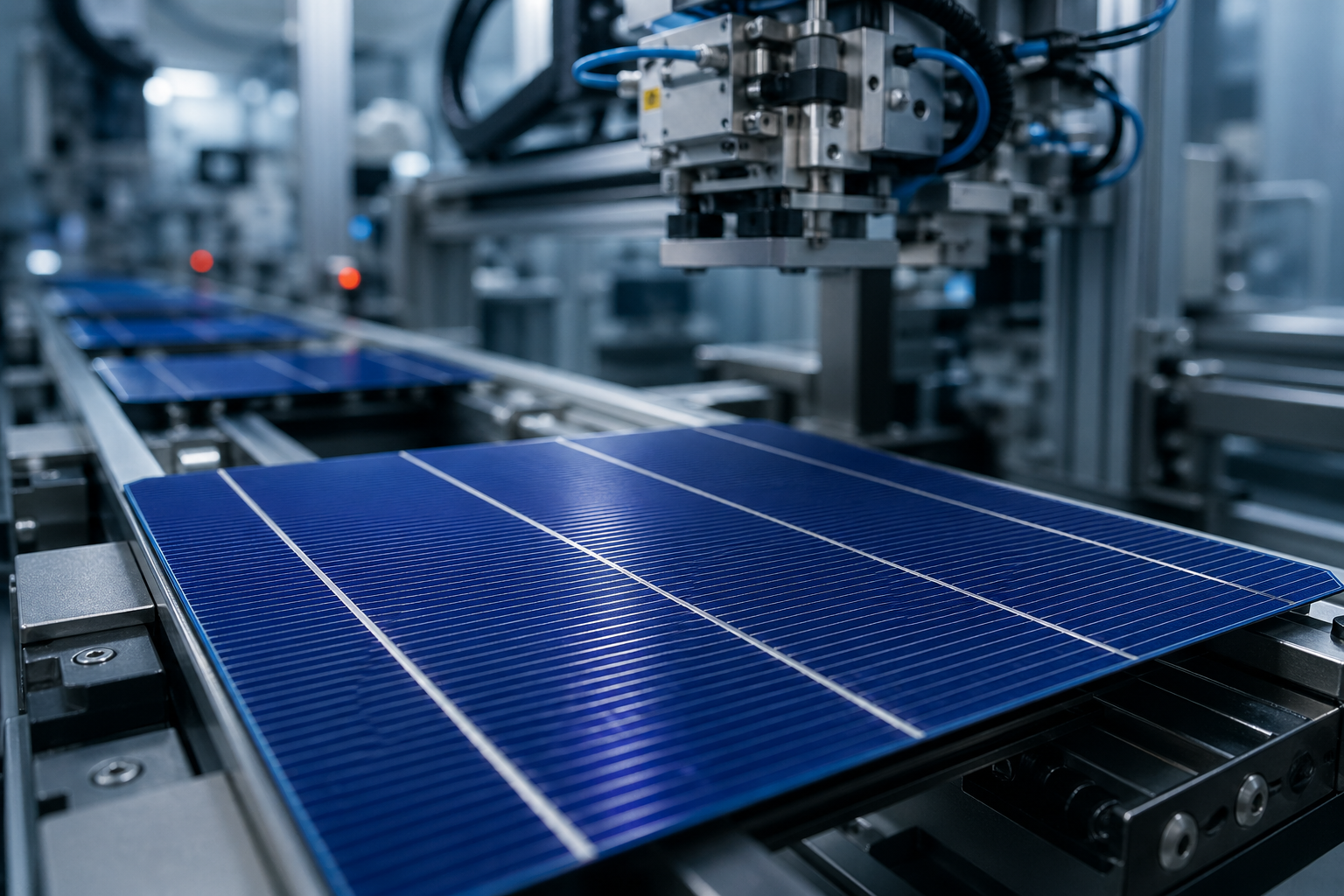
China’s Ministry of Finance (MOF) has announced that photovoltaic cells will be subject to a 2% consumption tax from April 1, 2027. The tax rate will increase to 4% from April 1, 2028.

The tax is expected to accelerate capacity rationalization in China’s solar industry by increasing cost pressure on manufacturers with already low margins and making inefficient production facilities increasingly unviable. While a 2 to 4 percent consumption tax may seem modest, it could further pressure profitability for manufacturers operating on tight or negative margins, potentially hastening the retirement of aging capacity and the departure of less competitive players.

The Chinese government has also introduced a consumption tax on a range of battery products, including lithium-ion batteries, nickel-metal hydride batteries and other energy storage technologies, with rates of 2% from September 2026 and 4% from September 2027. The measure broadens the scope of China’s battery-related tax framework and reflects policymakers’ efforts to improve industrial efficiency, curb the expansion of low-value capacity and encourage the development of advanced technologies.

The new tax adds to mandatory national standards tightening energy consumption and efficiency requirements across the PV value chain that Chinese authorities issued in early July.

The rules, which come into effect on January 1, 2027, are expected to reshape production, procurement and project selection by favoring products with higher efficiency and lower energy intensity. However, market participants remain divided over whether the new standards will actually reduce overcapacity and support a more sustainable pricing environment.

Since China’s solar industry entered a prolonged downturn more than two years ago, policymakers and industry participants have explored various approaches to address severe overcapacity. One such initiative was a plan to reduce polysilicon overcapacity, which was ultimately abandoned after China’s State Administration for Market Regulation (SAMR) warned that it could have resulted in a monopoly in the polysilicon segment.

See also  China's Hefei BOE Solar Technology claims an efficiency of 27.37% for perovskite solar cells

The plan involved China’s six largest polysilicon producers – Tongwei, GCL, Daqo, The six companies together have a capacity of almost 2.5 million tonnes (MT); the rest of the industry accounts for 700,000 tons.

Source link

batteries cells China consolidation consumption imposes industry pushes Tax
Share. Facebook Twitter Pinterest LinkedIn Tumblr Email
solarenergy
  • Website

Related Posts

‘Inclusion must go beyond good intentions and symbolic actions’

July 18, 2026

GenCost at Eight: How a decade of disruption reshaped the future of Australia’s energy system

July 18, 2026

The US will investigate solar cells from Ethiopia for possible tariff evasion

July 17, 2026
Leave A Reply Cancel Reply

Don't Miss
Commercial & Industrial

UK solar capacity reaches 16.9 GW

By solarenergyJuly 26, 20240

UK solar capacity has increased by 8.5% in the past year. Image: Returning energy. New…

Chinese PV Industry Brief: Beijing Investigates EU Investment Barriers to PV

July 12, 2024

Fraunhofer ISE warns of risks of higher than expected UV-induced degradation in TOPCon, PERC and HJT cells

December 3, 2024

VDE hail risk model updated to reflect increasing wind speeds during hailstorms

March 11, 2026
Stay In Touch
  • Facebook
  • Twitter
  • Pinterest
  • Instagram
  • YouTube
  • Vimeo
Our Picks

China imposes new consumption tax on PV cells and batteries as industry consolidation pushes

July 19, 2026

‘Inclusion must go beyond good intentions and symbolic actions’

July 18, 2026

GenCost at Eight: How a decade of disruption reshaped the future of Australia’s energy system

July 18, 2026

Vermeer MT500 automates the pole shaking process on large-scale solar energy jobs

July 17, 2026
Our Picks

China imposes new consumption tax on PV cells and batteries as industry consolidation pushes

July 19, 2026

‘Inclusion must go beyond good intentions and symbolic actions’

July 18, 2026

GenCost at Eight: How a decade of disruption reshaped the future of Australia’s energy system

July 18, 2026
About
About

Stay updated with the latest in solar energy. Discover innovations, trends, policies, and market insights driving the future of sustainable power worldwide.

Subscribe to Updates

Get the latest creative news and updates about Solar industry directly in your inbox!

Facebook X (Twitter) Instagram Pinterest
  • Contact
  • Privacy Policy
  • Terms & Conditions
© 2026 Tsolarenergynews.co - All rights reserved.

Type above and press Enter to search. Press Esc to cancel.