

The carbon footprint refers to the total greenhouse gas emissions generated by human activities, which contribute to global warming. A product’s carbon footprint (CFP) is calculated by combining the total greenhouse gas (GHG) emissions over its entire life cycle. This indicator provides consumers with information about the CO level2 emissions related to the product they use.
Currently, some countries have begun to label products with publicly disclosed CFP, allowing consumers to consider the CFP index in addition to quality and price when making their purchases.
To calculate the CFP for a product, manufacturers must maintain information about the product’s life cycle, including its entire greenhouse gas emissions from raw material extraction to production, distribution, use and disposal.
In 2023, the EU mandated domestic manufacturers to find ways to reduce their carbon footprint and introduced the Carbon Border Adjustment Mechanism (CBAM) to control the carbon footprint of imported goods into Europe. According to the information provided, the six commodity groups that leave the largest environmental footprint during production are iron and steel, cement, fertilizers, aluminum, electricity and hydrogen.
In Vietnam, the General Department of Standards, Metrology and Quality has issued ISO 14067:2020, which provides requirements and guidelines for companies to quantify and report the carbon footprint of their products. ISO 14067 is a unique certification that focuses specifically on the CO2 footprint at product level rather than on the entire management system.
In recent years, some Vietnamese companies have implemented carbon footprint reports according to ISO 14067, conducted greenhouse gas inventories according to ISO 14064, or reported carbon neutrality according to ISO 14068.
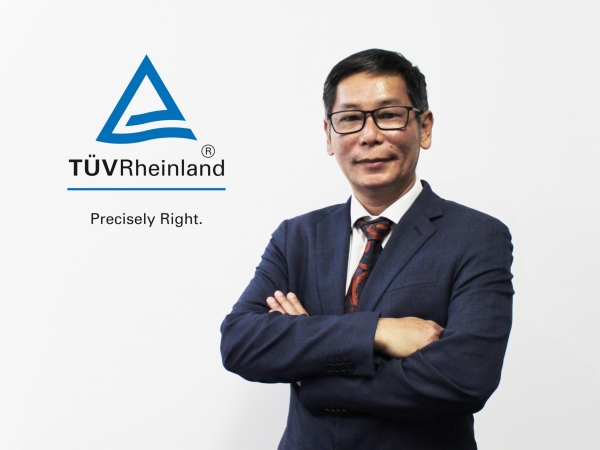
| Dr. Ton That Kiem, CEO of TUV Rheinland Vietnam |
Dr. Ton That Kiem, CEO of TUV Rheinland Vietnam said: “The purpose of certifying CFP is to determine the degree of CO2 emission reduction throughout the product life cycle through third-party verification. It aims to recognize the efforts of companies to transparently reduce the CO2 emissions of their products. The product life cycle in different processes includes the total greenhouse gas emissions generated from raw material extraction to production, distribution (transport), use and disposal.
TUV Rheinland is a global technical services provider from Germany specializing in certification, testing, inspection and training, helping industries in Vietnam meet international safety and environmental standards. The company offers carbon footprint inventory and certification to ISO 14067 standards as one of its services.
According to the CEO of TUV Rheinland Vietnam, carbon footprint inventory and certification are currently carried out at three levels: company level (CCF), product level (CFP) and project level. Companies will face several challenges in selecting the right carbon footprint calculation and reporting methods that meet their objectives and regulatory requirements.
 |
|
According to Associate Professor Dr. Nguyen Dinh Tho, carrying out carbon inventory steps is beneficial for the future trading process of companies’ carbon credits |
At a conference on ESG – Motivations and Breakthroughs on May 23, Associate Professor Dr. Nguyen Dinh Tho, director of the Institute for Strategy and Policy for Natural Resources and Environment, the importance of the carbon emissions inventory process.
Associate Professor Tho stated that companies should conduct an inventory of carbon emissions from the inception to completion of projects to provide a basis for future trading and transactions in carbon credits.
“Companies implementing a green transformation should take advantage of international market mechanisms, such as the carbon credit market. These mechanisms are designed to help companies recoup their initial investment in emissions reduction processes,” he said.
Managing the environmental footprint of products is one of the key topics that will be discussed during the RIS.ER Hub workshop series from July to November as part of the RIS.ER24 programme. The program, themed ‘Sustainable Development in the Ecosystem of Recycling, Renewable Energy and Green Finance’, will take place on July 26 in Ho Chi Minh City.
|
RIS.ER is a series of events on ESG and sustainable development in Vietnam, held annually since 2024. It serves as a platform for sharing knowledge and promoting connections. RIS.ER 24 aims to empower courageous leaders to seize opportunities for economic development and become a catalyst for the recovery of a group of companies through annual growth commitments, compliance with environmental protection and participation in fair trade standards, supporting the access to green investment sources. |
