

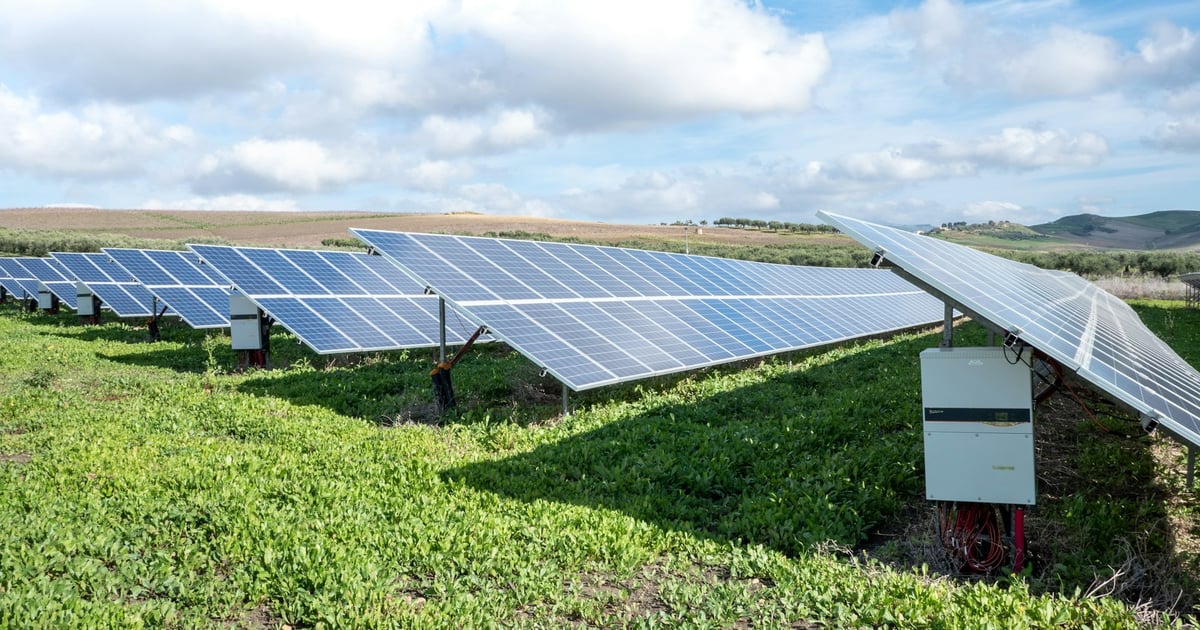
UK Energy Secretary Ed Miliband has granted development consent for the 740MW One Earth Solar Farm project.
It is the second largest solar PV project to receive DCO after the 800 MW Springwell Solar power station in April this year.
The project, located in Nottinghamshire and Lincolnshire, is being developed in partnership between renewable energy developers Perigus and PS Renewables.
It is also the third Nationally Significant Infrastructure Project (NSIP) – due to its capacity of more than 100 MW – to be approved in the past week, following the Peartree Hill solar park And Dean Moor solar projectwhich received approval in recent days. It is also the 30e approved by the government since July 2024.
Ed Miliband, Secretary of State for Energy Security and Net Zero, said: “The only way to achieve energy security is if we take a pro-growth approach to building more clean energy in Britain. For two years, that is exactly what this government has done.”
The UK government added that the approval for the 740MW One Earth Solar Farm project also comes days after it confirmed new planning reforms that would remove mandatory pre-application consultation requirements for major infrastructure projects. This could shorten the planning process by up to 12 months and potentially save the industry £1 billion during this Parliament. The changes have been made in the Planning and Infrastructure Act and are expected to come into force later this month.
Construction of the project is expected to begin in late 2027 and the 740MW solar project will be co-located with a battery energy storage system (BESS) with an output of more than 50MW.
“Solar at scale means cheap, clean, home-grown energy, insulated from the global instability that has caused energy prices to skyrocket. Solar farms provide the cheapest energy available – and the bigger they are, the greater the economies of scale. Every panel, whether on the ground or on rooftops, is a step towards a better Britain, with an economy protected from the vagaries of geopolitics,” said Chris Hewett, CEO of Solar Energy UK.
The future of NSIP development and adoption formed the core of a panel discussion last month at the Clean Power 2030 Summit, where panelists said changing political conditions mean NSIP approvals and development have become less certain.
Moreover, the approval of the second largest solar PV project comes in the same week as the government has unveiled the solar strike prices for the upcoming Contracts for Difference program. The administrative strike price – the highest bid price that producers can offer at the auction – remains unchanged at £75/MWh for solar in the allocation round 8 (AR8).
