

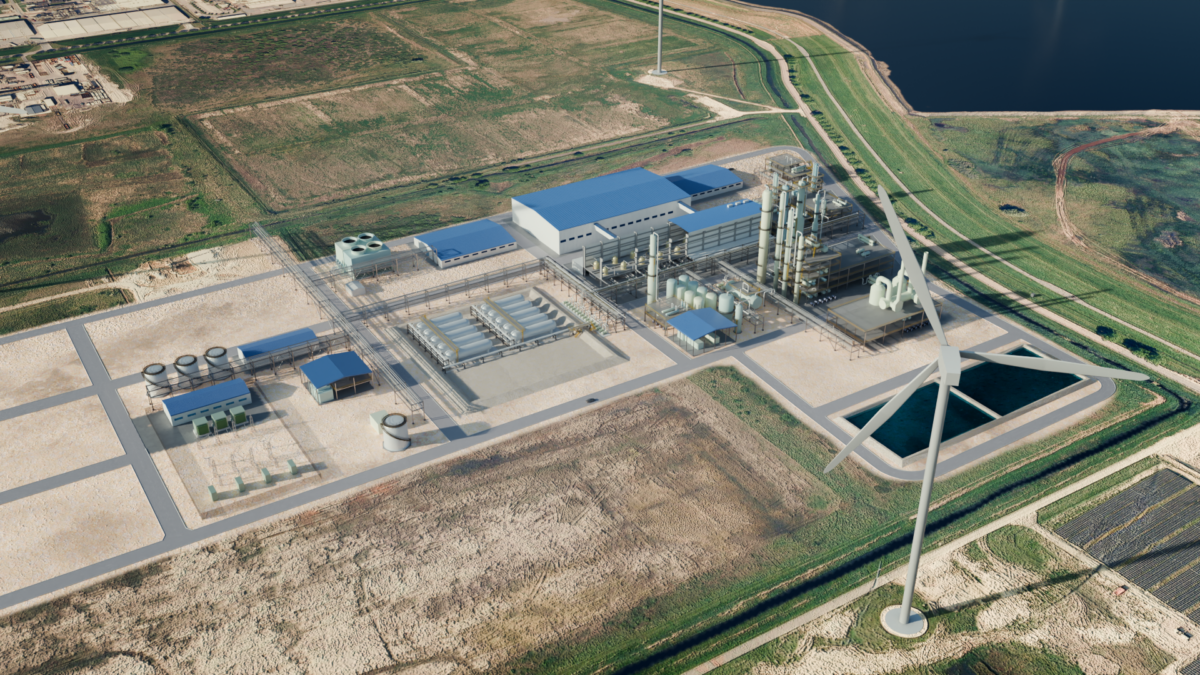
Resilicon says the basic engineering phase of the planned polysilicon plant in the Netherlands is underway after the project secured a technology supplier and an engineering, procurement and construction contractor. Once completed, the plant will produce high-purity polysilicon for solar energy supply chains.
Dutch startup Resilicon has taken a step towards developing Europe’s first polysilicon factory powered by renewable energy.
Resilicon has attracted US silicon specialists Advanced Material Solutions (AMS) as technology supplier and US-based engineering and construction company Fluor as engineering partner, which Resilicon says paves the way for starting the fundamental engineering phase of the project.
This phase of the project is supported by more than €14 million ($16.3 million) in financing with contributions from, among others, the Dutch Ministry of Economic Affairs and Resilicon’s technical partners.
According to details on Resilicon’s website, the company has secured exclusive rights to AMS’ technology in Europe, the Middle East and Africa. The technology is already being successfully deployed in South Korea and India and has been shown to reduce energy consumption in polysilicon production by up to 30%.
Resilicon says it is now preparing for the next phase of development and financing, including permitting, detailed design and stakeholder engagement.
The polysilicon plant will be located in the city of Delfzijl, in the Groningen Sea Ports area in the northeast of the Netherlands. Once completed, it will produce high-purity polysilicon at scale for solar, semiconductor and battery supply chains, while being powered entirely by renewable energy.
Resilicon estimates that a total of €900 million (approximately $1.04 billion) in financing is required for the project and has revealed that several parties are exploring investment opportunities led by KPMG.
European demand for polysilicon, the fundamental component of solar cells, is expected to increase by 80,000 to 120,000 tonnes by the end of this decade, equivalent to at least four polysilicon production facilities on a global scale, Resilicon says. More than 85% of global polysilicon production is currently concentrated in China.
Gosse Boxhoorn, founder of Resilicon, noted that polysilicon is a crucial raw material to reduce European dependence on China. “Securing supplies is essential for the future of key European industries, including energy, automotive, electronics and defence,” Boxhoorn added.
That was the case in August reported that China’s six largest polysilicon manufacturers plan to raise about $7 billion to buy and idle about a third of the country’s polysilicon production capacity. Earlier this year, researchers said warned China’s polysilicon industry could cause a global polysilicon shortage by 2028 if production capacity is cut too much.
This content is copyrighted and may not be reused. If you would like to collaborate with us and reuse some of our content, please contact: editors@pv-magazine.com.
