

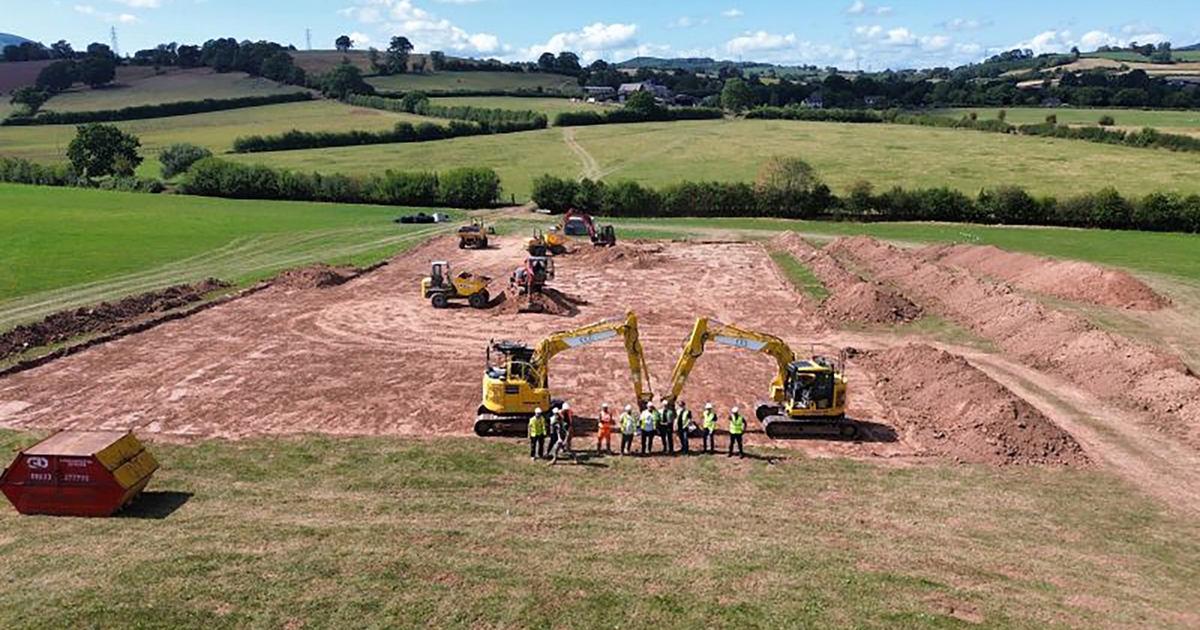
European energy has officially started construction on Great House Solar Farm, located 4 km southeast of Abergavenny in Zuid -Wales. The solar farm, which includes approximately 70 hectares, will generate 32 MW of clean electricity and marks the fifth active project of European Energy in the UK, making the total construction capacity at around 200 MWp.
In addition to energy generation, Great House Solar Farm will focus on the Monmouthshire County Council in 2019, explained by Monmouthshire County Council.
The construction is already underway. Phase one includes the preparation works for locations, including the installation of access roads, screens, substations and power pipes. After this, the foundations will be laid and assembly frames will be assembled. Phase three will see electrical systems and PV modules that are connected before the grid connection and testing phase four. The final phase includes the completion of landscape architecture and the repair of the site.
Biodiversity and Community Cooperation
In addition to the objectives for renewable energy consumption, Great House Solar Farm is designed with sustainability in the environment in mind. European energy has included plans to improve biodiversity on site, creating new habitats to support local animals in the wild.
Community involvement has been an important aspect of the project. European energy has made it clear that the input from local residents welcomes to refine its biodiversity plans, with the ultimate goal of ensuring that the farm becomes a harmonious part of the local environment.
The British government has thought if it should make Community benefits a legal obligation for developers of renewable energy. If an important part of its plan plan, the government will discuss whether he should create a legal mandate to, for example, give local people the opportunity to decide where investments are most needed.
The mandate would set minimal amounts for the fund of the community benefits based on the scale of infrastructure project, starting with tens of thousands a year on the for smaller projects and increase to the millions for developments on a larger scale.
