

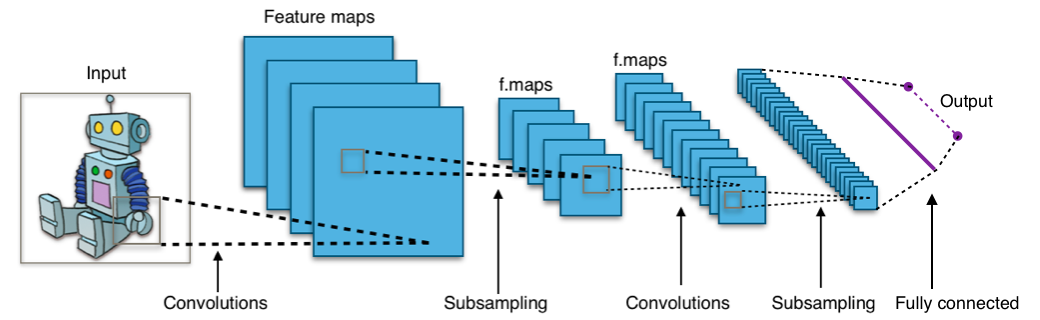
An international research team has used the deep learning algorithm of the convolutional neural network (CNN) to identify faults in solar panels. Their work showed that the proposed technique has a high degree of accuracy, especially when combined with transfer learning models.
A group of researchers led by the University of Sharjah in the UAE proposed using the convolutional neural network (CNN) technique to detect temperature- and shading-induced faults in PV modules. CNN is a deep learning algorithm that can extract and learn features from visual data.
“CNN extracts feature maps from datasets using kernels and filters that slide over input features,” the researchers said. “Transfer learning is applied to train a base model in which certain features have been extracted to train our main model due to the limited experimental data.”
The team first used CNN and transfer learning models to train and test the errors of external solar data and then artificially downscaled and tested this data under different numbers of epochs. Transfer learning is a machine learning technique in which a model trained for one task is reused for a second related task.
Their dataset classified seven operating conditions: PV without shading and temperature effect; PV works under the influence of one cell shadow in one string; PV works under the influence of two cells in one string in the shade; PV works under the influence of three cells shading two strings; PV works under the influence of four cells that are in two strings in the shade; PV works below operating temperature 25 C; and PV operating under operating temperature 50 C.
The scientists created a first model using only CNN and a second model based on the more extensive Mendeley database, which is not directly applicable to the error detection system. This database contains two measurements – Maximum Power Point (MPPT) and Intermediate Power Point Tracking (IPPT) – under the above seven operating conditions. The latter includes an inverter fault, a feedback sensor fault, two array mismatch conditions, a grid anomaly, an MPPT/IPPT controller fault, and a boost converter controller fault.
“You could use transfer learning and train a data-driven model based on external data, i.e. data that is not directly applicable to the error detection system, and which is then used to classify the errors of the experimental data,” explain the researchers. “Transfer learning is a method within deep learning where the goal is to train a basic model from a large data set, which is then used to train a model based on new data; the model uses the knowledge from the basic model and therefore does not have to acquire this knowledge itself.”
Both models were tested with few data variations: all available data, half of the data, one-third of the data, and one-fourth of it. They were also tested with different epochs (the number of complete passes in the given database) of 50, 25 and 10.
According to the results, in the case of 50 epochs, the transfer learning model achieved an average accuracy of 96.6%, and the new model achieved 97.1%. For the first ten epochs, they achieved an accuracy of 93.9% and 89.8%, respectively.
“The main goal of this study is to show how the transfer learning model built from the large Mendeley solar data set has an accuracy of 73.9%, 81.9% and 93.9% for fourth, half and full training data. respectively using ten epochs. In comparison, using ten epochs, the new model has an accuracy of 26.7%, 60.8% and 89.8% for fourth, half and full training data,” the researchers pointed out.
“The use of transfer learning is a great asset when analyzing datasets with limited data or when computational complexity is inhibited,” they concluded. “The increased classification accuracy from using transfer learning models instead of training a new model can reach >170%. Therefore, working with transfer learning models is highly recommended when the experiment is sparse and access to comparable data is available.”
The new methodology for fault detection of PV modules was presented in “Detecting the errors of solar photovoltaic modules due to temperature and shading effect by convolutional neural network”, published in the International Journal of Thermofluids. The research team also included academics from Egypt’s Minia University, Britain’s Aston University and Sweden’s Linköping University.
This content is copyrighted and may not be reused. If you would like to collaborate with us and reuse some of our content, please contact: editors@pv-magazine.com.
