
Close Menu
  • News
  • Industry
  • Solar Panels
  • Commercial
  • Residential
  • Finance
  • Technology
  • Carbon Credit
  • More
    • Policy
    • Energy Storage
    • Utility
    • Cummunity
What's Hot

A deep learning model tracks the status of the EV battery with high precision

March 6, 2026

Mitsubishi Electric Trane announces new heat pump line for hydronic heating – SPE

March 6, 2026

Origis is developing a 413 MW solar portfolio in West Texas

March 6, 2026
Facebook X (Twitter) Instagram
Solar Energy News
Friday, March 6
  • News
  • Industry
  • Solar Panels
  • Commercial
  • Residential
  • Finance
  • Technology
  • Carbon Credit
  • More
    • Policy
    • Energy Storage
    • Utility
    • Cummunity
Solar Energy News
Home - Solar Industry - First attempt to build inverted perovskite solar cell based on nickel oxides yields an efficiency of 20.06%
Solar Industry

First attempt to build inverted perovskite solar cell based on nickel oxides yields an efficiency of 20.06%

solarenergyBy solarenergyJune 25, 2024No Comments3 Mins Read
Facebook Twitter Pinterest LinkedIn Tumblr Email
Share
Facebook Twitter LinkedIn Pinterest Email

Scientists in Colombia have proposed developing inverted perovskite solar cells with a hole transport layer based on indium-doped nickel oxide. The result is a champion device that achieves an efficiency of 20.06% and exhibits remarkable stability.

June 25, 2024 Emiliano Bellini

A group of researchers from the Universidad de los Andes and Colombia have developed for the first time an inverted perovskite solar cell with a hole transport layer (HTL) based on nickel oxide layers (NiOx), doped with indium (In).

Inverted perovskite cells have a device structure known as “pin”, where hole-selective contact p is at the bottom of the intrinsic perovskite layer i with electron transport layer n at the top. Conventional halide perovskite cells have the same structure, but in reverse: a ‘nip’ arrangement. In the nip architecture, the solar cell is illuminated via the electron transport layer (ETL) side; in the pin structure, it is illuminated by the surface of the hole transport layer (HTL).

The scientists explained that NiOx has an energy gap of more than 3.5 eV, exceptional chemical stability, durability, low toxicity and cost-effective processing. “In the case of NiOx-based inverted perovskite solar cells, the doping approach has indeed paved the way for HTL optimization, often through observable improvements also at the interface level and in the perovskite layer,” she added.

The team built the NiOxIn HTL via a one-step electrochemical deposition (ECD) process, which it claims offers low processing temperature, precise control of thickness, adhesion and layer structure, as well as low chemical waste production.

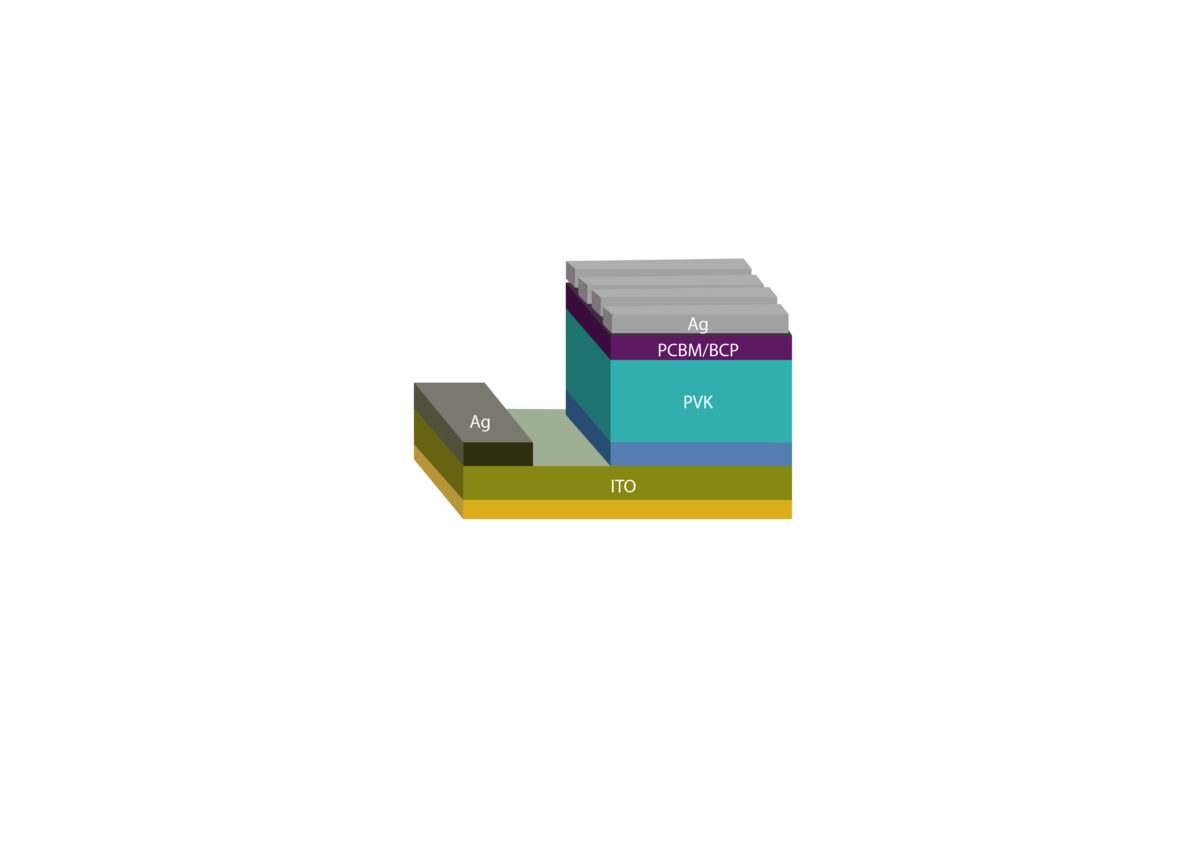
The cell was fabricated with a substrate made of indium tin oxide (ITO), the NiOxIn HTL, a perovskite absorber, an electron transport layer based on phenyl-C61-butyric acid methyl ester (PCBM), a bathocuproin (BCP) buffer layer and a silver (Ag) metal contact.

See also  Aiko offers 500 W all-back contact Solar modules for C&I applications-PV Magazine International

“The estimated thickness of each layer in the solar cell was 28 nm for the NiOxIn layers, 430 nm for the perovskite layer, 30 nm for the PCBM layer and 125 nm for the silver layer,” the group explained.

The champion cell built with the proposed architecture achieved an energy conversion efficiency of 20.06%, an open-circuit voltage of 1.10 V, and a short-circuit current density of 23.40 mA cm3.−2and a fill factor of 78.10%.

Through a series of MPPT (Maximum Power Point Tracking) tests, the researchers also found that the cell was able to maintain its performance under real operating conditions for more than 3,000 seconds.

“By monitoring cell performance for 46 days, all devices were found to be stable and no effect of indium doping was observed,” they claimed. “SEM and XRD tests of the perovskite layer indicated that the In doping of NiOx has a remarkable effect by increasing the grain and crystallite size of the absorber.”

The new solar cell design was presented in the paper “Improved inverted perovskite solar cells via indium-doped nickel oxide as a hole transport layer”, which was recently published in Solar energy. “The results show for the first time that indium doping of NiOx is a new and efficient option to improve the photovoltaic performance of inverted perovskite solar cells,” the academics concluded.

This content is copyrighted and may not be reused. If you would like to collaborate with us and reuse some of our content, please contact: editors@pv-magazine.com.

Source link

attempt based build cell efficiency Inverted nickel oxides perovskite solar yields
Share. Facebook Twitter Pinterest LinkedIn Tumblr Email
solarenergy
  • Website

Related Posts

Origis is developing a 413 MW solar portfolio in West Texas

March 6, 2026

New Jersey expands state community solar program by 3 GW

March 6, 2026

How to address imbalance datasets in solar panel dust detection

March 5, 2026
Leave A Reply Cancel Reply

Don't Miss
News

The Merz of Germany rejects that he slows the green shift

By solarenergySeptember 28, 20250

The Merz of Germany rejects that he slows the green shift The German Chancellor Friedrich…

Torus launches new microgrid management software

August 17, 2024

German Startup launches bidirectional loading kit for EVS – PV Magazine International

April 1, 2025

Solitek unveils 435W rooftop photovoltaic modules

September 30, 2024
Stay In Touch
  • Facebook
  • Twitter
  • Pinterest
  • Instagram
  • YouTube
  • Vimeo
Our Picks

A deep learning model tracks the status of the EV battery with high precision

March 6, 2026

Mitsubishi Electric Trane announces new heat pump line for hydronic heating – SPE

March 6, 2026

Origis is developing a 413 MW solar portfolio in West Texas

March 6, 2026

New Jersey expands state community solar program by 3 GW

March 6, 2026
Our Picks

A deep learning model tracks the status of the EV battery with high precision

March 6, 2026

Mitsubishi Electric Trane announces new heat pump line for hydronic heating – SPE

March 6, 2026

Origis is developing a 413 MW solar portfolio in West Texas

March 6, 2026
About
About

Stay updated with the latest in solar energy. Discover innovations, trends, policies, and market insights driving the future of sustainable power worldwide.

Subscribe to Updates

Get the latest creative news and updates about Solar industry directly in your inbox!

Facebook X (Twitter) Instagram Pinterest
  • Contact
  • Privacy Policy
  • Terms & Conditions
© 2026 Tsolarenergynews.co - All rights reserved.

Type above and press Enter to search. Press Esc to cancel.