

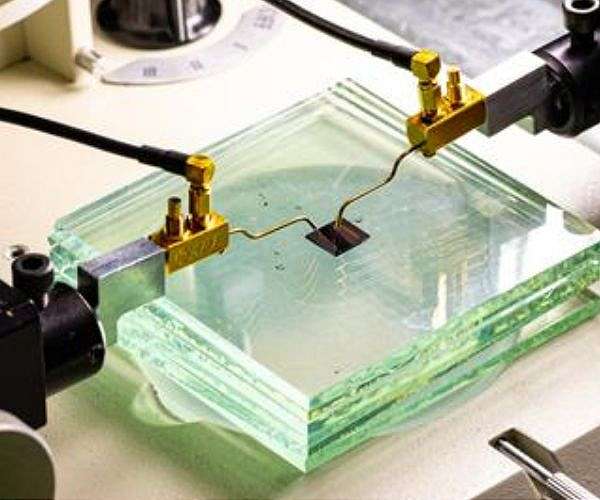
A team from the University of Arkansas and the University of Michigan has demonstrated the first use of temperature sensors powered solely by graphene-based solar cells, laying the foundation for battery-free sensor systems. Using graphene’s extraordinary energy harvesting ability, these devices can capture energy from their environment, including solar, thermal, acoustic and kinetic sources.
The researchers built dozens of graphene-silicon solar cells and connected them in series to increase the voltage output. These were used to charge storage capacitors, allowing the sensors to operate independently for over 24 hours after just a few minutes of charging. The absence of conventional batteries significantly extends operational life, enabling sensor deployments that can run for decades with minimal maintenance.
Reducing the sensors’ power requirement to nanowatt levels was a crucial achievement – about a thousand times lower than that of many current devices. By removing power management units and running the sensors directly from the storage capacitors, energy waste was further minimized. This efficiency makes these sensors well suited for remote or harsh environments where maintaining or replacing batteries is impractical.
Graphene’s robust structure also provides physical flexibility and durability, allowing for lighter, thinner and more resilient solar panels. These properties allow graphene-based panels to outperform traditional materials in terms of efficiency, especially under suboptimal lighting. The technology is well suited for integration into the Internet of Things and supports long-term distributed monitoring in applications such as agriculture, climate studies, infrastructure management and industrial automation.
Physicist Paul Thibado of the University of Arkansas, who is leading the graphene harvesting initiative, notes that there are ongoing efforts to integrate additional energy harvesting modes – such as kinetic harvesters – into the sensor arrays. With funding from the WoodNext Foundation and commercial interest from NTS Innovations, practical implementations are now being considered.
The findings provide a path to a new generation of autonomous sensors, which can support critical monitoring without relying on conventional batteries.
Research report:An array of mini graphene-silicon solar cells intermittently charges storage capacitors that power a temperature sensor
