

The UK government’s flagship company, Great British Energy (GBE), has published its strategic plan for the next five years.
GBE will build a portfolio of “at least” 15 GW of clean energy generation and storage capacity through ownership and investment and mobilize £15 billion of private finance through out-of-pocket spending.
The strategic plan, which is a response to the the government’s Statement of Strategic Priorities, published in Septemberdescribes the key areas of focus for the company and how it will achieve its objectives.
According to President Juergen Maier’s foreword, the document is “in some way about the mechanisms and levers we can use to bring about real change for the British people”.
The plan confirms that GBE will seek to ‘unlock’ private investment, acting primarily as an energy developer and owning and operating assets. The portfolio should generate revenue by 2030, at which point the portfolio will be “on track to company-wide profitability.”
By 2030, it plans to support ‘more than 1,000’ community and local energy projects, fund projects that support ‘at least 10,000’ jobs and launch a £1 billion programme, ‘Energy, Engineered in the UK’, to grow a domestic supply chain.
The company’s independence from government is described as “fundamental” to its role, allowing it to act as a “trusted, expert body that can make impartial, evidence-based decisions in the energy market”.
It also clarifies that GBE has no plans to become an electricity retailer selling power directly to domestic users, nor to develop or directly invest in large-scale network or network infrastructure projects – at “this stage”.
GBE’s initial investments will focus on three priority areas: Great British Energy Local, Onshore Energy and Offshore Energy. In addition to updating the strategic plan every two years, GBE will monitor its activities and report periodically, using capacity building and financial, employment and local impact assessments to measure progress.
Great British energy locally
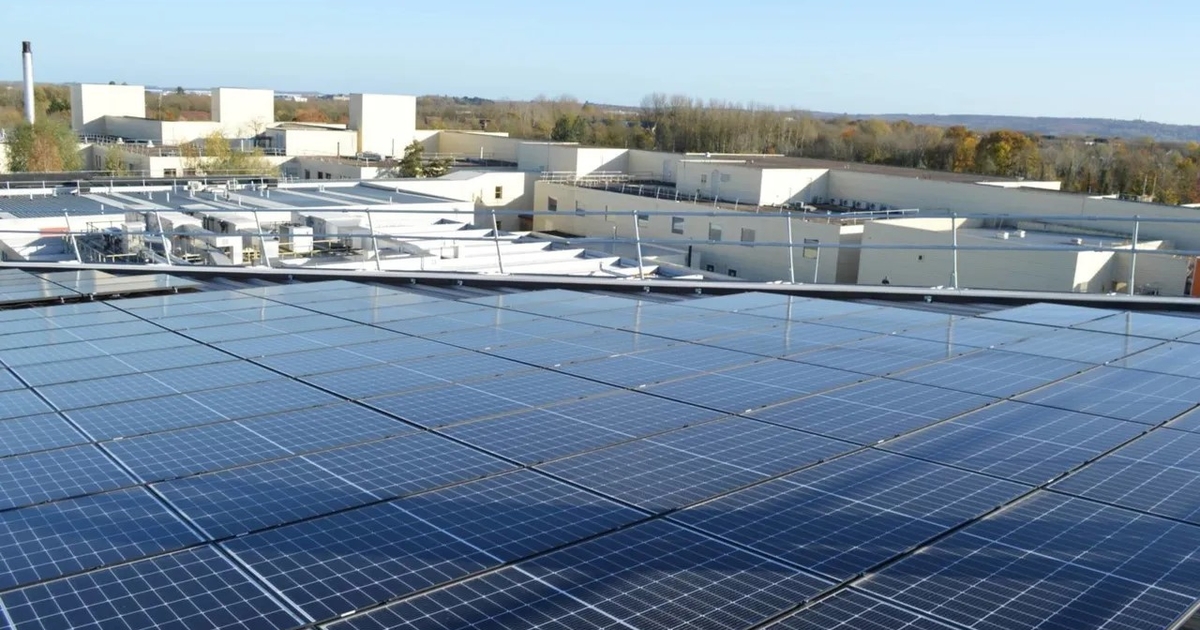
With support from the first investments solar PV installations on roofs of public sector buildingsGBE said it will help deploy or finance rooftop generation and locally distributed energy generation.
It also aims to open flexibility markets so that assets can better respond to local price signals.
One revelation from the plan is that GBE will establish a commercial platform to provide an end-to-end business solution for on-site generation. GBE Local will be a showcase, open to all consumer groups with a desire to develop on-site energy generation at scale, leveraging the purchasing power of the public sector and standardizing technologies where possible to enable smaller projects to access suppliers and benefit from economies of scale.
Energy on land
With the aim of becoming an independent power producer (IPP), GBE’s focus will be on initiating, developing, owning and operating clean energy projects in established technologies that have existing routes to market.
It will seek to develop state-owned land. In its strategic plan, GBE says initial analysis identified up to 330 km2.2 of state land that could be suitable for sustainable energy on land.
While there was speculation early on in its inception that GBE could invest in emerging and emergent technologies that would otherwise be unable to mobilize private investment, the differentiator that sets the government-owned energy company apart is instead this ability to develop public land.
GBE said it is currently exploring a partnership Trydan Gwyrdd Cymru, a Welsh state-owned renewable energy developer to develop public land in Wales and deliver up to 1GW of new renewable energy capacity by 2040.
Due to the relatively rapid development timelines for solar and battery energy storage systems (BESS), GBE said these technologies “offer the opportunity to realize results quickly.”
In his foreword, Maier noted that the energy transition “will take time, and the patience of the British public, before we see the full benefits of a fully electrified, fully low-carbon and fully British-led energy transition”.
The plan also highlights that there are opportunities for GBE to support BESS to complement its sustainable development, “where projects can provide important system services but may struggle to attract finance, for example larger scale/longer duration projects”.
For lithium-ion BESS, GBE sees a role for itself in mitigating risks and mobilizing private capital. It will also invest in “strategically important” long-term electricity storage (LDES) technologies to support technology deployment and commercialization.
The state-owned energy company’s offshore energy focus will be on the Celtic Sea and the North Sea, converting jobs in communities traditionally supported by the oil and gas industry to renewable energy sources. GBE will also acquire minority interests in the development of deeper water offshore generation projects.
Onshoring the renewable energy supply chain
Building on his commitment to strengthening supply chains and building a skilled workforceGBE will provide £1 billion, through a combination of grants and investment, for its Energy, Engineered in the UK programme.
The plan is “designed to unlock industrial opportunities from the energy transition and ensure that Britain develops sustainable capabilities in the clean energy technologies of the future,” the plan says.
This will enable GBE to “respond to market failures and proactively shape markets as a patient, long-term investor.”
