
Close Menu
  • News
  • Industry
  • Solar Panels
  • Commercial
  • Residential
  • Finance
  • Technology
  • Carbon Credit
  • More
    • Policy
    • Energy Storage
    • Utility
    • Cummunity
What's Hot

Lithuanian grid operators can now shut down solar power plants without cybersecurity measures

June 8, 2026

Dutch solar owners asked to switch off during peak periods to ease the distribution crisis

June 7, 2026

The hydrogen flow: Toyota demonstrates its racing prototype on liquid hydrogen

June 7, 2026
Facebook X (Twitter) Instagram
Solar Energy News
Monday, June 8
  • News
  • Industry
  • Solar Panels
  • Commercial
  • Residential
  • Finance
  • Technology
  • Carbon Credit
  • More
    • Policy
    • Energy Storage
    • Utility
    • Cummunity
Solar Energy News
Home - Solar Industry - Halocell Energy and Sofab Inks promote perovskite collaboration
Solar Industry

Halocell Energy and Sofab Inks promote perovskite collaboration

solarenergyBy solarenergyApril 13, 2026No Comments3 Mins Read
Facebook Twitter Pinterest LinkedIn Tumblr Email
Share
Facebook Twitter LinkedIn Pinterest Email

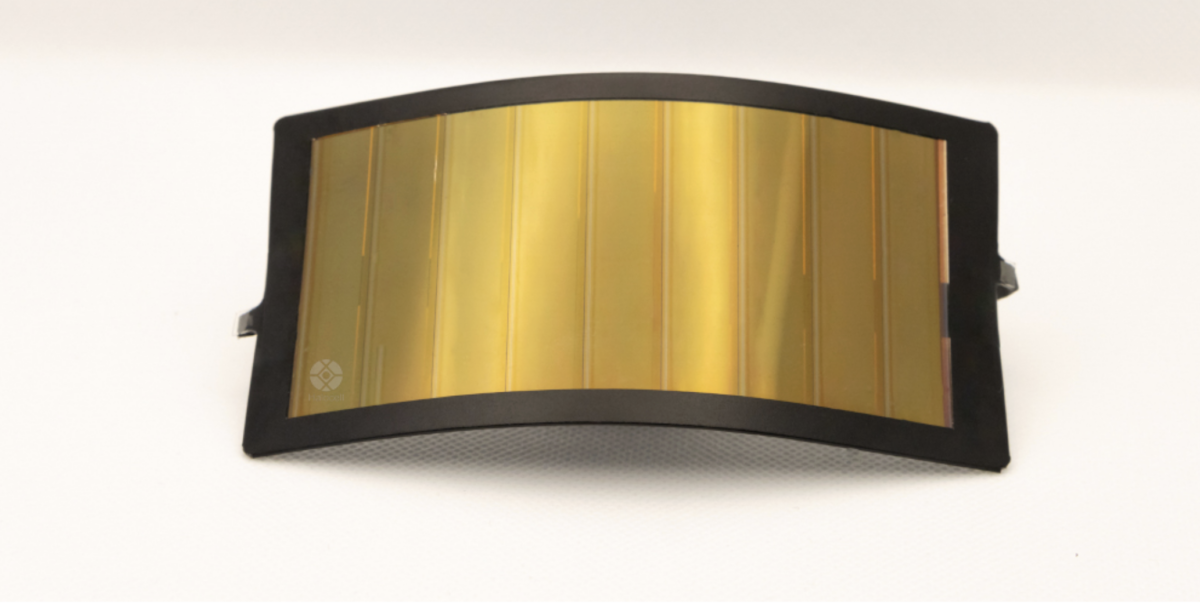
An ongoing collaboration between Australia’s Halocell Energy and US-based Sofab Inks shows that perovskite modules incorporating Sofab’s Tinfab electron transport layer retain approximately 100% of their normalized efficiency after 1,300 hours under accelerated combined light and moisture-heat tests.

April 13, 2026
Patrick Jowett

Australian solar cell developer Halocell Energy and US startup Sofab Inks have found that perovskite devices incorporating Sofab’s new metal oxide nanoparticle inks exhibit high levels of durability.

Halocell and Sofab Inks announced a strategic partnership to accelerate innovation in perovskite PV technology in mid-2025, coinciding with the launch of Halocell’s Ambient Module series. The partnership will see Sofab Inks supply Halocell with its nanoparticle inks, while Halocell also continues to formulate and produce its own proprietary perovskite inks.

Jack Manzella, COO and co-founder of Sofab Inks, shared pv magazine that the University of Louisville spin-off has worked with Halocell’s engineering team since the partnership began to qualify and validate the material in Halocell’s devices.

Modules with Sofab Inks’ Tinfab electron transport layer have demonstrated normalized efficiency of approximately 100% after 1,300 hours under accelerated combined light and moisture-heat tests of 1,000 lux lighting, 85% relative humidity and 65 C. Control devices using commercially available charge transport layers decreased by approximately 20% normalized efficiency under the same test conditions.

“Stability remains a critical barrier to the commercialization of perovskite solar cells, so this is a meaningful step forward,” Manzella said. pv magazine. “Halocell is one of the few perovskite companies actively selling modules today and the additional stability benefits of our materials strengthen their commercial offering.”

See also  Solar energy leads the global energy transition as the costs dive to register lows

Manzella explained that Sofab’s nanoparticle inks are designed to replace fullerene-based materials such as C60 as the electron transport layer, especially in PIN architectures and tandem applications. “They perform the same function, but offer improved thermal and environmental stability, are compatible with scalable manufacturing techniques such as slot-die coating and are based on cheaper, plentiful materials, making them better suited for commercial-scale production,” he said.

Halocell has now started shipping modules using Sofab’s Tinfab electron transport layer to partners for evaluation, with the current focus on applications in IoT devices, wireless sensors and small indoor electronics.

“Halocell plans to expand its offering into land and drone applications and we are excited to grow with them,” Manzella added.Looking ahead, we are focusing on joint development efforts aimed at scaling up to larger area modules and production volumes.”

In January, Halocell signed a Memorandum of Understanding with Queensland advanced materials company Lava Blue to collaborate on scalable, Australian-made specialty chemicals used in printing perovskite solar panels.

Last October, Sofab Inks announced that the tin oxide electron transport layer material was used in a 22.2% efficient 30 x 30 cm mini perovskite solar module.

This content is copyrighted and may not be reused. If you would like to collaborate with us and reuse some of our content, please contact: editors@pv-magazine.com.

Popular content

Source link

collaboration Energy Halocell inks perovskite promote Sofab
Share. Facebook Twitter Pinterest LinkedIn Tumblr Email
solarenergy
  • Website

Related Posts

Britain’s next energy dependency is already taking shape

June 5, 2026

ComEd starts a new energy pilot with a solar rebate on the roof of a brewery

June 5, 2026

Malaysia expects to reach 29.7 GW of solar energy by 2035

June 5, 2026
Leave A Reply Cancel Reply

Don't Miss
Policy

Ghana Plans Renewable Energy Investment Fund – PV Magazine International

By solarenergyMarch 6, 20250

Ghana is planning to accelerate the use of renewable energy sources, including solar systems for…

Spanish researchers claim that nest boxes in PV plants are often abused for Greenwashing – PV Magazine International

June 20, 2025

Germany implements 1.4 GW of Solar in July – PV Magazine International

August 16, 2025

UK Solar Implementment an increase of 5.9% on an annual basis

May 29, 2025
Stay In Touch
  • Facebook
  • Twitter
  • Pinterest
  • Instagram
  • YouTube
  • Vimeo
Our Picks

Lithuanian grid operators can now shut down solar power plants without cybersecurity measures

June 8, 2026

Dutch solar owners asked to switch off during peak periods to ease the distribution crisis

June 7, 2026

The hydrogen flow: Toyota demonstrates its racing prototype on liquid hydrogen

June 7, 2026

Era of electrification exposing Australia’s weakest link

June 6, 2026
Our Picks

Lithuanian grid operators can now shut down solar power plants without cybersecurity measures

June 8, 2026

Dutch solar owners asked to switch off during peak periods to ease the distribution crisis

June 7, 2026

The hydrogen flow: Toyota demonstrates its racing prototype on liquid hydrogen

June 7, 2026
About
About

Stay updated with the latest in solar energy. Discover innovations, trends, policies, and market insights driving the future of sustainable power worldwide.

Subscribe to Updates

Get the latest creative news and updates about Solar industry directly in your inbox!

Facebook X (Twitter) Instagram Pinterest
  • Contact
  • Privacy Policy
  • Terms & Conditions
© 2026 Tsolarenergynews.co - All rights reserved.

Type above and press Enter to search. Press Esc to cancel.