

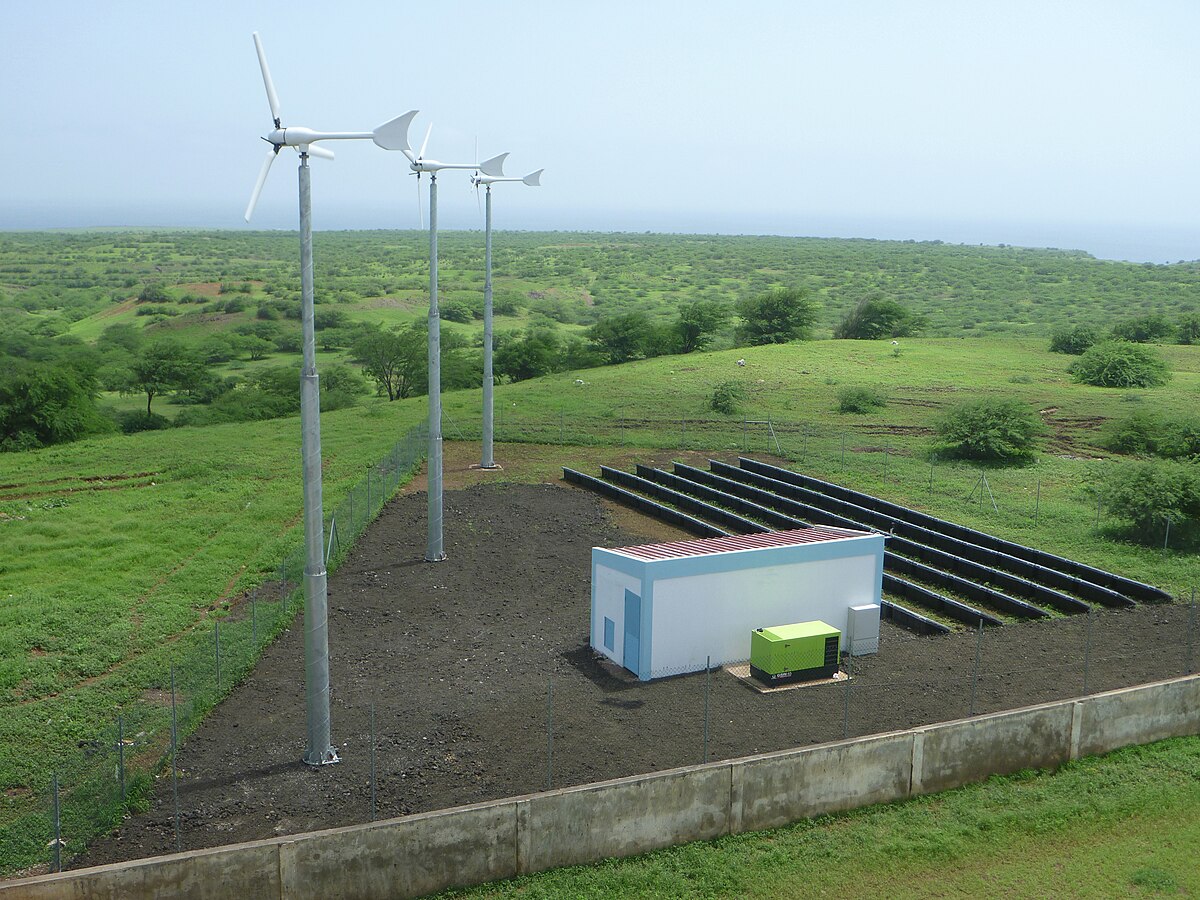
A Norwegian-Swedish research group has used multiple linear regression to assess whether 128 existing wind power plants in the Nordic countries can potentially be converted into wind solar power plants with cost-optimal PV capabilities and good net present value (NPV). Their modeling could potentially be used in all countries and latitudes.
A group of researchers from the Norwegian Institute of Energy Technology (IFE) and Sweden’s Uppsala University have outlined a new strategy to retrofit wind power plants into hybrid wind-solar installations.
“Hybrid solar-wind power plants can be valued differently under different market conditions,” Øyvind Sommer Klyvetold pv magazine. “In some cases, providing a sturdier production curve, as typically achieved by a solar-wind hybrid, could lead to additional revenue if the end consumer were to pay extra for such sturdier production. Conversely, there may be market situations where energy prices are sufficiently high that you would not want solar and wind sharing the grid connection infrastructure if that would lead to energy curtailment. There may also be rules that prohibit building solar-wind hybrids.”
The research group used multiple linear regression analysis (MLR) to investigate how 128 existing wind power plants in Norway and Sweden could potentially be converted into wind solar power plants with cost-optimal PV capacities and good net present value (NPV). MRL is a model that estimates the relationship between a quantitative dependent variable and two or more independent variables using a straight line.
In their modeling, the scientists assumed that solar power generation is sold to the day-ahead market and curtailed when the sum of PV and wind power generation exceeds the hybrid facility’s interconnection point (POI). “All 128 wind power plants examined have an average capacity factor of more than 15%,” the scientists specified. “Those with lower capacity factors were considered defective or small-scale wind turbines and were removed in an earlier step. A total of 22 wind power plants were previously filtered out in that step.”
They also assumed that there is no shade on the facility, that snow loss can be neglected, and that the ground is suitable for installation. “These assumptions will lead to a positive bias in the modeled capacity factors, especially in the northernmost bidding areas, which are more mountainous and snowy than locations in the southernmost bidding areas of Scandinavia,” they further explained, noting that the NPV calculation only took into account income and costs related to the PV system.
The model identified three key parameters for the viability of the retrofit program: a high average PV capacity factor; a low average wind capacity factor; and a strong negative Pearson correlation factor between the hourly PV and wind generation profiles. The Pearson correlation coefficient is the most common way to measure a linear correlation between two variables.
The researchers found that a strong anticorrelation alone could easily decide whether converting an existing wind power plant to a wind-solar hybrid is economically feasible. “In this context, many of the most profitable retrofit cases occurred at locations with the weakest anticorrelation, and the positive impact of the anticorrelation on NPV only became apparent after conducting an MLR analysis that took into account the factors for PV and wind capacity. also.”
Their analysis also found that locations with high solar radiation and poorly performing wind power plants should be prioritized, while areas with high hourly anti-correlation between wind and solar power should be neglected.
“The hourly correlation coefficient between PV and wind power generation profiles is a better indicator of techno-economic feasibility than daily or seasonal correlation coefficients,” she added. “The slope coefficients of the derived MLR model can be multiplied by the average wind and PV capacity factors of a wind power plant and anti-correlation to provide an initial estimate of the site’s techno-economic PV retrofit potential.”
The research group also emphasized that the new methodology can be applied in any country and at any latitude. It was presented in the study “Converting wind power plants into hybrid PV-wind power plants: impact of resource-related characteristics on techno-economic feasibility”, published in Aapplied energy.
This content is copyrighted and may not be reused. If you would like to collaborate with us and reuse some of our content, please contact: editors@pv-magazine.com.
