

Image: Tokyo University of Science
By ESS news
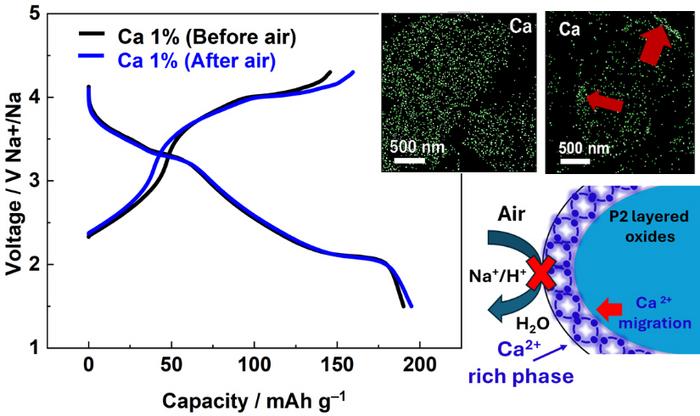
Researchers from Tokyo University of Science in Japan report a breakthrough in improving the stability of sodium ion batteries under ambient conditions using a new calcium doping strategy.
Sodium ion batteries have long suffered from surface instability in air and water, especially in their cathode materials. These instabilities cause structural degradation, irreversible phase changes during cycling, and limited energy density, ultimately leading to reduced performance and shortened lifespan.
The scientists focused on improving the air and water stability of a sodium compound known as Na₂/₃[Fe₁/₂Mn₁/₂]O₂ (NFM), which they describe as a “very promising compound” for use as a P2-type cathode material, offering fast ion transport and strong cycling stability.
To read further, visit our ESS news website.
This content is copyrighted and may not be reused. If you would like to collaborate with us and reuse some of our content, please contact: editors@pv-magazine.com.
Popular content

