

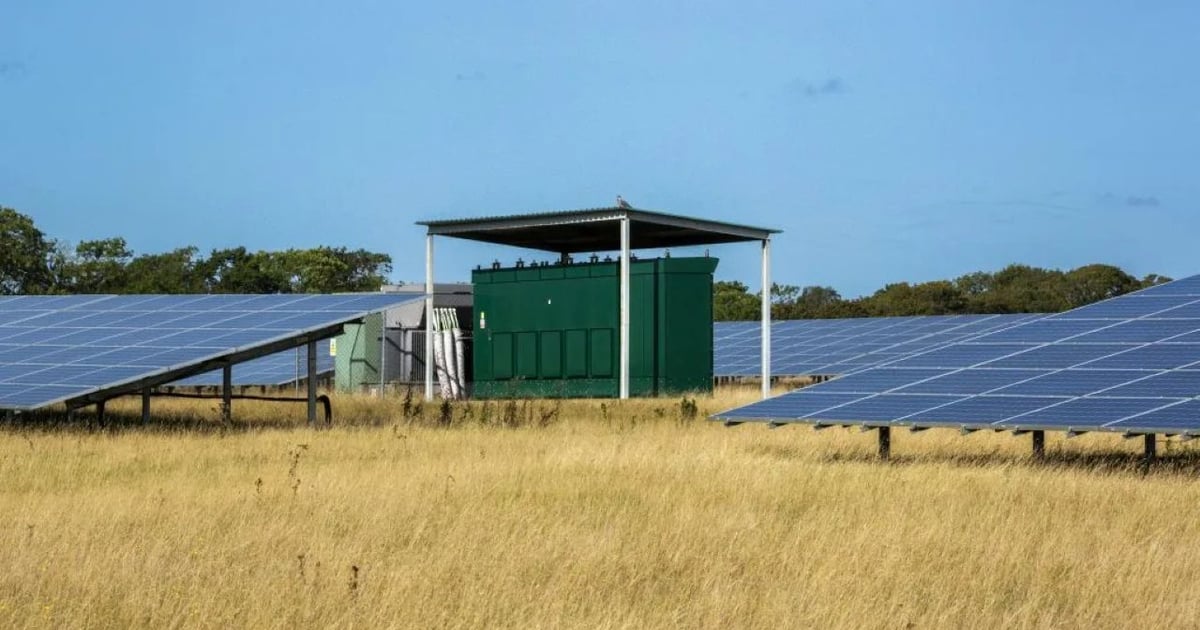
UK-based clean energy developer Island Green Power (IGP) has closed a £315 million HoldCo debt financing to support its transition to an independent power producer (IPP).
The financing package was arranged by Barclays Bank and Tokyo-based financial services firm Nomura, who acted as joint-lead underwriters and bookrunners. It will enable IGP to refinance existing debt and provide capital to support the company’s growth and enable the construction of IGP’s first projects.
IGP, which previously operated as a pure development company, is behind the West Burton solar power station, the largest Nationally Significant Solar Infrastructure Project (NSIP) to receive a Contract for Difference (CfD).
The company is 100% owned by funds managed by Macquarie Asset Management. Its focus is on large-scale solar NSIPs, and it is co-locating many of its solar power plants with battery energy storage systems (BESS). It has consent for the 480MW West Burton NSIP and the 600MW Cottam Solar Farm, and five NSIPs are currently in the planning examination process.
It was then decided to transition from developer to IPP Macquarie took over full ownership of IGP in May last year.
The shift towards a focus on owner-occupied activities, away from pure development, is a wider trend in the UK market, reflecting a value shift. In the past few years Elgin energy And Aura power both made the same transition.
Focus on NSIPs
IGP’s approach, which only focuses on projects larger than 100 MW (the threshold that qualifies a project as an NSIP), is one that delivers economies of scale. Despite a more expensive consent process, with millions of pounds spent before construction, there is a 100% approval rate for NSIPs under the current political regime.
Secretary of State for Energy Security and Net Zero Ed Miliband has granted development consent orders (DCOs) to 29 large-scale renewable energy projects since becoming Energy Minister in 2024.
NSIP projects are approved at government level, over the heads of local planning authorities, which some see as a disadvantage.
Discussed about a panel at the Clean Power 2030 Summit last weekChanging political circumstances have made the approvals and development of the NSIP less certain. In the longer term, Britain faces the possibility of a Reform Britain victory at the next general election and the turn against renewable energy that would entail. In the short term there will be a change of leadership within the Labor Party and probably a reshuffling of top positions.
