

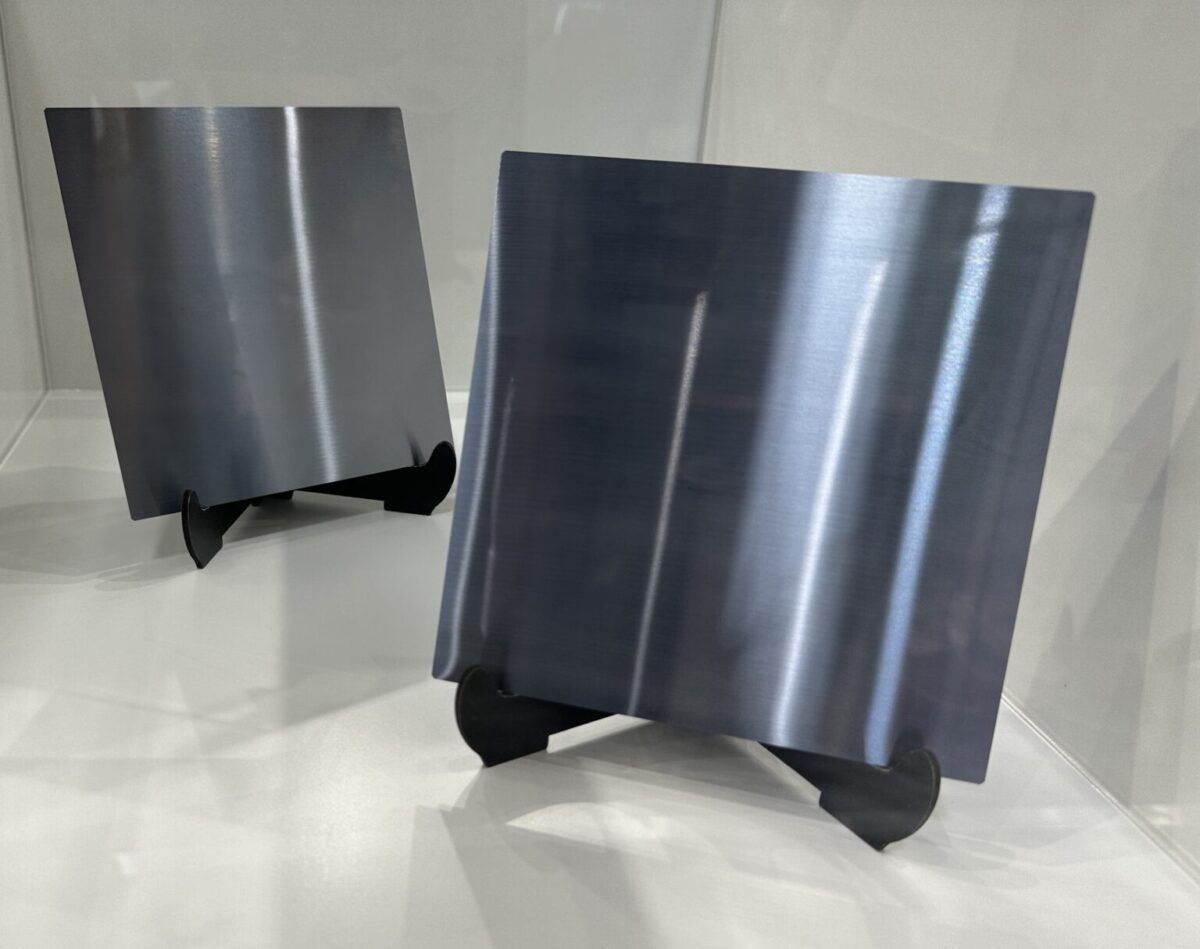
High-strength silicon wafers offer superior efficiency potential, but are highly susceptible to edge recombination and mechanical damage, limiting their commercial use compared to more robust standard wafers. Researchers from Longi and Sun Yat-sen University have shown that integrating in-situ edge passivation unlocks this potential, significantly increasing the fill factor and efficiency of back-contact solar cells.
The PV industry has so far largely failed to use high-resistance, light-doped wafers in commercial solar cell production, even though they have fewer recombination sites, improving electrical performance. These wafers are actually more brittle and prone to cracking during handling, sawing or assembling modules.
In contrast, standard Czochralski grown silicon wafers with moderate to low resistance are mechanically more robust and easier to process. In addition, they tolerate thermal and mechanical stress better, which is why they dominate mass market PV production despite a slightly lower efficiency potential.
In an effort to narrow this gap, Chinese manufacturer Longi and researchers from China’s Sun Yat-sen University have proposed using edge passivation as a way to increase the mechanical resistance of high-strength wafers while maintaining high efficiency and fill factor levels.
‘Having potential is not enough’ said the study’s lead author, Hao Lin pv magazine. “In our early experiments, high-resistivity wafers often performed worse than standard wafers. Our research shows why. We found that high-resistance wafers operate at higher excess carrier densities at the maximum power point (MPP) and exhibit reduced carrier collection capabilities due to flatter concentration gradients. This intrinsic feature makes them much more sensitive to edge recombination. Without effective passivation, the edges act as a ‘drain’ that negates the theoretical benefits.”
“We have shown that this sensitivity can only be managed by coupling high-resistance wafers with our in-situ edge passivation, unlocking their true performance,” he continued. “Our key insight is that high-resistance wafers enter this high-level injection regime much more easily than low-resistance wafers. This specific physical characteristic gives high-resistance wafers their superior intrinsic potential for high fill factors.”
The research team built 182 mm x 91 mm interdigitated back-contact (HIBC) hybrid solar cells using high-resistance or Czochralski-grown wafers. They explained that the only difference in the manufacturing process was that silicon nitride was not deposited on the wafer edges of the high-resistance substrates during chemical vapor deposition. As a result, the unprotected passive layer of silicon oxide and polysilicon (SiOx/n-poly-Si) was removed at the edges during the wet chemical cleaning.
The whole production process consisted of wet chemical cleaning, chemical vapor deposition (CVD), phosphor diffusion, atomic layer deposition (ALD), laser patterning, physical vapor deposition (PVD), insulation and screen printing. The high-resistance wafers had resistance values of 8–10 Ω·cm and the low-resistance wafers of 1.0–1.5 Ω·cm.
The scientists tested the performance of both cell types via a Sinton FCT-650 IV tester, a Sinton WCT-120MX wafer metrology system, transmission electron microscopy and simulation software.
This analysis showed that when effective edge passivation was introduced, both low- and high-resistance solar cells showed noticeable performance improvements, although the magnitude of the improvement differed significantly between the two.
In low-resistance cells, the implementation of passivated edge technology led to an absolute increase in pseudo-fill factor by 0.48%, accompanied by an absolute increase in efficiency by 0.34%. These gains indicate that reducing edge recombination has a positive impact on overall device performance, even in wafers with moderate resistivity.
The effect was even more pronounced in cells with high resistance. In this case, the passivation of the edges resulted in a 1.04% absolute improvement in the pseudo-fill factor and an absolute increase in efficiency of 0.64%, which is almost double the efficiency gain seen in low-resistance counterparts. As a result, high-resistance cells not only recovered their intrinsic performance potential, but ultimately outperformed low-resistance cells, achieving an absolute advantage of 0.34% in pseudo-fill factor.
This outcome highlights the strong synergistic interaction between high-resistance wafers and effective edge passivation, the researchers said.
Their findings can be found in the study “Synergistic effect of high-resistance wafers and edge passivation in unlocking the performance of counter-contact silicon solar cells”, published in Solar energy materials and solar cells.
“These findings serve as a critical guideline for the PV industry. The extreme sensitivity of high-resistance wafers extends beyond just the edge of the wafer – it applies both to scratches during production and to long-term degradation from passivation. Although high-resistance wafers provide a higher efficiency ceiling, they are functionally more ‘vulnerable’. Therefore, realizing their potential in mass production requires stricter control of mechanical damage and module stability,” concludes Lin.
This content is copyrighted and may not be reused. If you would like to collaborate with us and reuse some of our content, please contact: editors@pv-magazine.com.
