

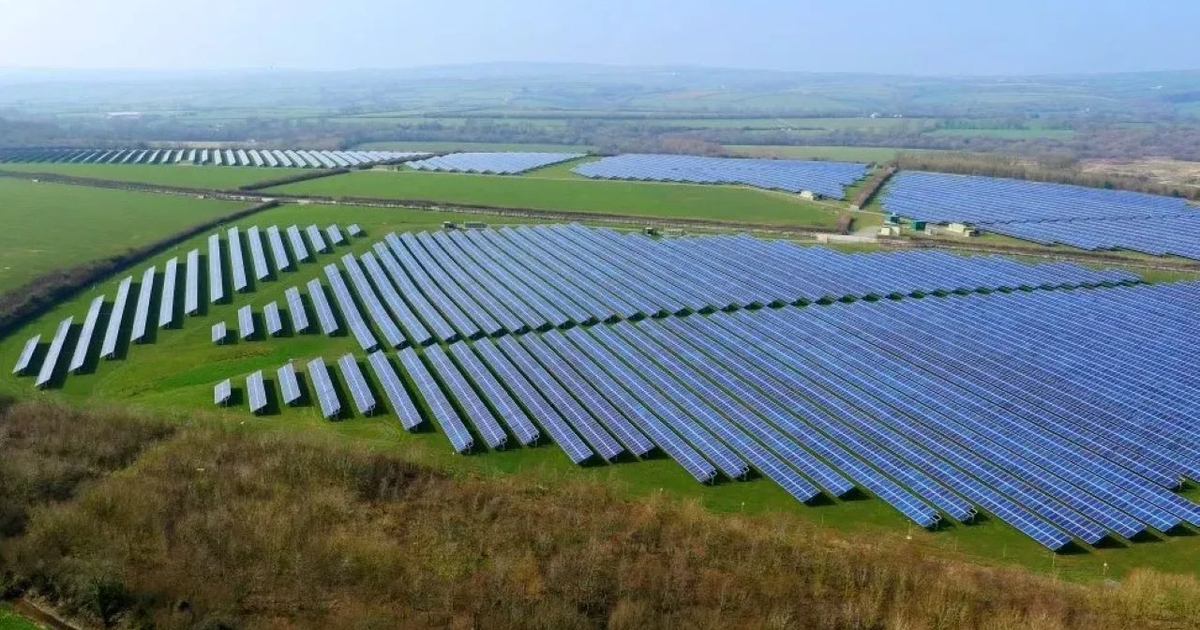
Low Carbon will expand its renewable energy pipeline by “several gigawatts” following an investment of almost £1.1 billion.
The renewable energy company secured what it called a landmark investment from CVC DIF, part of CVC, the manager of global private markets. Combined with follow-on investments from existing shareholder MassMutual, refinancing existing project finance debt and raising a Holdco facility, the total is approximately £1.1 billion in committed capital.
CVC DIF’s investment gives it a majority stake in Low Carbon. The company said the cash injection will allow it to “significantly” expand its installed capacity in the UK and Europe.
The independent power producer (IPP) said it will expand its presence in Britain, Germany and Poland, aiming to develop a 3GW portfolio of operational utility-scale solar, onshore wind, battery energy storage and bundled assets in the coming years.
US insurance giant MassMutual, which became a major shareholder in Low Carbon following a strategic partnership formed in 2021, announced it would continue to support the company’s growth with additional private investment.
Drew Dickey, head of alternative investments at MassMutual, said: “Significant progress has been made since our original investment in Low Carbon.” When the two first worked together, the IPP planned to deploy 20 GW of new renewable energy capacity by 2030.
Currently, Low Carbon says it has developed more than 8 GW of renewable energy projects and currently has 1 GW of capacity in operation, as well as a 16 GW development pipeline.
While the strategy involves connecting individual megawatt solar PV plants in England, Low Carbon is also developing projects large enough to be considered Nationally Important Infrastructure Projects (NSIPs).
It was earlier this year submitted a planning application for the Beacon Fen Energy Parkwhich will consist of a 400 MW solar PV plant, combined with a 600 MW battery energy storage system (BESS).
This was shortly before has released an NSIP under developmentthe 500MW Gate Burton solar plant, which will also feature a BESS of an undisclosed capacity, to EDF Renewables. The company had also sold one pipeline of eight turnkey solar PV projects with a combined capacity of 350MW to TotalEnergies.
This was likely the result of the realignment of grid connection queues, as changes to project timelines caused a surge in project sales in Britain. I’m following this, an analyst from Solar Media Market Research Josh Cornes explained that while Low Carbon had a Ready-to-Build (RTB) portfolio of more than 1.5 GWp, network reforms have accelerated connection times, compressing the connection dates of the entire portfolio over the next three to five years. Capacity constraints forced it to sell more than half of that portfolio because it couldn’t develop them all at once.
