

Today, the U.S. Treasury Department issued a report with new data on the success of the 2023 program year of the Inflation Reduction Act’s Bonus Credit Program for Low-Income Communities. The report shows how the program reduces energy costs for American households as part of the Biden-Harris administration’s economic agenda.
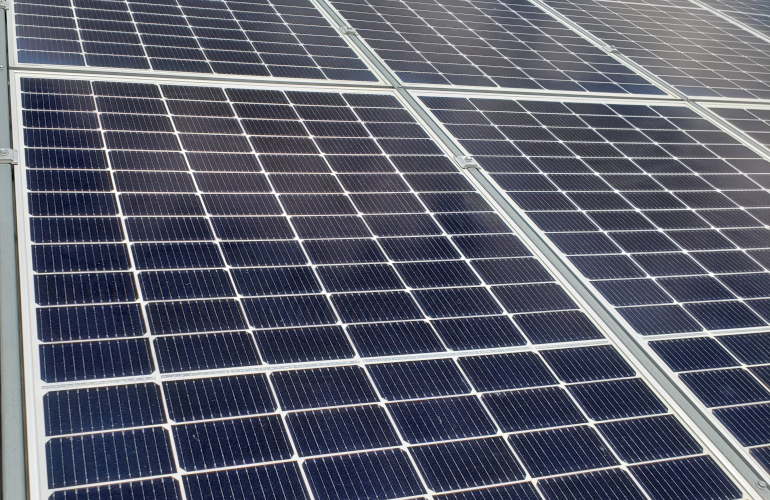
About $3.5 billion in investments in solar installations, made through the Low-Income Communities Bonus Credit Program, is expected to finance the generation of nearly 2 billion kWh of clean electricity each year in underserved places. That’s equivalent to the total annual electricity use of 200,000 average-sized U.S. households, or about $270 million per year at typical retail rates.
“$3.5 billion in public and private investments are flowing to communities that are too often left out and left behind, thanks to the Biden-Harris administration’s investments in clean energy projects,” said U.S. Deputy Treasury Secretary Wally Adeyemo. “These investments are already lowering costs, protecting families from energy price spikes and creating new opportunities in our clean energy future.”
Facilities that received allocations in the first year of the Bonus Credit Program for Low Income Communities include:
- More than 48,000 residential behind-the-meter utilities to reduce household electricity costs for single-family and multi-family homes;
Nearly 100 new energy facilities will be developed on Indian lands; - More than 800 energy facilities will be installed on affordable housing projects that will serve thousands of low- and middle-income residents; And
- More than 300 facilities, including community solar, that provide at least 50 percent of the financial benefits of the energy they produce to low-income households.
The Low-Income Communities Bonus Credit program was established under Section 48(e) of the Internal Revenue Code to promote cost-effective clean energy investments in low-income communities on Indian lands (as defined in the Act), if part of affordable housing. developments, or otherwise benefit low-income households. Low-income families across the country face energy costs that are up to three times higher than those of other families (that is, they spend on average up to three times as much, as a percentage of household income, on their home energy costs), and investments made through the Bonus Credit Program for low-income communities plays an important role in addressing this disparity. Section 48(e) increases the Section 48 energy investment tax credit for qualifying facilities by 10 to 20 percentage points, providing a strong incentive for clean energy development and adoption.
During its first year, the program saw strong demand, with more than 54,000 applications from 48 states, the District of Columbia, Puerto Rico, American Samoa, the Commonwealth of the Northern Mariana Islands and the U.S. Virgin Islands requesting more than four times the 1.8 gigawatts of DC solar and wind capacity available for allocation in 2023.
Through a rigorous process, the IRS awarded allocations to more than 49,000 energy facilities across the country, focusing on the projects that delivered the most immediate savings to households. Facilities receiving these allocations represent a combined investment of approximately $3.5 billion.
Facilities Receive Program Year 2023 Allocations under IRC 48(e) Bonus Program for Low-Income Communities by Application Category
|
Number of |
Rating plate Electrical power of facilities in kilowatts direct current |
|
|---|---|---|
|
(1) |
(2) |
|
| All facilities, total |
49,246 |
1,475,238 |
| Facilities located in a low-income community as defined in IRC Section 45D(e), total |
48,026 |
604,046 |
|
47,703 |
394,127 |
|
323 |
209,919 |
| Facilities located on Indian Land as defined in section 2601(2) of the Energy Policy Act of 1992 |
96 |
40,529 |
| Facilities that are part of a qualified low-income housing project |
805 |
136,433 |
| Facilities that are part of a qualified low-income economic benefit project |
319 |
Details may not add to the total due to rounding. Source: IRS, RAAS, Income Statistics, August 2024.
Awards were concentrated in areas with high energy costs or persistent poverty, reflecting the program’s success in providing meaningful energy savings for households and increasing clean energy adoption nationwide in areas with the lowest levels of historical investment .
This first-year impact report follows a notice of proposed rulemaking released last week to implement the Bonus Credit Amount Program for Low-Income Clean Electricity Communities under Section 48E(h). That provision, part of the Clean Electricity Investment Tax Credit under Section 48E, creates a similar program that would apply to additional clean electricity technologies beyond wind and solar energy, such as hydropower and geothermal energy.
News item from the Ministry of Finance
