
Close Menu
  • News
  • Industry
  • Solar Panels
  • Commercial
  • Residential
  • Finance
  • Technology
  • Carbon Credit
  • More
    • Policy
    • Energy Storage
    • Utility
    • Cummunity
What's Hot

A deep learning model tracks the status of the EV battery with high precision

March 6, 2026

Mitsubishi Electric Trane announces new heat pump line for hydronic heating – SPE

March 6, 2026

Origis is developing a 413 MW solar portfolio in West Texas

March 6, 2026
Facebook X (Twitter) Instagram
Solar Energy News
Friday, March 6
  • News
  • Industry
  • Solar Panels
  • Commercial
  • Residential
  • Finance
  • Technology
  • Carbon Credit
  • More
    • Policy
    • Energy Storage
    • Utility
    • Cummunity
Solar Energy News
Home - Solar Industry - MIT researchers develop polymer film that can prevent corrosion of solar panels
Solar Industry

MIT researchers develop polymer film that can prevent corrosion of solar panels

solarenergyBy solarenergyNovember 14, 2025No Comments3 Mins Read
Facebook Twitter Pinterest LinkedIn Tumblr Email
Share
Facebook Twitter LinkedIn Pinterest Email

Engineers at the Massachusetts Institute of Technology say their polymer coating can be used to protect photovoltaic modules, due to its impermeability to gases. The team has shown that a 60 nanometer thick film can extend the life of a perovskite crystal by several weeks.

November 14, 2025
Patrick Jowett

A team at the Massachusetts Institute of Technology (MIT) has developed a lightweight polymer film that can be used as a protective coating on solar panels because it is virtually impermeable to gas molecules.

Under laboratory test conditions, the nanometer-thick polymer was found to completely repel nitrogen and other gases. This differs from traditional polymers, which allow gases to pass through because their molecules are loosely bonded together, leaving small openings for gases to pass through.

The lab’s new material, known as 2DPA-1, is a two-dimensional polymer that self-assembles into molecular sheets using hydrogen bonds. It contains a building block called melamine, which contains a ring of carbon and nitrogen atoms, which can expand in two dimensions to form nanometer-sized disks.

2DPA-1 differs from previous polymers in that the disks are stacked on top of each other and held together by hydrogen bonds between the layers, making the structure strong and stable. MIT claims the polymer is stronger than steel, but has only one-sixth the density.

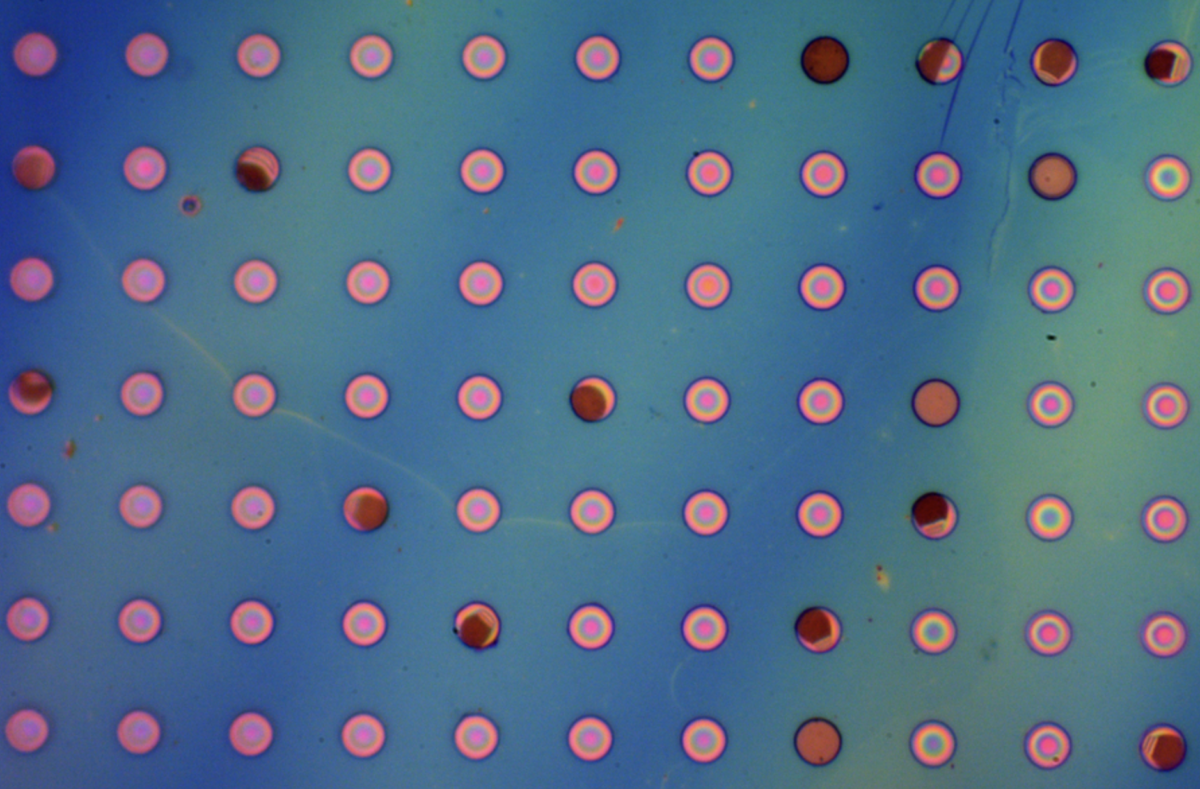
The MIT research exposed 2DPA-1 to helium, argon, oxygen, methane and sulfur hexafluoride and found that its permeability to these gases was at least 1/10,000 that of any other existing polymer, making it almost as impermeable as graphene.

Scientists have been working to develop a graphene coating as a method to protect solar cells from corrosion, but scaling up a graphene film has proven difficult because the film cannot be painted onto surfaces. Because MIT’s 2DPA-1 polymer sticks easily due to the strong hydrogen bonds between the layered disks, it could be a valuable alternative.

See also  Scientists classify weather types based on extreme photovoltaic output events

In the research paper “A molecularly impermeable polymer made from two-dimensional polyaramids”, available in naturethe research team shows that a 60 nanometer thick film could extend the life of a perovskite crystal by weeks, before adding a thicker coating could provide longer protection.

“By using an impermeable coating like this, you can protect infrastructure like bridges, buildings, railroads – basically anything outside exposed to the elements,” said Michael Strano, MIT’s Carbon P. Dubbs Professor of Chemical Engineering.

George Schatz, a professor of chemistry and chemical and biological engineering at Northwestern University, who was not involved in the study, called the results “remarkable.”

“Normally, polymers are fairly permeable to gases, but the polyaramids reported in this paper are orders of magnitude less permeable to most gases under conditions of industrial relevance,” Schatz explains.

This content is copyrighted and may not be reused. If you would like to collaborate with us and reuse some of our content, please contact: editors@pv-magazine.com.

Popular content

Source link

corrosion develop film MIT panels polymer Prevent researchers solar
Share. Facebook Twitter Pinterest LinkedIn Tumblr Email
solarenergy
  • Website

Related Posts

Origis is developing a 413 MW solar portfolio in West Texas

March 6, 2026

New Jersey expands state community solar program by 3 GW

March 6, 2026

How to address imbalance datasets in solar panel dust detection

March 5, 2026
Leave A Reply Cancel Reply

Don't Miss
Policy

Energy storage will no longer be eligible for a bonus for low incomes in 2025

By solarenergyOctober 4, 20240

Credit: DSD Renewables On October 3, the Solar Energy Industries Association (SEIA) submitted comments on…

Two Blues Solar completes four school solar installation

September 30, 2025

The government spends £ 700,000 on NHS -Zonne -installations

September 26, 2025

Swedish grid operators reluctant to integrate batteries – PV Magazine International

March 26, 2025
Stay In Touch
  • Facebook
  • Twitter
  • Pinterest
  • Instagram
  • YouTube
  • Vimeo
Our Picks

A deep learning model tracks the status of the EV battery with high precision

March 6, 2026

Mitsubishi Electric Trane announces new heat pump line for hydronic heating – SPE

March 6, 2026

Origis is developing a 413 MW solar portfolio in West Texas

March 6, 2026

New Jersey expands state community solar program by 3 GW

March 6, 2026
Our Picks

A deep learning model tracks the status of the EV battery with high precision

March 6, 2026

Mitsubishi Electric Trane announces new heat pump line for hydronic heating – SPE

March 6, 2026

Origis is developing a 413 MW solar portfolio in West Texas

March 6, 2026
About
About

Stay updated with the latest in solar energy. Discover innovations, trends, policies, and market insights driving the future of sustainable power worldwide.

Subscribe to Updates

Get the latest creative news and updates about Solar industry directly in your inbox!

Facebook X (Twitter) Instagram Pinterest
  • Contact
  • Privacy Policy
  • Terms & Conditions
© 2026 Tsolarenergynews.co - All rights reserved.

Type above and press Enter to search. Press Esc to cancel.