
Close Menu
  • News
  • Industry
  • Solar Panels
  • Commercial
  • Residential
  • Finance
  • Technology
  • Carbon Credit
  • More
    • Policy
    • Energy Storage
    • Utility
    • Cummunity
What's Hot

A deep learning model tracks the status of the EV battery with high precision

March 6, 2026

Mitsubishi Electric Trane announces new heat pump line for hydronic heating – SPE

March 6, 2026

Origis is developing a 413 MW solar portfolio in West Texas

March 6, 2026
Facebook X (Twitter) Instagram
Solar Energy News
Friday, March 6
  • News
  • Industry
  • Solar Panels
  • Commercial
  • Residential
  • Finance
  • Technology
  • Carbon Credit
  • More
    • Policy
    • Energy Storage
    • Utility
    • Cummunity
Solar Energy News
Home - News - Mizzou scientists use layered crystals for next-generation energy solutions
News

Mizzou scientists use layered crystals for next-generation energy solutions

solarenergyBy solarenergyJanuary 22, 2025No Comments3 Mins Read
Facebook Twitter Pinterest LinkedIn Tumblr Email
Share
Facebook Twitter LinkedIn Pinterest Email

Mizzou scientists use layered crystals for next-generation energy solutions


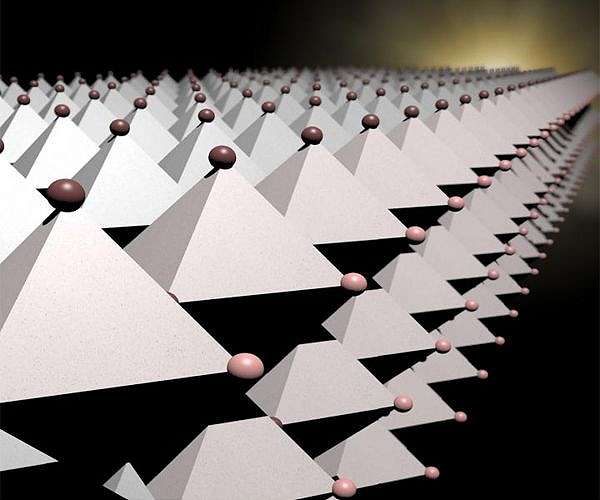
Researchers at the University of Missouri are delving into the nanoscale properties of halide perovskites, a material that could revolutionize energy-efficient optoelectronic technologies. By investigating its ultra-thin crystalline structure, scientists aim to unlock unprecedented efficiencies in solar energy and lighting solutions.

Physics professors Suchi Guha and Gavin King of Mizzou’s College of Arts and Science are leading the research. “Halide perovskites are being hailed as the semiconductors of the 21st century,” says Guha, an expert in solid-state physics. “Over the past six years, my laboratory has focused on optimizing these materials as a sustainable source for the next generation of optoelectronic devices.”

The team used chemical vapor deposition to create halide perovskites, a process refined by Randy Burns, a former graduate student of Guha, in collaboration with Chris Arendse of the University of the Western Cape, South Africa. This scalable method offers potential for the mass production of advanced solar cells.

In investigating the material’s optical properties, Guha’s lab used ultrafast laser spectroscopy to better understand its functionality. Complementing these findings, King introduced ice lithography, a cryogenic technique that enables nanometer-scale fabrication. “By creating complex patterns on these thin films, we can produce devices with different properties and functionalities,” says King, a specialist in biological physics. He likened the process to using a nanometer-scale chisel to cut out the fundamental layers of optical electronics.

The collaboration between Guha and King, despite their different areas of expertise, has been integral to the success of the project. “When you work together, you get the full picture and the opportunity to learn new things,” Guha explains. “Gavin’s lab, for example, works with biological materials, and by combining that with our work in solid state physics we are discovering new applications that we had not thought of before.”

See also  Insolation Energy will add 3 GW of solar panel and 1.4 GW of cell capacity by March

King echoed the sentiment. “Everyone brings a unique perspective, and that’s what makes it work. If we were all trained the same way, we’d all be thinking the same way, and that wouldn’t allow us to achieve as much as we can here together .”

This research is an example of the groundbreaking work taking place at the University of Missouri’s Center for Energy Innovation, where interdisciplinary efforts are advancing sustainable energy technologies.

Research report:Carrier relaxation and exciton dynamics in chemical vapor-deposited two-dimensional hybrid halide perovskites

Research report:Stabilizing metal halide perovskite films via chemical vapor deposition and cryogenic electron beam patterning


Source link

crystals Energy layered Mizzou nextgeneration scientists solutions
Share. Facebook Twitter Pinterest LinkedIn Tumblr Email
solarenergy
  • Website

Related Posts

A deep learning model tracks the status of the EV battery with high precision

March 6, 2026

Origis is developing a 413 MW solar portfolio in West Texas

March 6, 2026

The technical interface makes perovskite solar cells ready for the market

March 5, 2026
Leave A Reply Cancel Reply

Don't Miss
Finance

Sunnova files for bankruptcy – PV Magazine International

By solarenergyJune 11, 20250

The American residential sun company Sunnova has been concluded assets and electricity buy agreements to…

Authorities approve the 22.5 MW solar project for renewable connections

September 18, 2024

Improvement of quasi-2D perovskiet solar cells with dicyandiamide interface engineering

September 8, 2025

Two major community software companies announce merger

March 12, 2025
Stay In Touch
  • Facebook
  • Twitter
  • Pinterest
  • Instagram
  • YouTube
  • Vimeo
Our Picks

A deep learning model tracks the status of the EV battery with high precision

March 6, 2026

Mitsubishi Electric Trane announces new heat pump line for hydronic heating – SPE

March 6, 2026

Origis is developing a 413 MW solar portfolio in West Texas

March 6, 2026

New Jersey expands state community solar program by 3 GW

March 6, 2026
Our Picks

A deep learning model tracks the status of the EV battery with high precision

March 6, 2026

Mitsubishi Electric Trane announces new heat pump line for hydronic heating – SPE

March 6, 2026

Origis is developing a 413 MW solar portfolio in West Texas

March 6, 2026
About
About

Stay updated with the latest in solar energy. Discover innovations, trends, policies, and market insights driving the future of sustainable power worldwide.

Subscribe to Updates

Get the latest creative news and updates about Solar industry directly in your inbox!

Facebook X (Twitter) Instagram Pinterest
  • Contact
  • Privacy Policy
  • Terms & Conditions
© 2026 Tsolarenergynews.co - All rights reserved.

Type above and press Enter to search. Press Esc to cancel.