

A European research consortium is investigating a new nanostructured silicon approach that could help crystalline silicon solar cells overcome efficiency limitations. The initiative, known as Low-Energy Electron Multiplication on Nanostructured Solar Cells (LEEMONS), aims to exploit a mechanism called low-energy electron multiplication (LEEM), which allows a single high-energy photon to generate multiple low-energy electrons, reducing energy losses that typically occur when excess photon energy is dissipated as heat.
LEEM is a form of carrier multiplication (CM), a promising process that, if applied successfully, can dramatically increase the efficiency of PV devices. The process occurs when the absorption of a single photon results in the excitation of multiple electrons. In conventional solar cells, a single photon can excite only one electron across the band gap of the cell, causing all high-energy free carriers to dissipate as heat.
Nanostructuring silicon
It is claimed that carrier multiplication has the potential to bring solar photovoltaics closer to Shockley-Queisser – the maximum theoretical efficiency that a solar cell using a single p-n junction can possibly achieve, calculated by examining the amount of electrical energy extracted per incident photon. However, so far it has only been applied in experimental research on solar energy. Compared to classical CM, LEEM enables carrier multiplication at lower excess electron energies, reducing thermalization losses. The proposed LEEM approach modifies the response of silicon itself and does not require additional semiconductors, as in tandem solar cells using perovskite or other absorber materials.
For their experiments, the scientists use nanostructuring silicon via controlled ion implantation. The process creates ultra-thin amorphous silicon regions embedded in a crystalline silicon matrix. In these nanostructured regions, high-energy carriers are more likely to generate additional electron–hole pairs through impact ionization before losing their energy through thermalization. A key step in the technology is the formation of buried amorphous silicon layers through ion implantation followed by controlled annealing.
Ion implantation
“The nanostructured silicon used in the LEEMONS project is produced via a controlled ion implantation process applied to conventional crystalline silicon wafers,” said project coordinator Brice Rouffie. pv magazine. “During implantation, energetic ions are introduced into the silicon lattice, locally damaging the crystalline structure and creating thin amorphous regions beneath the surface. Because the implanted ions all have a well-defined kinetic energy, they penetrate the silicon to a predictable depth before losing their energy. As a result, the lattice damage is concentrated in a very narrow region, allowing the formation of ultra-thin amorphous layers.”
A subsequent thermal annealing step partially recrystallizes the silicon, while preserving extremely thin buried amorphous layers embedded in the crystalline matrix. Recrystallization occurs more rapidly in the crystallographic direction than in other directions, naturally smoothing and flattening the amorphous and crystalline interfaces. These layers typically have nanometer-scale thickness and can be placed at controlled depths.
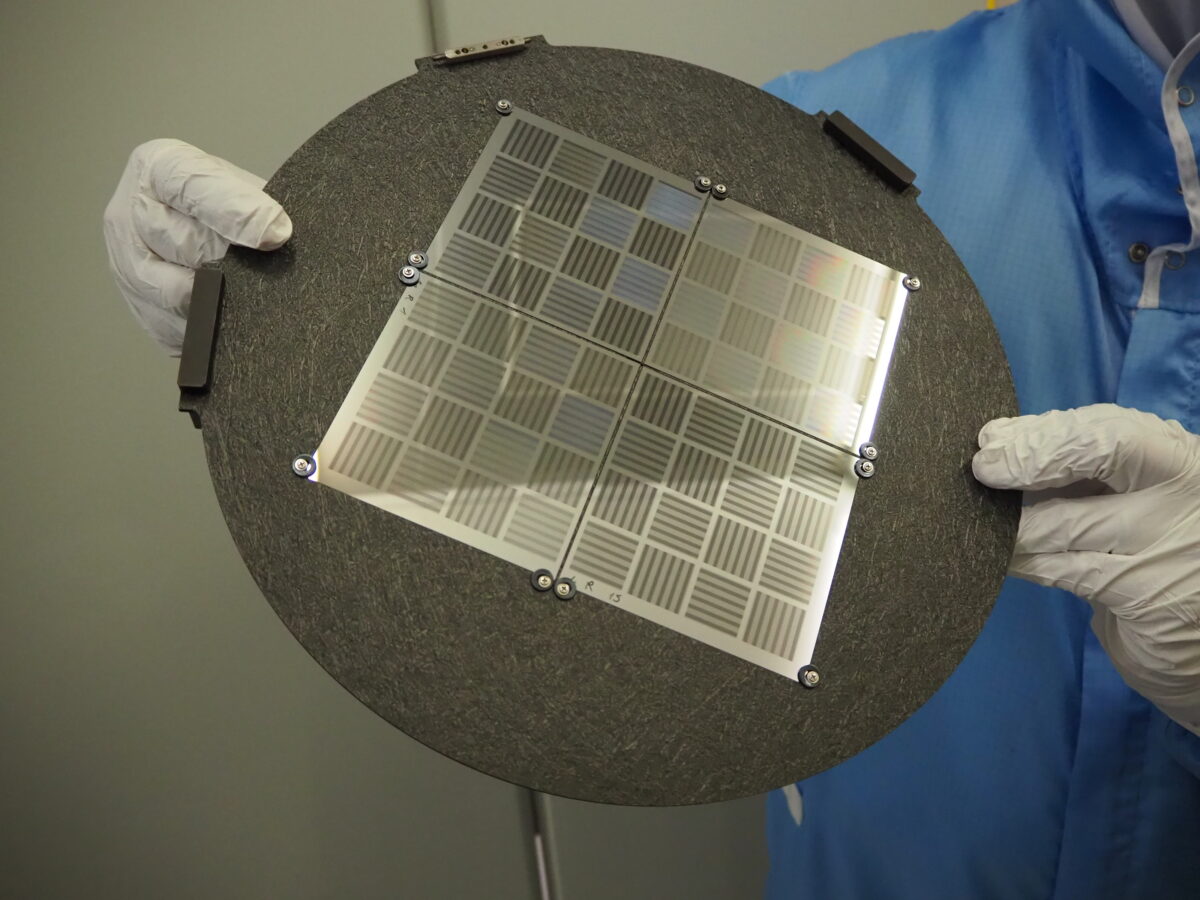
Using transmission electron microscopy, the research group discovered that the produced nanometer-scale amorphous layers in crystalline silicon wafers were suitable for initial experiments in solar cells. To precisely define implantation zones, they use rigid masks, including ultra-thin silicone masks with micrometer-scale openings and metal mesh masks with openings as small as 7 µm. These techniques enable patterned ion implantation without reliance on photoresist processes, thus avoiding contamination or damage to the wafer surface.
Production techniques
The scientists explained that integrating the silicon nanostructures into practical devices requires careful adjustments to various production steps. A key challenge is metallization, as standard solar cell combustion processes typically exceed 400 C, which could alter the implanted nanostructures. To address this, they are investigating low-temperature metallization methods, including silver contacts deposited by magnetron sputtering at temperatures below 100 C. Passivation is another focus, with teams from Germany’s ISC Konstanz and the Swiss Center for Electronics and Microtechnology (CSEM) evaluating dielectric layers and diffusion processes to preserve carrier lifetimes while accommodating the implanted structures.
“Preparatory work is still ongoing and the project has not yet reached the stage of testing fully integrated prototypes of M6 solar cells,” Rouffie said. “At ISC Konstanz, current efforts are focused on optimizing the metallization process to ensure that the nanostructured regions created by ion implantation can survive the high-temperature step used in industrial solar cell production. Initial testing has shown that the amorphized silicon layers can remain stable during baking and when appropriate dummy wafer configurations and laser-enhanced contact optimization (LECO) are used, which is an encouraging result for process compatibility.”
At the same time, work at CSEM is currently focused on understanding the impact of the LEEM nanostructures on carrier lifetime. “An initial experimental campaign in January 2026 did not deliver the expected improvements, so a second optimization campaign is now underway to refine the implantation and annealing conditions and better understand the mechanisms affecting longevity,” he continued. “Once these lifetime optimizations are completed and process integration is stabilized, the consortium plans to proceed with the fabrication and testing of the first complete M6 cell prototypes incorporating the LEEM nanostructures from mid-2026.”
Efficiency roadmap
Rouffie explained that in the detailed balance calculation by Shockley and Queisser, it is assumed that each absorbed photon can generate at most one electron-hole pair. This assumption is one of the main factors limiting the maximum efficiency of conventional photovoltaic devices.
“Carrier multiplication procedures challenge this limitation by allowing a single high-energy photon to generate multiple charge carriers,” he pointed out. “In theory, this could push the efficiency limits well beyond the 31.0% and 40.8% calculated for devices without carrier multiplication under single-sun and maximum-concentration illumination, respectively. Detailed balance calculations predict that efficiencies as high as 44.7% under single-sun and 85.9% under concentrated light can be achieved, assuming the Sun behaves as a blackbody at a temperature of 5,762 K.”
“These results confirm previous calculations by Rofl Brendel, CEO of the German Institute for Solar Energy Research Hamelin (ISFH), who obtained similar values under slightly different assumptions, namely 43.6% for an optimal bandgap of 0.768 eV and 85.4% for 0.048 eV,” Rouffie said. “Similar limits have also been obtained for standard lighting conditions. Overall, for single-junction photovoltaic cells, the theoretical efficiency increases from about 33.7% without carrier multiplication to about 44.4% when multiplication effects are included.”
“LEEM is expected to outperform other known carrier multiplication processes, such as multi-exciton generation, because its low-energy activation threshold could allow a larger portion of the solar spectrum to contribute to this effect,” he also pointed out. “Additionally, reducing thermal losses would lower the operating temperature of the solar cells and thereby further improve the overall performance of the device. LEEM therefore has the potential to significantly increase the efficiency of silicon solar cells, potentially approaching a doubling of theoretical efficiency limits without the need for fundamentally different manufacturing processes.”
Looking ahead, the researchers aim to demonstrate proof-of-concept devices using established solar cell architectures, including Passivated Emitter and Rear Contact (PERC) and heterojunction (HJT) solar cells.
“At this stage the project is not targeting a specific commercial efficiency value,” concludes Fourrie. “The main goal is to experimentally verify whether the LEEM mechanism can be induced in nanostructured silicon and whether it can lead to measurable improvements in carrier generation. If such effects can be demonstrated, efficiency improvements of almost 30-35% for single-junction silicon devices become conceivable, given the higher theoretical limits predicted when carrier multiplication mechanisms are taken into account.”
The LEEMONS project is funded under the EU’s Horizon Europe program and will run from November 2024 to October 2027. The consortium consists of six partners: Segton Advanced Technology, CEA-Leti, ISC Konstanz, CSEM, Roltec and University of Franche-Comté
.
