

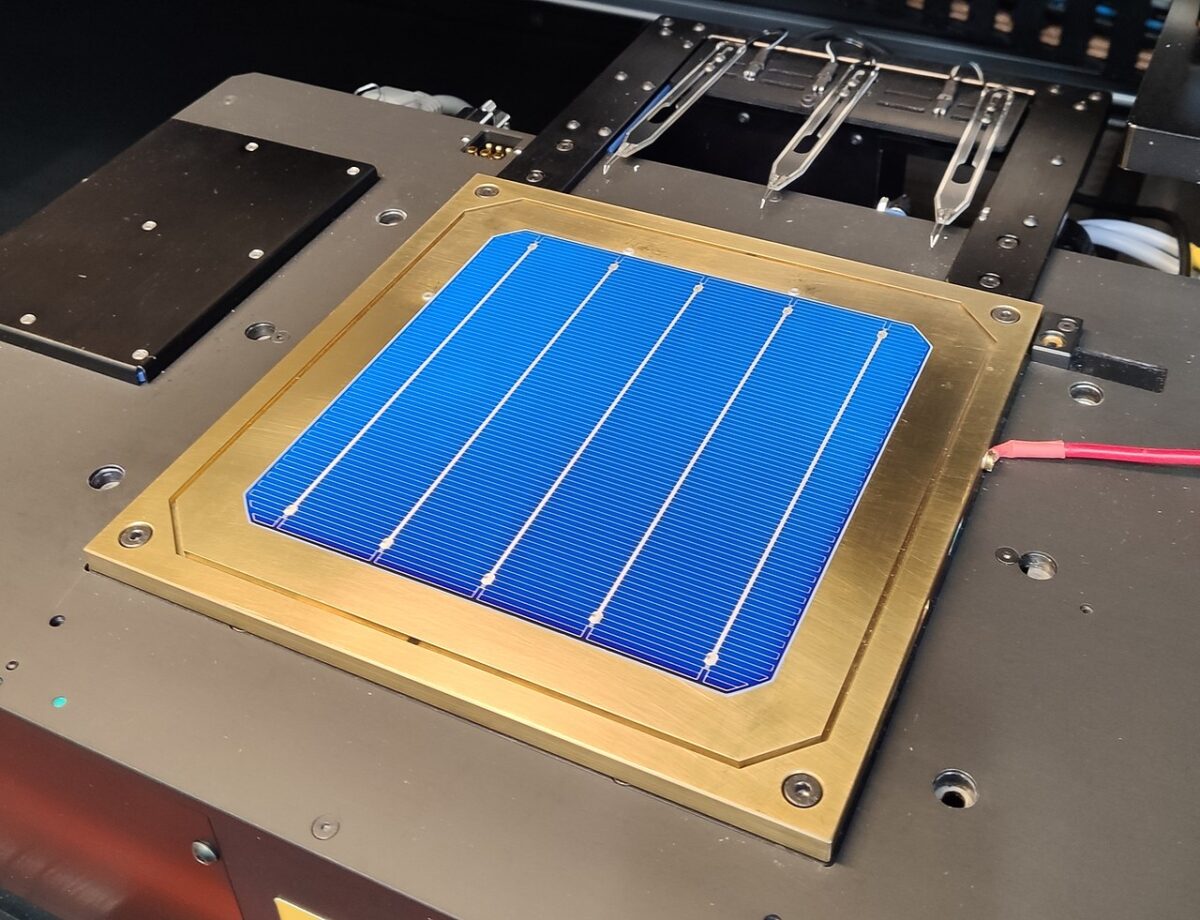
Researchers from the University of New South Wales examined the impact of sodium-induced degradation in heterojunction solar cells under accelerated moist heat tests. They considered three different types of sodium salts and identified the degradation mechanisms attributed to each contaminant.
A research team from the University of New South Wales (UNSW) and Chinese-Canadian solar panel manufacturer Canadian Solar has investigated how heterojunction (HJT) solar cells are affected by sodium (Na) and moisture degradation under accelerated moisture-heat tests and discovered that most degradation modes primarily affect the cells themselves, making cell-level testing preferable.
“The main motivation for this work was to address the long-term reliability challenges of HJT technology, which, despite its high efficiency and growing acceptance in the photovoltaic market, is highly susceptible to degradation under high temperature and high humidity conditions ,” said the study’s lead author, Bram Hoex pv magazine. “A major focus is on understanding the underlying mechanisms of Na-induced degradation and its interactions with environmental anions and material compositions, such as transparent conductive oxide layers (TCO) and metal contacts.”
According to Hoex, understanding these mechanisms is crucial to guide the field in effectively addressing the recombination problems and other degradation pathways. “Cell-level testing is approximately two orders of magnitude faster than module-level evaluations, allowing detailed characterization of failure modes,” he explained. “This accelerated and detailed approach is used in this study to comprehensively investigate the degradation mechanisms and support the development of improved parts lists, solar cells and test protocols.”
In the newspaper “Revealing the degradation mechanisms in silicon heterojunction solar cells under accelerated moisture-heat tests”, published in Solar energy materials and solar cellsHoex and his team considered three different types of sodium salts: sodium bicarbonate (NaHCO₃), sodium chloride (NaCl) and sodium nitrate (NaNO₃) – as decomposers to simulate contamination in HJT cells under moist heat.
“This methodological choice simulates realistic contamination scenarios that often occur in the field,” says Hoex. “Through in-depth analysis of degradation patterns and elemental profiling, we have precisely identified the degradation mechanisms attributed to each contaminant, uncovering distinct pathways modulated by the specific anionic properties of each sodium salt/ion combination.”
The researchers found that NaHCO₃, due to its alkaline nature, causes significant degradation in SHJ cells by chemically interacting with transparent conductive oxide (TCO) layers, leading to marked changes in elemental composition and ultimately affecting open-circuit voltage stability and contact integrity endangers. Moreover, they determined that NaCl, driven by its chloride ions, mainly causes severe contact disturbances related to morphological transformations in silver nanoparticles. Conversely, NaNO₃ showed negligible impact on the performance of SHJ cells, which we attribute to its neutral anionic structure and lower chemical reactivity.
“Our findings confirm that sodium ions require specific conditions to initiate degradation in SHJ cells, selectively affecting vulnerable areas,” Hoex concluded. “This comprehensive insight provides valuable guidance for material selection and module manufacturing processes and could serve as a diagnostic tool for identifying and addressing solar panel defects observed in the field.”
Another research group led by UNSW investigated failure modes in HJT solar panels with glass backplate configurations in 2023. They identified four failure modes caused by moist heat in heterojunction solar panels with a glass-back configuration.
More recently, a group of researchers from the French research center Institut Photovoltaïque d’Ile-de-France (IPVF) and EDF R&D, a division of French energy giant EDF, conducted a series of tests to test the reliability of HJT solar panels in a humid heat environment and has determined that sodium ions are the most important degradation factor.
These tests showed that the modules with soda-lime glass-glass configuration suffered the largest open-circuit voltage and short-circuit current losses, due to the depassivation of the cell by the action of sodium ions from glass leaching.
The analysis also showed that the effect of sodium ions in inducing cell passivation breakdown are particularly strong at the leading edge, while mIt was found that moisture induces degradation of the transparent conductive oxide (TCO) and contacts and leads to fill factor losses.
This content is copyrighted and may not be reused. If you would like to collaborate with us and reuse some of our content, please contact: editors@pv-magazine.com.
