

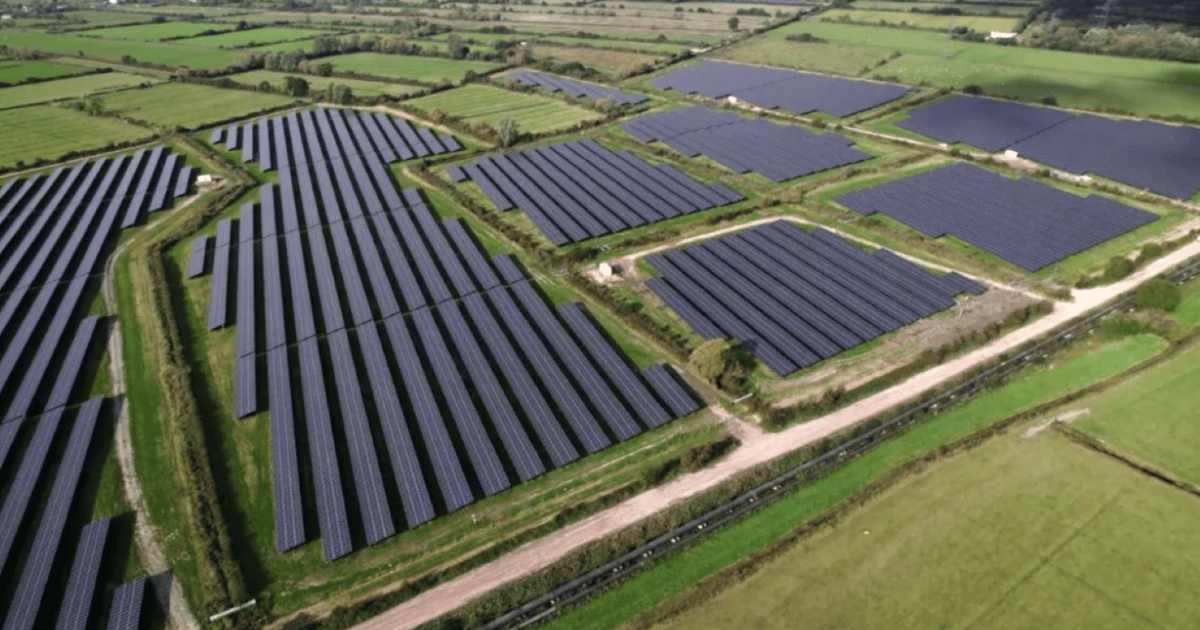
Developer Starlight Energy has secured planning permission for a 240MW/960MWh battery energy storage system (BESS) near Stockton-on-Tees in Durham.
The Thorpe Thewles BESS is the largest such project developed by Starlight in Britain, according to the developer’s announcement, which posted on LinkedIn.
Starlight Energy is the development arm of NextEnergy Group, launched in 2022. Early this year, Starlight sold a Scottish-developed BESS to the NEUK I Fund, owned by NextEnergy Capital, the investment management company within the same group.
As of April this year, Starlight Energy’s global portfolio stood at 7 GW, with 850 MW of solar and 250 MW of storage assets in the United Kingdom, where parent company NextEnergy is based. Starlight currently operates in Canada, Greece, Italy and Romania.
NextEnergy Group was behind the development of the Llanwern Solar Farm, which was commissioned in 2020. After establishing Starlight Energy through internal reallocation, the developer now counts the project, at one point the largest solar park in Great Britainas part of its portfolio.
When Starlight was launched, the focus was on solar energy development, initially focusing on early-stage solar PV projects. It stated its intention to expand into other areas, including energy storage.
The increased focus on BESS assets, which reflects a broader market trend where the technology has become a popular area for expansion or diversification for struggling solar companies, comes after a rocky 2025 for NextEnergy’s Solar Fund.
In December 2025, NextEnergy blamed macroeconomic uncertainty, persistently high interest rates, asset manager consolidations and redemptions, rising long-term government bond yields, political instability and falling energy prices for a decline in net asset value (NAV) between April and September that year.
In response to this NextEnergy embarked on a ‘strategic reset’ early this year, and said it would increase its exposure to energy storage to 30% of its gross asset value, a significant increase from the previous figure of 10%. The company said the shift would allow it to “take full advantage of developments within the sector”.
These developments were perhaps especially evident at the Intersolar Europe event in Munich last month, with a written by our colleagues at PV technology research into the shift to storage by solar energy companies.
