

The National Energy System Operator (NESO) last week (February 13) published the latest version of its timeline for developers to receive grid connection offers.
Today, in line with the new delivery deadline, NESO said the first contract has been sent for protected transmission projects, which will be connected in 2026 and 2027, on ‘a small project connecting in Scotland’.
NESO announced the new dates in a joint announcement with the UK Transmission Owners (TOs), Distribution Network Operators (DNOs) and other supply partners. Under the new timescales, protected transmission and large embedded projects due to be connected in 2026/27 will receive formal connection date offers between February 13, when the timeline was published, and mid-April this year. Protected distribution offers will ship between early March and May 2026.
Gate 2 Phase 1 (connecting pre-2030) transmission and major embedded offerings are now planned between mid-May and mid-September 2026, with distribution-level offerings coming approximately two months later (mid-July to mid-November 2026).
Gate 2 Phase 2 offers (connection between 2030-2035) will then follow for transmission and large embedded projects between early September 2026 and mid-January 2027, and for distribution between mid-October 2026 and mid-March 2027.
Offer timelines will be somewhat location-based, related to the technical complexity and extent of reassessment required in each network zone. Finally, creating a new area of potential uncertainty, the operator has removed the reference to when the next application window opens in the timeline.
Why the timeline for grid connection has changed
According to the operator, engineering and technical problems were identified after the disaster a new queue was formed and time was needed to revise, leading to wider delays. While the process used to manage connection requests caused significant delays, infrastructure upgrades are also needed to enable timely connections for renewable energy generation projects.
NESO and the other operators said the issues raised during the queuing reform process must be resolved to “ensure that the offers issued through the program will be robust, reliable and technically accurate.”
The two main factors in the slowdown are: updated background assumptions, where the volume of Gate 2 projects is higher than initially thought, meaning network companies now have to repeat studies moving into the engineering phase; and that some areas may require additional time to ensure that construction schedule assumptions are accurate.
NESO’s announcement acknowledged that there has been “considerable uncertainty” throughout the process to date, particularly around when to expect offers. It further admitted that “any change in the timeline creates uncertainty, especially regarding resources and investments.”
How the grid connection timeline has changed
By means of consultation on how the grid connection queue would be reformedthe solution was intended to create greater certainty around the expansion of renewable energy generation in Great Britain.
For a while, there was no official timetable for when the results of the reforms would be visible. When the Gate 2 application window opensNESO said that following the close of the evidence window, which was due to take place on July 29, new connection agreements would be issued in the fall of 2025.
Problems with the portal meant that entries remained open until Augustand inside October NESO published its first official timeline.
According to that timeline (which many have noted is now difficult to find, making it appear that NESO is working on schedule), customer notifications will begin no later than December 1. It said firm offers for protected projects (scheduled for connection 2026/27) would be issued by the end of January 2026. At the end of January the operator had to confirm further delays, leading to the new timeline outlined above.
A screenshot of the timeline published in October, via Internet Archive. This timeline will also be available in webinar recordings on the NESO website from October.
Impact of the delays
There is one for developers of protected projects risk that they will not receive a fixed connection date until close enough to the date when construction is no longer feasible.
As part of the connection queuing reform, fines will be introduced for projects that do not progress within the set deadlines. So far, there is no indication that compensation will be provided for projects affected by the top-down delays; Such grants are one of four key demands made by consultancy Blake Clough in an open letter to NESO, based on issues raised by developers.
Developers who have been notified that they will receive a Gate 2 Phase 1 offer will experience similar issues with uncertainty, but there will likely also be developers who oversubmitted and now face an unrealistic concurrent buildout if they accept their offers.
For those who received Gate 1 offers and plan to reapply in the next period, there is also no certainty; Although the government’s objectives are currently strongly focused on 2030-2035 deadlines, there will also be a need beyond that time.
Or yes expressed frustration with the delays and refused to provide assistance to NESO that failed to meet its obligations.
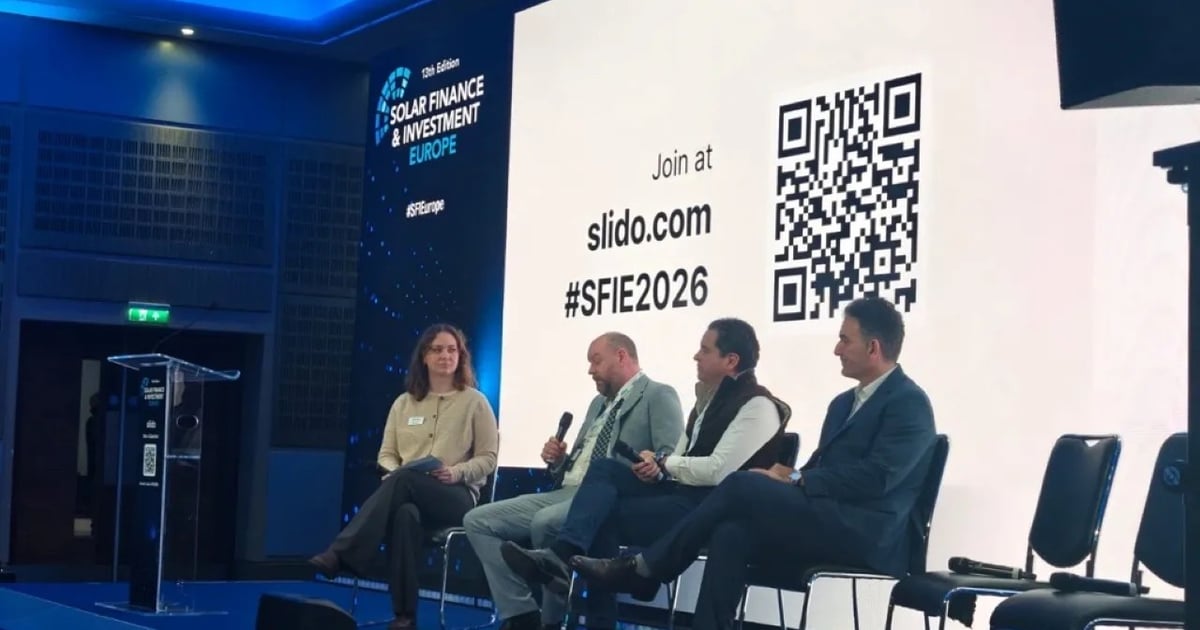
Further exploration of this took place in a webinar organized by Solar energy portal with speakers from Blake Clough, Innova and Solar Media Market research, available to view on request. We have that too reporting in a panel on this subject of the Solar Finance & Investment Summit, organized by our publisher Solar Media in London earlier this month.
The interconnection reform, which notably left no room to award contracts for battery energy storage systems (BESS) beyond the projects that promised ‘protected’ connections, is likely to be a key topic at next week’s conference. EU energy storage summitorganized by Solar Media in London.
Visit the website to view the agenda And book tickets.
