

Ofgem’s cap-and-floor support program could support up to 7.6 GW of long-term energy storage (LDES) capacity.
The UK energy regulator has shortlisted 16 projects for the LDES support programme, the first of its kind, with a duration of 8 to 22 hours.
The projects have a total capacity of 7,645 MW and have an ‘appropriate mix of duration, technology and site distribution’, Ofgem said. Lithium-ion battery energy storage system (BESS) and pumped storage hydropower (PSH) have taken up the lion’s share of capacity, with two smaller projects using compressed air energy storage (CAES) and a mix of vanadium redox flow batteries (VRFB) and zinc hybrid cathode technology.
They were chosen from 77 projects shortlisted for a total of 27GWunveiled in September 2025, and the chosen capacity is at the top end of Ofgem’s estimated range of 2.7-7.7 GW for this initial window.
The scheme aims to enable the deployment of LDES capacity to improve security of supply, reduce emissions and reduce system costs. The UK government predicts an increased need for LDES as more renewables come online, but due to long construction timelines and uncertain revenues, this cannot be left to the private sector alone.
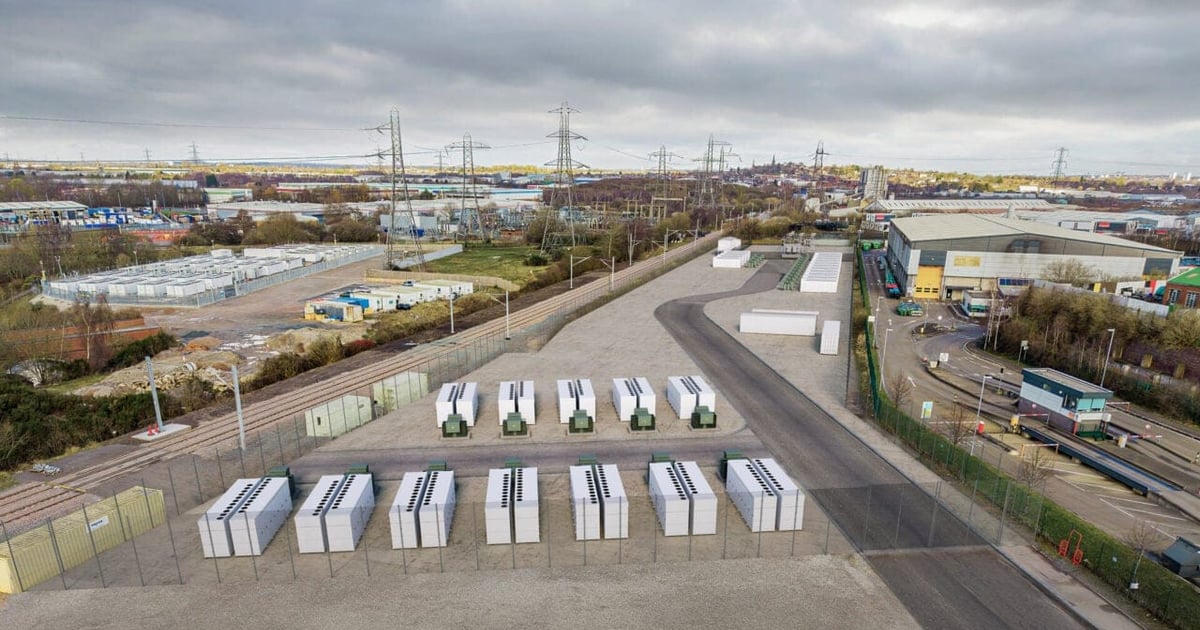
Field has five BESS projects with a total capacity of 1.6 GW/26.8 GWh, an average duration of 16.75 hours. Amit Gudka, CEO and co-founder of owner-operator BESS, commented: “The UK LDES Cap and Floor is a global milestone program, and we are proud to be part of it. Our 16- to 18-hour battery life will be among the longest lasting in the world – and represents a significant step forward in solving the challenge of daily electricity shifting.”
The results table via Ofgem.
Most of the capacity is in northern Scotland, which reflects the biggest imbalance in the UK energy system: there is huge wind generation there, but not the sufficient grid capacity to transport it south to demand centres. Energy storage will help reduce this imbalance.
Lithium-ion was not even initially going to be included, but became eligible after industry calls not to discriminate on technology. However, that has led to opposition from other parts of the BESS industry The LDES scheme will disrupt the market and threaten the development of short-term BESS.
Ofgem said it has placed the targeted capacity at the higher end of the target range to account for project attrition (projects that decline in size or fail between now and delivery) while meeting system needs.
‘This approach balances the risks of under-spend and over-spend, while recognizing inherent uncertainties in delivery. We intend to manage delivery risks through terms and conditions and delivery requirements. The resulting portfolio is therefore expected to deliver sufficient capacity even if some projects do not proceed, while maintaining value for consumers,” Ofgem said.
‘We recognize the importance of maintaining a pipeline of projects and we are keen to see the continued development of new and emerging technologies.’
Further LDES cap-and-floor application windows are expected, subject to consultation in 2026 and a decision on a second
window by 2027, it added.
View Ofgem’s full decision document heredetailing how it rates the projects on various metrics, including viability and system benefits.
This article appeared first on our sister site, Energy storage.news.
The UK energy storage investment landscape will be a key focus Clean Energy Summit 2030it starts tomorrow morning. Last minute tickets are still available – don’t miss it.
