
Close Menu
  • News
  • Industry
  • Solar Panels
  • Commercial
  • Residential
  • Finance
  • Technology
  • Carbon Credit
  • More
    • Policy
    • Energy Storage
    • Utility
    • Cummunity
What's Hot

Sol Systems adds to project portfolio with Texas acquisition | Projects Weekly

August 31, 2026

Climate-Linked Supply Chain Risk Is Already In Your P&L

August 26, 2026

Drake Plastics gets new carport project near Houston | Projects Weekly

August 17, 2026
Facebook X (Twitter) Instagram
Solar Energy News
Sunday, September 6
  • News
  • Industry
  • Solar Panels
  • Commercial
  • Residential
  • Finance
  • Technology
  • Carbon Credit
  • More
    • Policy
    • Energy Storage
    • Utility
    • Cummunity
Solar Energy News
Home - Technology - Organic solar cell based on trichlorobenzene achieves an efficiency of 19.31% – SPE
Technology

Organic solar cell based on trichlorobenzene achieves an efficiency of 19.31% – SPE

solarenergyBy solarenergyJune 5, 2024No Comments2 Mins Read
Facebook Twitter Pinterest LinkedIn Tumblr Email
Share
Facebook Twitter LinkedIn Pinterest Email

An international research team developed an organic solar cell based on a new, non-monotonic intermediate strategy for state manipulation. The device reportedly exhibited non-radiative recombination losses while exhibiting remarkable energy conversion efficiency.

June 5, 2024 Patrick Jowett

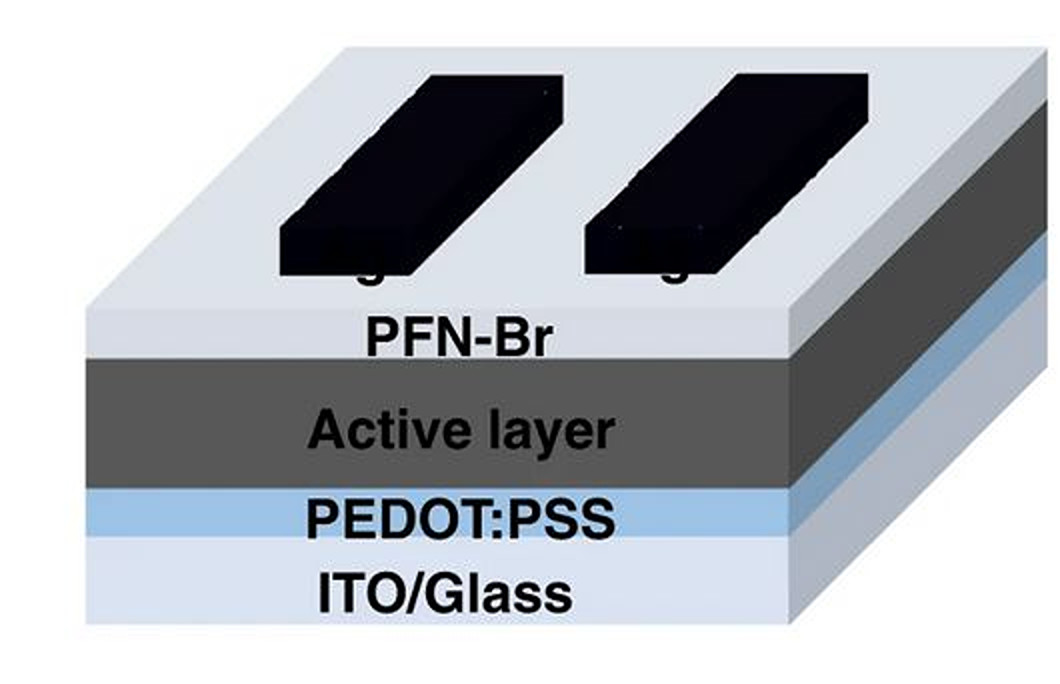
Schematic representation of the organic solar cell

Image: The Hong Kong Polytechnic University, Nature Communication, Common License CC BY 4.0

A research team led by Hong Kong Polytechnic University developed a non-monotonic intermediate state manipulation (ISM) strategy aimed at increasing energy conversion efficiency and reducing non-radiative recombination losses in organic photovoltaic (OPV) cells.

The scientists have configured a new technique for regulating the morphology of organic solar cells by using 1,3,5-trichlorobenzene as a crystallization regulator. Their cell contained one donor and one acceptor in the photoactive layer. They then applied the ISM strategy to both manipulate the bulk heterojunction organic solar cell morphology and optimize the crystallization dynamics and energy loss of the non-fullerene organic absorber.

They explained that their ISM strategy, which took about two years to devise, promotes the formation of more ordered molecular stacking and favorable molecular aggregation compared to traditional solvent additives.

The academics built the cell with a substrate of glass and indium tin oxide (ITO), a layer based on the PEDOT:PSS polymer, the organic absorber and a layer of the PFN polymer.

The ISM strategy was found to be significantly beneficial for the energy conversion efficiency of the organic PV device, which reached 19.31%. According to the research group, this result represents a record for binary organic solar cells.

It was also found that the cell had a non-radiative recombination loss of just 0.168 eV, which the scientists say is significantly lower than that of counterparts built without the ISM strategy.

See also  Brazil Solar Curtillment reaches 20% as a renewable Strain schedule infrastructure - PV Magazine International

“The new finding will make organic solar cell research an exciting field, and this is likely to create enormous opportunities in applications such as wearable electronics and building-integrated solar photovoltaics,” said the study’s lead author Li Gang, noting that the results are very encouraging for the future. long-term research into organic solar cells.

The new cell design was described in the study “19.3% binary organic solar cells and low non-radiative recombination enabled by non-monotonic intermediate state transition,” published in communication about nature.

This content is copyrighted and may not be reused. If you would like to collaborate with us and reuse some of our content, please contact: editors@pv-magazine.com.

Source link

achieves based cell efficiency organic solar SPE trichlorobenzene
Share. Facebook Twitter Pinterest LinkedIn Tumblr Email
solarenergy
  • Website

Related Posts

Türkiye will add 2.1 GW of solar energy in the first half of the year

July 30, 2026

Taiwan introduces new solar regulations for large buildings

July 29, 2026

British Solar Renewables wins call for 29 MW solar power plant

July 28, 2026
Leave A Reply Cancel Reply

Don't Miss
Technology

East-west vertical PV as an antidote to pollution in desert climates – SPE

By solarenergyAugust 22, 20240

New research from Qatar shows that east-west oriented vertical PV installations can significantly help reduce…

Philippines registers solar panel manufacturer targeting the EU export market

April 16, 2026

Taslink Plant Deep-Sea cable to connect Australia, New Zealand-PV Magazine International

March 6, 2025

Major BESS developments in Scotland and Cornwall

July 17, 2024
Stay In Touch
  • Facebook
  • Twitter
  • Pinterest
  • Instagram
  • YouTube
  • Vimeo
Our Picks

Sol Systems adds to project portfolio with Texas acquisition | Projects Weekly

August 31, 2026

Climate-Linked Supply Chain Risk Is Already In Your P&L

August 26, 2026

Drake Plastics gets new carport project near Houston | Projects Weekly

August 17, 2026

What Counts For Scope 3 Targets

August 12, 2026
Our Picks

Sol Systems adds to project portfolio with Texas acquisition | Projects Weekly

August 31, 2026

Climate-Linked Supply Chain Risk Is Already In Your P&L

August 26, 2026

Drake Plastics gets new carport project near Houston | Projects Weekly

August 17, 2026
About
About

Stay updated with the latest in solar energy. Discover innovations, trends, policies, and market insights driving the future of sustainable power worldwide.

Subscribe to Updates

Get the latest creative news and updates about Solar industry directly in your inbox!

Facebook X (Twitter) Instagram Pinterest
  • Contact
  • Privacy Policy
  • Terms & Conditions
© 2026 Tsolarenergynews.co - All rights reserved.

Type above and press Enter to search. Press Esc to cancel.