

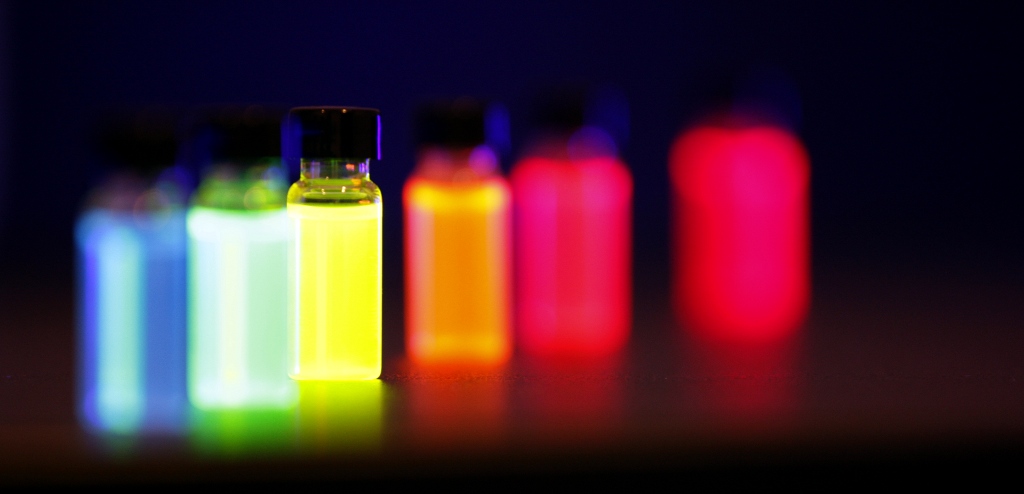
The cell, devised by scientists in China, was built with an alkaline treatment that efficiently modulates the surface chemistry of perovskite quantum dots. The device reportedly achieved the highest energy conversion efficiency ever reported for this type of solar cell.
Researchers from North China Electric Power University have developed a flexible perovskite quantum dot (PQD) solar cell via an alkali-supplemented antisolvent hydrolysis (AAAH) strategy that reportedly improves the charge transport of the perovskite absorber.
Quantum dots are small semiconductor particles that can carry a charge and can be made from different materials. They have been investigated as possible solar cell materials for a long time. Those based on perovskites have proven particularly attractive to researchers working on solar photovoltaics, as they have already demonstrated efficiencies of more than 16%.
The scientists explained that PDQs are particularly suitable for photovoltaic applications due to their tunable bandgap energy, high photoluminescence quantum yields (PLQY), defect tolerance and chemical processability. “In particular, lead iodide PQDs, methylammonium (MA) or formamidinium (FA) are promising for next-generation solar cells due to their high light absorption coefficients and efficiencies closer to the ideal Shockley-Queisser theoretical value,” they further explained.
The AAAH strategy for cell construction consisted of depositing solid PQD films layer by layer, rinsing each layer with an antisolvent that effectively removes the pristine ligands from the PQD surface without damaging the perovskite core.
Conventional pure ester antisolvents used to date for these types of operations have been found to lead to the direct dissociation of dynamically bound pristine oleic acid (OA) ligands rather than replacing them with hydrolyzed shorter counterparts, causing ‘extensive’ surface vacancy to harvest energy carriers, according to the academics.
The research group identified methyl benzoate (MeBz). an organic ester compound widely used in the perfumery industry, as an anti-solvent that provides “adequate” ligand exchange without compromising the integrity of the perovskite absorber.
The cell was fabricated with a substrate made of indium tin oxide (ITO), an electron transport layer (ETL) made of tin oxide (SnO2), the PDQ absorber, a spiro-OMeTAD-based hole transport layer (HTL), and a gold (Au) electrode.
The device was tested under standard lighting conditions and found to achieve an energy conversion efficiency of 18.37%, with an undisclosed independent solar cell accreditation laboratory having certified an efficiency of 18.30%.
This result is described as a world record for PDQ solar cells. “To further validate the potential of the AAAH-based ligand exchange for large-area photovoltaic applications, we fabricated 1 cm² solar cells, which achieved a champion efficiency of 15.60%, underscoring the promising scalability of this strategy,” the team said, noting that the best-performing devices also achieved steady-state efficiency of 17.85% and achieved an average efficiency of 17.68%.
“The charge carrier dynamics revealed that the high photovoltaic performance was attributed to the assembly of light-absorbing layers with fewer defects, homogeneous crystallographic orientations, minimal PQD agglomerations and favorable energy level positions via the AAAH strategy, resulting in suppressed trap-assisted recombination and facilitated charge extraction within PQDSCs,” the researchers concluded.
The cell was described in the study “Enrichment of conductive coverage by alkaline treatment of perovskite quantum dots towards certified 18.3% efficient solar cells”, published in communication about nature.
This content is copyrighted and may not be reused. If you would like to collaborate with us and reuse some of our content, please contact: editors@pv-magazine.com.
