Researchers in Norway investigated the melting behavior of silicon notch agglomerates under different atmospheres and temperatures to improve the recycling of silicon from solar energy. They found that vacuum melting improves deoxidation and produces a homogeneous, oxide-free melt, while agglomerate size has little effect on melting behavior.
Researchers from the Norwegian University of Science and Technology (NTNU) have studied the melting behavior of silicon notch powder under different regimes and conditions, with the aim of bringing the refining and recycling of the material closer to commercial and technical implementation.
Silicon kerf is the silicon material that is lost as waste when a crystalline silicon rod is cut into thin wafers during solar cell production. “The recycling of silicon kerf has been on the agenda for several years and some laboratory-scale solutions have been proposed. However, there is currently no well-established industrial process to recycle it back into solar silicon due to the strict purity requirements and scalability factors,” the research team explains.
In their analysis, the melting behavior of silicon kerf agglomerates with different sizes was taken into account.
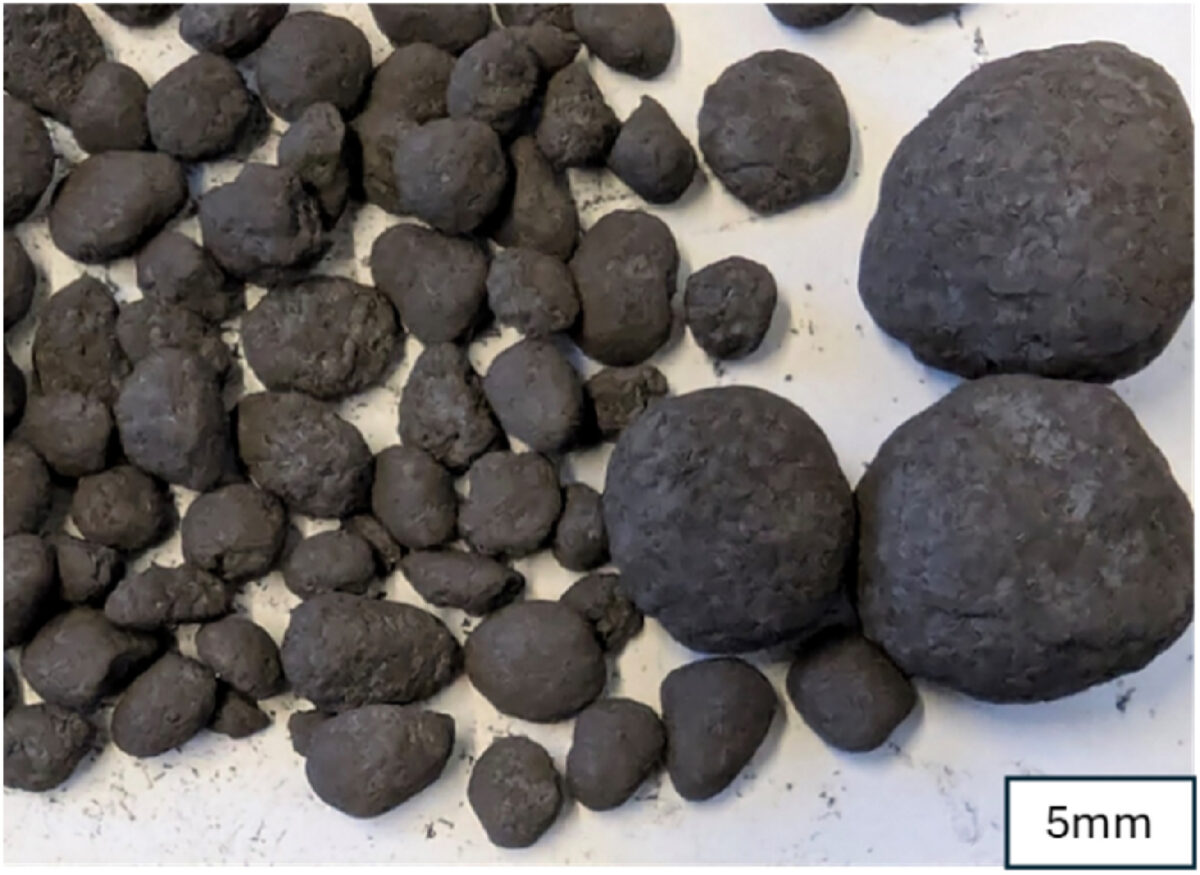
They first dried a silicon kerf powder cake, sourced from Norwegian manufacturer REC Solar Norway, and then pulverized it with a mortar and pestle. The powder was then agglomerated in a drum pelletizer and the resulting pellets were further dried. Finally, the dried pellets were melted using electromagnetic induction under different conditions and analyzed using glow discharge mass spectrometry (GDMS) for elemental impurity element compositions.
For their experiments, the scientists used a 75 kW semi-closed oven and a closed controlled atmosphere induction oven. The melting was carried out under different regimes at temperatures ranging from 1,600 C to 1,800 C
Image: Norwegian University of Science and Technology, Solar Energy Materials and Solar Cells, CC BY 4.0
Three different melting regimes were used. In the first regime, the agglomerates were heated to the target temperature under an argon atmosphere, held for 30–60 min, and then slowly cooled in the oven. In the second regime, the samples were heated to the target temperature and kept under vacuum for 30–60 min. The third regime applied a vacuum during both the heating and holding phases. The furnaces were equipped with a camera, which allowed the melting process to be assessed in real time.
The silicon recycled after melting was then analyzed by scanning electron microscopy (SEM), glow discharge mass spectroscopy (GDMS) and electron probe microanalyzer (EPMA), with the scientists finding that the size of silicon notch agglomerates has little effect on their melting behavior. However, they also found that melting under inert and vacuum conditions differs significantly. In fact, vacuum promotes the evaporation of volatile elements and increases the formation of silicon monoxide (SiO) gas, which enhances deoxidation and improves melting.
Furthermore, the analysis showed that under an inert atmosphere at temperatures below 1,800 C and residence times of 30–120 minutes, no homogeneous melt is achieved. In contrast, vacuum melting allows simultaneous oxygen loss via SiO gas, creating an oxide-free single melt. In both atmospheres, SiO deposition occurs above the molten silicon and on the crucible surface, although the underlying reaction mechanisms differ between inert and vacuum conditions.
Their findings are available in the study “Investigation of mechanisms and melting behavior of Si notch agglomerates under inert and vacuum conditions to recover PV silicon”, published in Solar energy materials and solar cells.
This content is copyrighted and may not be reused. If you would like to collaborate with us and reuse some of our content, please contact: editors@pv-magazine.com.
Popular content