

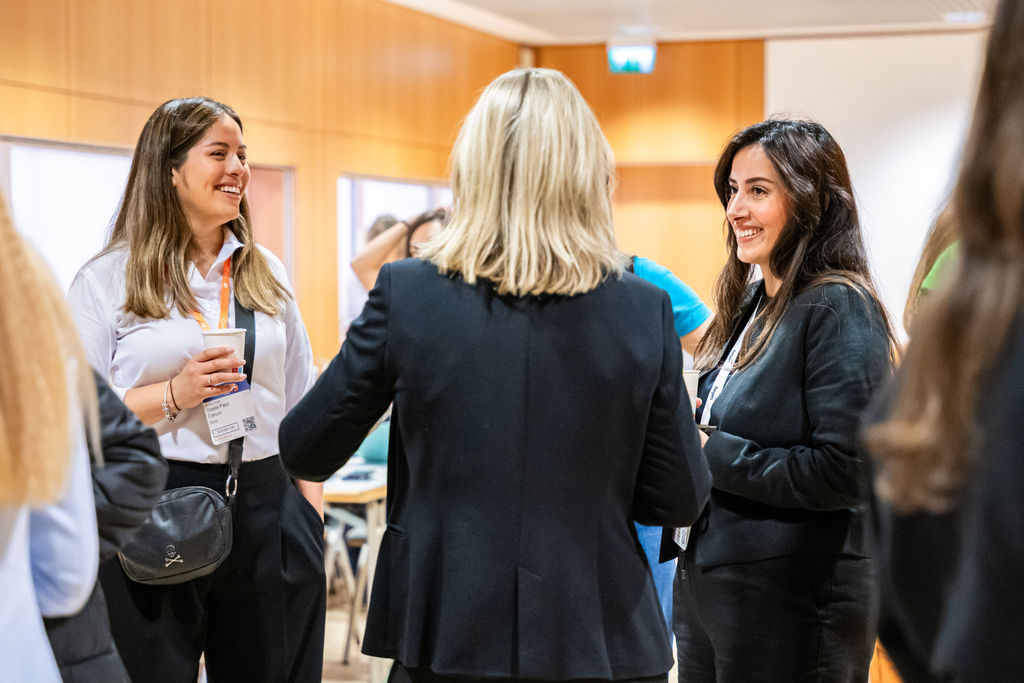
The energy transition is often shaped through technology, policy and capital. Yet one message always emerged in the Women in Solar+ Europe 2025 (WiSEu Network) series: the transition will only succeed if it is also a human transition. Gender equality, diversity, equality and inclusivity are no longer marginal discussions; they are critical to how resilient, innovative and future-proof our industries can be.
In the testimonies shared in 2025, neither women nor men spoke in abstract terms. They talked about lived experiences: outdated expectations, invisible barriers, moments of allyship, and leadership decisions that perpetuated or consciously challenged old power structures. Together, these voices point to a deeper truth: many of the traditional models that have shaped our workplaces and societies are no longer fit for purpose.
Visibility is still uneven and that matters
A recurring theme was visibility. Maria Colom, Senior Director EMEA at ENGIE highlighted how women’s contributions often remain undervalued, despite equal responsibility and performance. As she put it, “We are present in the room, but we are not always seen or heard in the same way, and that has consequences for trust, progression and influence.”
This lack of visibility is not just personal; it shapes organizational culture. When leadership pipelines repeatedly elevate the same profiles, the message, often unintentional but deeply felt, is that leadership has one acceptable face.
Christelle Mirailles, Business Development & Strategy at Equans Solar & Storage, echoed this sentiment from a structural perspective and noted that “Gender equality cannot depend solely on individual resilience; it must be embedded in systems, processes and accountability.” Her experience reflects a broader pattern: when inclusion depends on goodwill rather than design, progress remains fragile.
Prejudices are often subtle: but their impact is not
Several contributors spoke about the persistence of unconscious bias, especially in technical and leadership environments. Yana Hryshko, Head of Solar Supply Chain Research at Wood Mackenzie Power and Renewables, described how credibility is still unevenly distributed, noting that “Women are often expected to repeatedly demonstrate expertise, while men are assumed to be competent from the start.”
These microdynamics accumulate. Over time, they influence who speaks in meetings, who is entrusted with complex projects, and who is considered “ready” for promotion.
From a different angle, Rachel Hayes, Head of Consents and ESG at Solar Energy UK, reflected on how organizational silence can inadvertently reinforce inequality: “Failure to address prejudice does not make it disappear, it only normalizes it.”
Emiliano Bellini, news director at pv magazine, called argues for refinement and the need to develop DEI while freeing up language in debates to enable open conversations without fear of offence, encouraging growth from error: “We must free our thinking and allow room for error, especially as we address implicit bias.”
The role of male allies and intersectionality
One of the strongest shifts in this year’s conversations was the increasing involvement of men as allies. Rosilena Lindo, former Minister of Energy of Panama, emphasized the importance of men getting involved in the gender equality conversation: “Gender equality is not a women’s issue; it is a global development imperative. We need male allies who understand that inclusion benefits everyone. Creativity and innovation thrive within diverse environments.”
Antonio Arruebo, market analyst at SolarPower Europe, put this strongly when he said: “Gender equality frees everyone. It frees women from limitations and men from outdated expectations of leadership.” His perspective reinforced that inclusion increases, not threatens, opportunities.
Similarly, Nexun CEO Josef Kastner emphasized responsibility at the top: “Leaders must actively ask themselves who is missing from the table, and why.” This shift from passive support to active responsibility marks a crucial evolution in the maturity of DEI.
DEI conversations also went beyond gender. Cultural background, geography and socio-economic context intersect with gender. Solutions that work in one region may not translate directly to another, and inclusive leadership requires curiosity, humility and adaptability.
Laura Riedl, Digital Marketing Manager Europe at Solis, reinforced and shared this global vision “Diverse teams not only better reflect society, they also understand markets better.” In an industry defined by scale and speed, this insight is strategic, not symbolic.
From gender debate to collective goal
One of the most important developments reflected in this series is the growing realization that gender equality is not a zero-sum game. It is not about women or men making progress at the expense of the other, nor about assigning blame to inherited structures. It’s about recognizing that diverse talent, perspectives and ways of working are essential to solving complex global challenges.
As traditional social and professional models continue to erode, we are invited to redefine the roles of both women and men, at work and beyond. This redefinition requires courage, empathy and a shared sense of purpose. As Carmen Madrid, founder of the WiSEu network, powerfully states: “This is not a gender battle, men versus women or the other way around, but talent versus climate change.”
This reframing reflects the real challenge ahead. If the energy transition is to succeed, it must utilize all available talent, freed from outdated narratives, focused on impact and united by a purpose that is much bigger than any one group. The invitation is clear: listen deeply, challenge assumptions, and design workplaces where talent of all kinds can thrive.
Interested in joining female industry leaders and experts at Women in Solar+ Europe? More information: www.wiseu.network
The views and opinions expressed in this article are those of the author and do not necessarily reflect those of the author pv magazine.
This content is copyrighted and may not be reused. If you would like to collaborate with us and reuse some of our content, please contact: editors@pv-magazine.com.
