
Close Menu
  • News
  • Industry
  • Solar Panels
  • Commercial
  • Residential
  • Finance
  • Technology
  • Carbon Credit
  • More
    • Policy
    • Energy Storage
    • Utility
    • Cummunity
What's Hot

Dutch solar owners asked to switch off during peak periods to ease the distribution crisis

June 7, 2026

The hydrogen flow: Toyota demonstrates its racing prototype on liquid hydrogen

June 7, 2026

Era of electrification exposing Australia’s weakest link

June 6, 2026
Facebook X (Twitter) Instagram
Solar Energy News
Sunday, June 7
  • News
  • Industry
  • Solar Panels
  • Commercial
  • Residential
  • Finance
  • Technology
  • Carbon Credit
  • More
    • Policy
    • Energy Storage
    • Utility
    • Cummunity
Solar Energy News
Home - News - Safer and flexible battery developed for wearable technology
News

Safer and flexible battery developed for wearable technology

solarenergyBy solarenergyJune 9, 2024No Comments3 Mins Read
Facebook Twitter Pinterest LinkedIn Tumblr Email
Share
Facebook Twitter LinkedIn Pinterest Email

Safer and flexible battery developed for wearable technology


Researchers have developed a safer, cheaper and more flexible battery option for wearable devices.

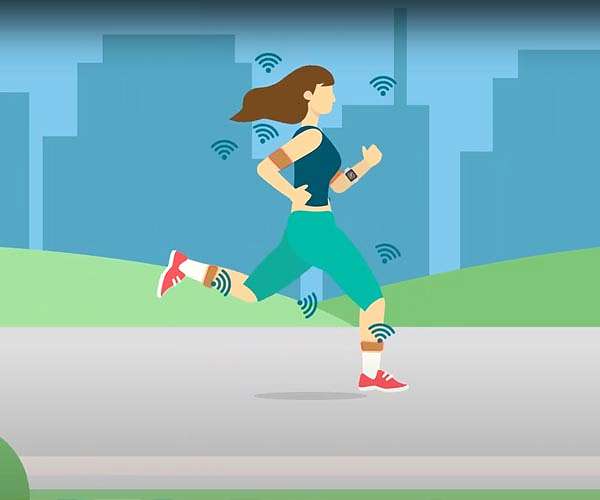
Fitness trackers, smart watches, virtual reality headsets, smart clothing and implants are becoming ubiquitous. These devices require more flexible and miniaturized energy storage mechanisms for greater comfort, reliability and longer lifespan. Improvements must not endanger safety.

Recent battery research has focused on ‘micro’ flexible energy storage devices (MFESDs). Aqueous microbatteries offer distinct advantages between different structures and electrochemical bases.

Aqueous batteries, which use a water-based solution as the electrolyte, have been around since the late 19th century. However, their energy density is too low for applications such as electric vehicles. Lithium-ion batteries are more suitable for such use.

Despite the lower energy density, aqueous batteries are safer and cheaper than lithium-ion batteries. This makes them a viable option for MFESDs, known as aqueous micro batteries (AMBs).

“Unfortunately, until now, AMBs have not lived up to their potential,” said Ke Niu, a materials scientist at the Guangxi Key Laboratory of Optical and Electronic Materials and Devices of Guilin University of Technology. “To use in a wearable device, they must withstand bending and twisting in the real world. Most tested to date fail under such stress.

Self-healing AMBs are needed to overcome stress fractures. However, current self-healing AMBs rely on metal compounds, which react strongly with the electrode materials, causing performance degradation.

“So we started exploring the possibility of non-metallic charge carriers,” added Junjie Shi, a researcher at the School of Physics and Center for Nanoscale Characterization and Devices (CNCD) at Huazhong University of Science and Technology.

See also  Mexico announces battery storage mandate for renewable power plants - PV Magazine International

The research team identified ammonium ions, derived from ammonium salts, as optimal charge carriers. They are less corrosive and have a wide electrochemical stability window.

“But ammonium ions are not the only ingredient in the recipe needed to make our batteries self-healing,” says Long Zhang, another leading team member at CNCD.

The team incorporated ammonium salts into a polyvinyl alcohol (PVA) hydrogel for its strength and low cost. Hydrogels can absorb and retain large amounts of water without disrupting their structure, providing flexibility and self-healing properties.

Titanium carbide, a 2D nanomaterial, was chosen for the anode because of its conductivity. Manganese dioxide was woven into a carbon nanotube matrix for the cathode to improve conductivity.

Testing showed that the prototype battery showed excellent energy density, power density, longevity, flexibility and self-healing after ten cycles.

The team wants to further develop their prototype and optimize it for commercial production.

Research report:A self-healing aqueous ammonium-ion microbattery based on PVA-NH4Cl hydrogel electrolyte and MXene-integrated perylene anode


Source link

battery developed flexible Safer technology wearable
Share. Facebook Twitter Pinterest LinkedIn Tumblr Email
solarenergy
  • Website

Related Posts

UK government considers community grant for battery storage

June 5, 2026

The UK battery storage facility supports 24-hour industrial operation

May 29, 2026

Brazil is not meeting its battery storage potential – SPE

May 23, 2026
Leave A Reply Cancel Reply

Don't Miss
Solar Industry

German Castle now organizes with a brick-red PV system

By solarenergyJuly 2, 20250

A castle in Bavaria, Germany, has installed a brick PV system using colored solar modules…

Analysts warn of a possible sudden drop in silver prices – SPE

January 27, 2026

Chinese customs confiscates solar panels suspected of intellectual property infringement

June 21, 2024

New sun additives reached 59.71 GW in Q1 – PV Magazine International

April 22, 2025
Stay In Touch
  • Facebook
  • Twitter
  • Pinterest
  • Instagram
  • YouTube
  • Vimeo
Our Picks

Dutch solar owners asked to switch off during peak periods to ease the distribution crisis

June 7, 2026

The hydrogen flow: Toyota demonstrates its racing prototype on liquid hydrogen

June 7, 2026

Era of electrification exposing Australia’s weakest link

June 6, 2026

‘Come out from behind your screen, our industry is ultimately about people’

June 6, 2026
Our Picks

Dutch solar owners asked to switch off during peak periods to ease the distribution crisis

June 7, 2026

The hydrogen flow: Toyota demonstrates its racing prototype on liquid hydrogen

June 7, 2026

Era of electrification exposing Australia’s weakest link

June 6, 2026
About
About

Stay updated with the latest in solar energy. Discover innovations, trends, policies, and market insights driving the future of sustainable power worldwide.

Subscribe to Updates

Get the latest creative news and updates about Solar industry directly in your inbox!

Facebook X (Twitter) Instagram Pinterest
  • Contact
  • Privacy Policy
  • Terms & Conditions
© 2026 Tsolarenergynews.co - All rights reserved.

Type above and press Enter to search. Press Esc to cancel.