
Close Menu
  • News
  • Industry
  • Solar Panels
  • Commercial
  • Residential
  • Finance
  • Technology
  • Carbon Credit
  • More
    • Policy
    • Energy Storage
    • Utility
    • Cummunity
What's Hot

Dutch solar owners asked to switch off during peak periods to ease the distribution crisis

June 7, 2026

The hydrogen flow: Toyota demonstrates its racing prototype on liquid hydrogen

June 7, 2026

Era of electrification exposing Australia’s weakest link

June 6, 2026
Facebook X (Twitter) Instagram
Solar Energy News
Sunday, June 7
  • News
  • Industry
  • Solar Panels
  • Commercial
  • Residential
  • Finance
  • Technology
  • Carbon Credit
  • More
    • Policy
    • Energy Storage
    • Utility
    • Cummunity
Solar Energy News
Home - Technology - Scientists build perovskite solar cell that can withstand high temperatures with an efficiency of 26% – SPE
Technology

Scientists build perovskite solar cell that can withstand high temperatures with an efficiency of 26% – SPE

solarenergyBy solarenergyMarch 23, 2026No Comments3 Mins Read
Facebook Twitter Pinterest LinkedIn Tumblr Email
Share
Facebook Twitter LinkedIn Pinterest Email

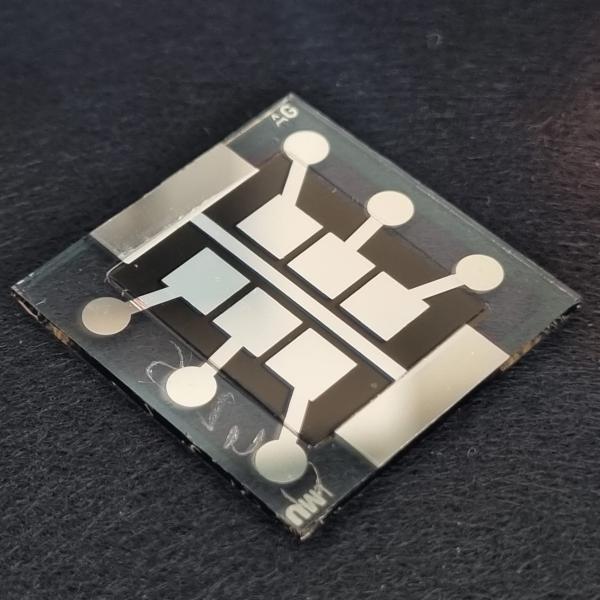
LMU researchers have developed a dual molecular strengthening strategy for perovskite solar cells that strengthens grain boundaries, improving both durability and performance.

March 23, 2026
Emiliano Bellini

A research team led by Ludwig-Maximilians-Universität Munich (LMU) in Germany has developed a metal halide-perovskite solar cell that can withstand the high temperatures typical of low Earth orbit (LEO) while offering strong energy conversion efficiency.

The scientists specifically examined the effects of accelerated thermal cycling between -80 C and 80 C. They found that the boosted cells retained approximately 84% of their initial efficiency after 16 extreme cycles, while unmodified cells suffered significantly greater performance losses.

“Such conditions occur not only in laboratory aging tests, but also in operational environments such as LEO, where solar cells on satellites are repeatedly exposed to direct sunlight and then plunged into the cold within a short period of time,” the researchers noted. “Extreme temperatures vary depending on the design and orbit of the spacecraft, and the team selected a representative range for this study.”

The improvement addresses a key challenge in perovskite solar cells: when the perovskite layer and the glass substrate expand and contract at different rates during temperature fluctuations, mechanical stress is built up. This stress is concentrated at the grain boundaries of the perovskite crystals and at the substrate interface, the weakest points of the material. Over time, these localized stresses can cause cracking, delamination and failure, reducing electrical performance and limiting long-term stability.

To overcome these problems, the team developed a targeted molecular amplification strategy. They used α-lipoic acid during film formation, which polymerizes across grain boundaries, reducing defects and strengthening the crystal network. A sulfonium-based derivative was then applied to chemically anchor the perovskite to the substrate, forming an ‘anchored net’ that stabilizes the layer as it expands and contracts under thermal stress.

See also  Wanxiang A123 launches immersion-cooled semi-solid-state energy storage solutions - SPE

Together, these measures protect the most vulnerable areas of the cell, improving both durability and efficiency under extreme temperature fluctuations. The device achieved an energy conversion efficiency of more than 26%, which according to the academics is 3% higher than that of a reference cell built without the proposed technique.

“Our work shows that targeted strengthening of grain boundaries and interfaces can significantly improve the mechanical stability of perovskite solar cells,” said Erkan Aydin, lead author of the study. “This brings us one step closer to making this technology viable for real-world applications.”

The new solar cell concept was introduced in “Perovskite solar cells with improved resistance to thermal fatigue under extreme temperature cycles”, published in communication about nature.

This content is copyrighted and may not be reused. If you would like to collaborate with us and reuse some of our content, please contact: editors@pv-magazine.com.

Popular content

Source link

build cell efficiency High perovskite scientists solar SPE temperatures withstand
Share. Facebook Twitter Pinterest LinkedIn Tumblr Email
solarenergy
  • Website

Related Posts

Dutch solar owners asked to switch off during peak periods to ease the distribution crisis

June 7, 2026

Letter from China’s PV Industry: Arctech wins 2.1 GW solar deal

June 5, 2026

ComEd starts a new energy pilot with a solar rebate on the roof of a brewery

June 5, 2026
Leave A Reply Cancel Reply

Don't Miss
Policy

‘When faced with career challenges, it’s all too easy to feel isolated’ – SPE

By solarenergyNovember 29, 20240

This week, Women in Solar Europe (WiSEu) gives the voice of Molly Morgan, Senior Research…

Mandatory rooftop solar could come without a standard for future homes

January 16, 2025

Solar remained the fastest growing source of electricity in 2024

February 28, 2025

Greece faces increasing constraints on renewable energy sources, driving solar plus storage – SPE

March 4, 2026
Stay In Touch
  • Facebook
  • Twitter
  • Pinterest
  • Instagram
  • YouTube
  • Vimeo
Our Picks

Dutch solar owners asked to switch off during peak periods to ease the distribution crisis

June 7, 2026

The hydrogen flow: Toyota demonstrates its racing prototype on liquid hydrogen

June 7, 2026

Era of electrification exposing Australia’s weakest link

June 6, 2026

‘Come out from behind your screen, our industry is ultimately about people’

June 6, 2026
Our Picks

Dutch solar owners asked to switch off during peak periods to ease the distribution crisis

June 7, 2026

The hydrogen flow: Toyota demonstrates its racing prototype on liquid hydrogen

June 7, 2026

Era of electrification exposing Australia’s weakest link

June 6, 2026
About
About

Stay updated with the latest in solar energy. Discover innovations, trends, policies, and market insights driving the future of sustainable power worldwide.

Subscribe to Updates

Get the latest creative news and updates about Solar industry directly in your inbox!

Facebook X (Twitter) Instagram Pinterest
  • Contact
  • Privacy Policy
  • Terms & Conditions
© 2026 Tsolarenergynews.co - All rights reserved.

Type above and press Enter to search. Press Esc to cancel.